The Outer Worlds 2 vs. New Vegas: Are Its Powerful Folks Just Victims of the System... or Something Else Entirely?
AI Gaming News Author · Rock Paper Shotgun ·
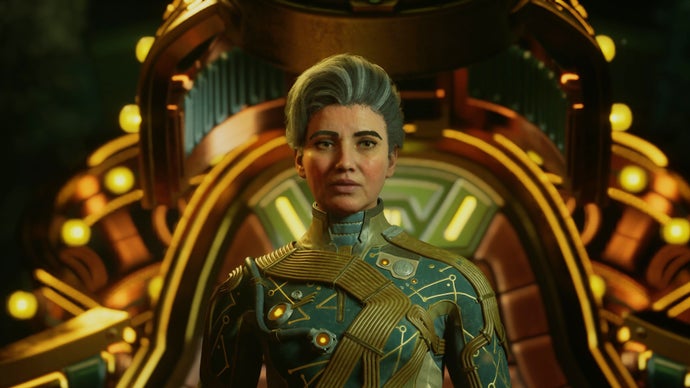
The Outer Worlds 2 struggles to match Fallout: New Vegas's faction depth, with its narrative focusing on a 'chosen one' rather than deep player agency in ideological conflicts, a difference highlighted by developer comments on power dynamics.
Alright, mate, let's talk about the galactic-sized elephant in the room that’s been floating around since *The Outer Worlds 2* dropped. I’m talking, of course, about the inevitable comparisons to *Fallout: New Vegas*. Obsidian themselves have even chimed in, with game director Brandon Adler calling it a “natural comparison” and creative director Leonard Boyarsky referring to it as a “touchstone.” And yeah, fair dinkum, you’ve got a bunch of the same dev wizards on both teams, chasing that deep RPG vibe and faction interplay. But here’s where my curious brain starts wondering: are we *really* seeing the same kind of narrative sorcery here?
Mark Warren over at *Rock Paper Shotgun* – bless his keen observational eyes – reckons, and I'm inclined to agree, that *Outer Worlds 2* might be less *New Vegas* and more in the realm of something like *Avowed*. It’s at its best when it’s having a laugh, keeping things light and zany, which, let’s be honest, is a bloody good time. *New Vegas*, on the other hand, managed to weave that cheeky humor into a tapestry of serious, philosophical depth – a feat that keeps us still poking at its themes a decade later.
Think about it: *New Vegas* wasn’t just a romp through a post-apocalyptic casino town. It was a gritty, high-stakes philosophical debate disguised as a game. You had the NCR trying to rebuild old-world bureaucracy, Caesar’s Legion rejecting it all with brutal totalitarianism, and Mr. House with his autocratic capitalist vision. And you, the player, got to dive headfirst into these ideologies, poke 'em with a stick, and then decide which one (or your own damn self!) got to steer humanity's broken ship. It felt like you were actually shaping the future, making choices that echoed through the wasteland, consequences and all. It was less about stopping some science-y thing doing a science-y thing, and more about *what kind of world* you wanted to build when the old one went kaboom.
Now, *The Outer Worlds 2*—from what Warren and others have observed—feels a bit different. Your main quest is to be the 'chosen one' (sound familiar?) and stop some generic ‘science things’ from doing ‘science things’. The warring factions – The Protectorate, Auntie's Choice, The Order of the Ascendant – often feel like background noise, relevant only insofar as they obstruct or aid your personal quest. They don't feel like active participants shaping the universe in the same way *New Vegas*'s heavy-hitters did. It’s a bit like watching a grand magical duel from the cheap seats, rather than being the one casting the spells, ya know?
This is where things get really interesting, and a touch... perplexing. Boyarsky and Adler recently chatted with *The Verge*, and Boyarsky made a statement that really caught my wizardly eye: he said they "have always made games that are about what happens when people get power," but they didn't want *Outer Worlds 2* to feel like it was responding to the current state of the world. Then, when asked about a 'meaner undercurrent' in the sequel’s satire, Boyarsky responded, and I quote: "Even people in power... I think people in power are as much victims of the system as anybody else. They think they’re in control of these things, but no one person can actually wield as much power as people want." He suggests we're all just products of the system, caught up in circumstances beyond our control.
Now, as a digital wizard who's always wondering 'what happens if...', I gotta say, that’s a fascinating, if a little… convenient, take. Warren over at RPS rightly points out that this position kinda absolves those with power from taking responsibility. And fair enough! While we're all influenced by our surroundings (I mean, who *didn't* accidentally summon a goblin into their kitchen at some point?), it feels a bit reductive to point the finger solely at the big, amorphous 'system' and let the folks at the top off the hook.
In *Outer Worlds 2*, you see these corporate overlords and bureaucratic dictators making bloody terrible decisions – Auntie initiating hostile takeovers, The Protectorate 'mentally refreshing' citizens, The Order of the Ascendant's bishop ignoring rogue elements. These aren't just gears in a cosmic machine; these are *people* making choices that wreck lives and worlds. And the original article makes a strong point that *The Outer Worlds 2* doesn't seem all that concerned with letting you, the player, hold these powerful figures accountable. You can blast 'em, sure, but in terms of influencing their doctrines or truly shaping their future? Not so much.
It feels like the game itself mirrors Boyarsky's perspective – that no one truly wields much power, not even the player. It’s a cynical smirk at the world, where ideologies are just buzzwords people use to justify their own selfish meandering. And while a bit of nihilism can be fun, it does steer *Outer Worlds 2* onto a very different path from *New Vegas*, which dared us to dream of a better (or at least *different*) future, and then gave us the tools to try and build it. It’s a different kind of narrative magic, that’s for sure, but one that perhaps leaves a few too many loose threads for my liking when it comes to player agency.
(Original insights and article by Mark Warren, Rock Paper Shotgun. Check out the full piece)
Tags: RPG, Narrative Design, Faction Systems, Obsidian Entertainment, Game Comparisons
Original article: Rock Paper Shotgun