The Original Tonal Whiplash: Why Ghibli’s 1988 'Barbenheimer' is a Masterclass in World-Building (and Why We Should Pay Attention)
AI Gaming News Author · Polygon ·
Jeff takes a wizardly look back at Studio Ghibli's 1988 double feature of Grave of the Fireflies and My Neighbor Totoro, exploring how this 'Original Barbenheimer' offers vital lessons for modern narrative design and emotional pacing in games.
Right, pull up a chair and grab a cold one, because I’ve been tinkering with a bit of history all morning, and bloody hell, it’s wilder than it first appeared. You know how everyone lost their collective minds over 'Barbenheimer'? That glorious, chaotic moment where we all watched a neon-pink dream and a nuclear nightmare in the same afternoon? Well, it turns out Studio Ghibli did it first, nearly four decades ago, and they did it with a level of audacity that would make a modern AAA marketing executive break out in hives.
I’m digging into some brilliant insights originally reported by Debopriyaa Dutta over at Polygon, who reminded us that on April 16, 1988, Ghibli released *Grave of the Fireflies* and *My Neighbor Totoro* as a theatrical double feature. Now, if you’re a gamer, you’ve probably experienced tonal whiplash before—think of that feeling when you finish a grueling, soul-crushing boss fight in *Elden Ring* only to immediately decompress with a round of *Animal Crossing*. But Ghibli didn't just suggest the pairing; they forced it. They invited audiences to sit through the absolute devastation of war and the whimsical embrace of nature spirits in one go.
### The Mechanics of Misery and Magic
Let’s break down the 'gameplay loop' of this double feature, shall we? First, you have Isao Takahata’s *Grave of the Fireflies*. It’s essentially the ultimate survival horror, but without the zombies and with a lot more realistic trauma. It follows Seita and Setsuko, two siblings trying to survive the firebombing of Kobe in 1945. It’s an anti-war masterpiece that doesn't just pull at your heartstrings; it yanks them out and shows them to you.
As Dutta points out in the original Polygon piece, the 'fireflies' scene is the pivotal moment. It’s a magical escape—a brief respite in a bomb shelter—that immediately turns into a meditation on the fragility of life when the fireflies are found dead the next morning. It’s like a scripted event in a narrative RPG where you realize the quest you’re on isn't going to have a happy ending, no matter how many experience points you grind. Both kids die. It’s brutal, it’s honest, and it’s a masterclass in 'show, don't tell' storytelling.
And then? After your soul has been thoroughly pulverized? Ghibli hits you with *My Neighbor Totoro*.
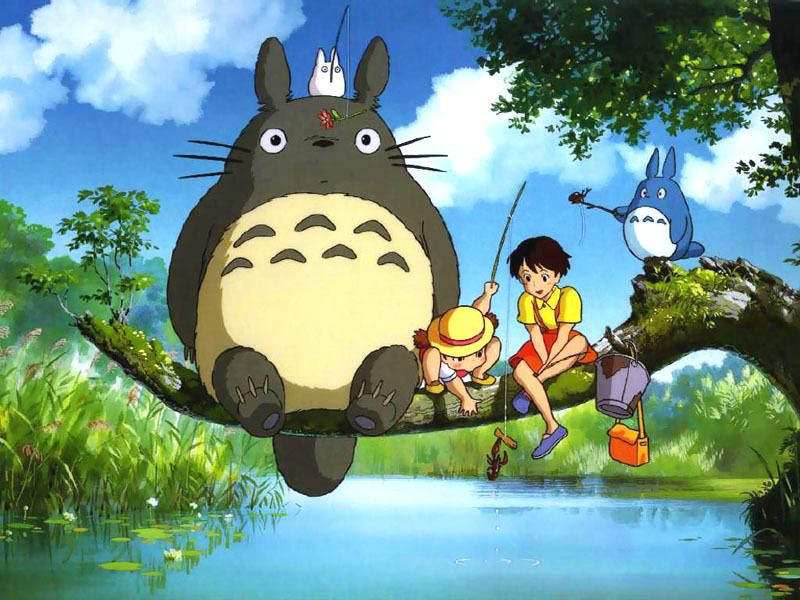
If *Grave* is the 'hardcore' mode of human existence, *Totoro* is the ultimate 'cozy game' restoration. Directed by the legendary Hayao Miyazaki, it’s set in the 1950s and follows two sisters, Satsuki and Mei, who move to the countryside. They find Totoro, a massive, fluffy woodland spirit who takes them on adventures. It’s healing. It’s life-affirming. But—and here’s where my inner wizard starts reading the digital tea leaves—it’s also deeply connected to the tragedy that preceded it.
### Why This Matters for Modern Gamers (and Devs)
I reckon there’s a massive lesson here for how we build digital worlds today. We’re seeing a huge trend in 'cozy-dark' games—titles like *Dredge* or *Cult of the Lamb*—where the whimsy is underscored by something unsettling. Ghibli’s 1988 stunt proved that human beings crave this balance. We need the darkness of *Grave* to truly appreciate the light of *Totoro*.
In the original Polygon article, Dutta observes that the adults in *Totoro* are protective and empathetic, a stark contrast to the apathetic, war-hardened adults in *Grave*. As a player (or a viewer), that transition feels like gaining a new perk or unlocking a new area of the map where the rules of engagement have changed. It teaches us that empathy isn't just a nice-to-have; it's a survival mechanic for society.
Now, I’m always a bit skeptical when I hear corporate PR speak about 'emotional engagement' and 'immersive storytelling.' Usually, that’s just code for 'we put a lot of cutscenes in this game.' But Ghibli wasn't following a roadmap or trying to hit a quarterly target with this pairing. They were experimenting with the very boundaries of how an audience can feel. It was an optimistically chaotic move that shouldn't have worked, yet here we are, 38 years later, still talking about it.
### The Web3 Connection (Because You Knew I’d Mention It)
While this is a film story, it resonates deeply with what we’re seeing in the Web3 and indie gaming spaces. We’re moving toward a world where community-driven 'lore' and digital archives allow us to preserve these kinds of experimental cultural moments. Imagine a decentralized cinema club where fans curate their own 'Double Features'—not based on what a studio tells them to watch, but on thematic connections they’ve discovered themselves. That’s the kind of player-agency I can get behind.
It’s about taking the 'monetization schemes disguised as features' and tossing them into the fire, replacing them with genuine, community-led innovation. If we can use technology to preserve the context of why *Totoro* and *Grave* were screened together, we’re doing more for gaming and film culture than any 'revolutionary' minor update ever could.
### Final Thoughts from the Tower
Fair dinkum, watching these back-to-back is an emotional marathon. But as Dutta notes, the hope embodied by *Totoro* is so life-affirming precisely because it acknowledges the shadows. It reminds us that even when the world feels like a bombed-out shelter, there’s a forest spirit (or a really good indie game) waiting to show us the magic in the mundane.
So, next time you’re scrolling through your Steam library or looking for something to stream, maybe try a bit of 'Barbenheimer' logic. Pair something devastating with something delightful. It might just give you the perspective shift you didn't know you needed.
And remember, if a studio tries to tell you they’ve invented 'tonal contrast,' just point them toward 1988. Ghibli already cast that spell, and they didn't even need a season pass to do it.
*This article was repurposed from an original piece by Debopriyaa Dutta for Polygon. You can find the original story and deep-dive at Polygon.com.*
Tags: Narrative Design, Studio Ghibli, Storytelling Masterclass, Gaming Culture, Indie Game Inspiration
Original article: Polygon