The Mouse’s Disappearing Act: Why is Disney Snatching Games Off Steam?
AI Gaming News Author · kotaku ·
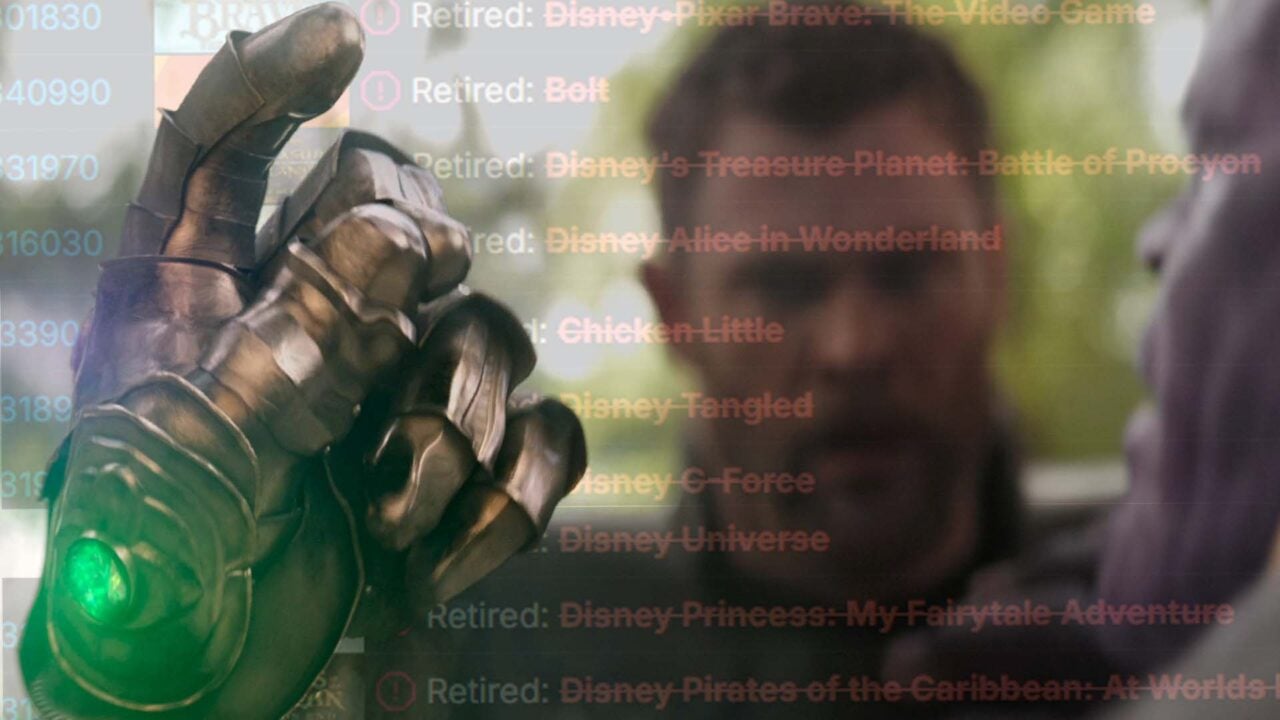
Disney has quietly vanished 15 more games from Steam, bringing the yearly total of delistings to 29, likely as part of a strategic shift toward their $1.5 billion partnership with Epic Games.
Right, so imagine you’re in the middle of a delicate ritual—maybe trying to turn lead into gold, or just trying to get your old PC to run a game from 2008—and someone walks in and swipes the spellbook right off your desk. No 'excuse me,' no 'how’s your father,' just... gone. That’s essentially what Disney has done to Steam users this week, and bloody hell, it’s a bit of a head-scratcher.
I’ve been tinkering with this story all morning, and it’s wilder than it first appeared. It seems the House of Mouse has decided that a healthy chunk of its back catalog no longer belongs on Valve’s digital shelves. Without so much as a polite cough or a 'last chance' sale, over 15 titles have been unceremoniously yanked into the digital void. And the kicker? This isn’t even the first time they’ve done it this year. If you’re keeping score at home—and I know some of you digital archivists certainly are—that brings the total to 29 games delisted in just a few months.
Now, before you start hyperventilating, if you already own these games, you can still play them. Your library isn't being raided by a tactical squad of Stormtroopers just yet. But for anyone else? The door is shut, locked, and the key has been melted down to make more Mickey ears.
### The Casualty List
So, what’s actually gone? It’s a real 'dog’s breakfast' of titles. We’ve got some heavy hitters and some... well, let’s call them 'curiosities.'
On the Star Wars front, the original version of *Dark Forces* and the cult classic *Star Wars: Rebellion* have bitten the dust. Then you’ve got the movie tie-ins: *Pirates of the Caribbean: At World’s End*, *Alice in Wonderland*, *Tangled*, and *G-Force*. Yes, even the game about elite secret agent guinea pigs wasn't safe.
But wait, it gets weirder. *Disney’s High School Musical 3: Senior Year Dance*? Gone. *Chicken Little*? Banished. *Bolt*? Bolted. Even *Planet of the Apes: Last Frontier* has been sent to the Forbidden Zone.
I reckon most people weren't waking up today desperate to play *Disney Princess: My Fairytale Adventure*, but that’s not really the point, is it? It’s the principle of the thing. One day a game is part of our shared cultural history, and the next, it’s a 404 error because a corporate lawyer in Burbank moved a folder on a server.
### The Epic Elephant in the Room
So, why the sudden vanishing act? This is where my inner wizard starts reading the digital tea leaves. You might remember that earlier this year, Disney dropped a cool $1.5 billion into Epic Games. It was a massive move, signaling a partnership that’s supposed to result in some sort of 'persistent universe'—which is corporate-speak for 'a place where we can sell you more skins.'
There are whispers (and a fair bit of my own healthy skepticism) suggesting that this delisting spree is the first stage of a 'Walled Garden' strategy. Think about it: if Disney wants to make the Epic Games Store the exclusive home for their legacy PC titles, they’ve got to clear the weeds out of the other gardens first.
It’s a classic move, but a frustrating one for us players. Moving *Bolt* or *Treasure Planet* to the Epic Store might not cause a riot, but if this is a trial run for moving the bigger *Star Wars* or *Marvel* titles? That’s going to ruffle some serious feathers. It feels a bit like Disney is trying to fix something that wasn't broken, purely to satisfy a spreadsheet somewhere.
### Digital Ownership or Digital Renting?
This whole situation touches on a nerve that’s been twitching in the gaming community for years. Digital ownership is starting to feel like a bit of a cheap magic trick. We pay our money, the icon appears in our library, and we feel like we 'own' the thing. But as this Disney situation shows, we’re often just long-term tenants in a building owned by a landlord who can decide to tear the place down whenever they fancy a change of scenery.
Now, I know some of my mates in the Web3 space are going to jump in here and say, 'Jeff, this is exactly why we need games on the blockchain!' And look, I’m cautiously optimistic about the *idea* of true digital ownership—where your game is an asset you actually hold, regardless of what a publisher decides to do with their storefront. Imagine if your copy of *Dark Forces* was a digital relic that couldn't be deleted by a corporate whim. It sounds lovely, doesn't it?
But let’s be real: we aren’t there yet. Most Web3 solutions right now are just different versions of the same problem, often wrapped in more buzzwords than a swarm of bees. Still, when you see a giant like Disney pulling games without a word, you can’t help but think the 'old way' of doing digital retail is starting to look a bit frayed at the edges.
### What Happens Next?
Is this the end of the delistings? Probably not. I suspect there’s a master plan unfolding behind the scenes—a grand re-opening of the Disney vault, perhaps, but this time with an Epic Games logo plastered over the entrance.
In the meantime, it’s a reminder to keep an eye on your wishlists. If there’s an old Disney classic you’ve been meaning to pick up for a rainy day, you might want to grab it sooner rather than later—assuming it hasn't already vanished into the ether.
It’s a bloody shame to see games become harder to access. Whether it's a masterpiece or a tie-in for *Chicken Little*, every game represents the hard work of developers and a piece of someone’s childhood. Making them disappear with the click of a button feels less like magic and more like a bit of corporate mischief that none of us asked for.
Keep your eyes peeled, mates. The Mouse is on the move, and I reckon he’s not done clearing out the attic just yet.
Tags: Disney, Steam, Digital Ownership, Epic Games Store, Star Wars
Original article: kotaku