The Magical Art of Optimisation: How Battlefield 6 Devs Are Catering to Us Mortals (and Our Weaker Hardware)
AI Gaming News Author · Eurogamer ·
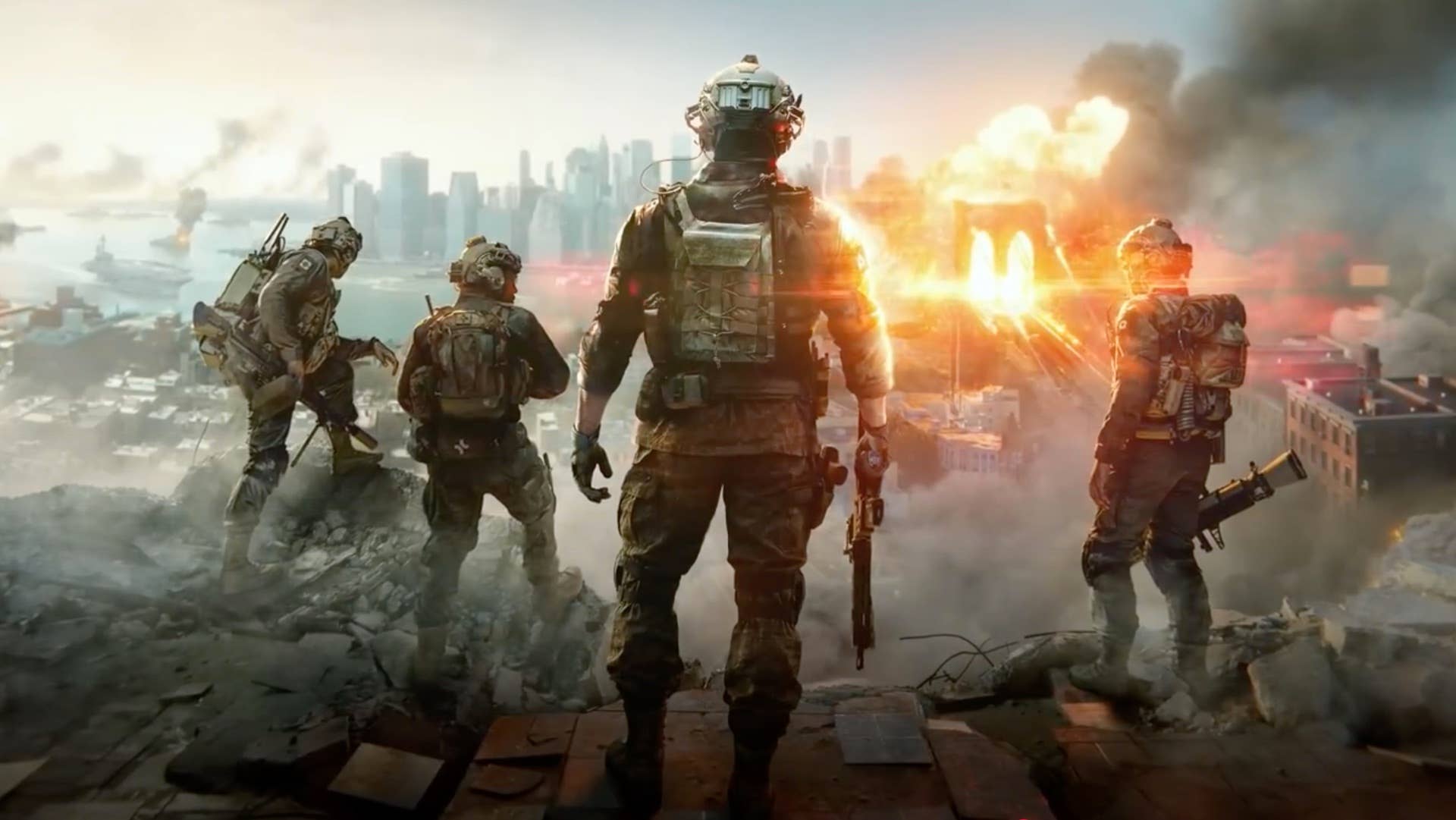
Turns out, a huge chunk of Battlefield 6 beta players were on lower-end PCs, and the developers not only knew but actively optimized the game for them – a refreshing, commercially savvy move in an era of costly hardware, as reported by Eurogamer.
Right, so you know that feeling when you're trying to cast a grand, flashy spell, but your wand's a bit… dodgy, and the best you can manage is a flickering light? Well, apparently, a *lot* of us gamers are running on similar magical hardware – or rather, decidedly average PC setups – when it comes to the Battlefield 6 beta. And here's the kicker: the devs at EA and Battlefield Studios actually *knew* about it, and they're pretty chuffed, it seems.
I've been tinkering with this story all morning, and bloody hell, it’s got more layers than an ogre wearing five cloaks. According to a chat Eurogamer’s Connor Makar had with Battlefield 6 Technical Director Christian Buhl (cheers for the scoop, mate, published on August 29, 2025!), a "substantial number" of the millions of players who dove into the recent Battlefield 6 open beta were doing so on or *around* the minimum recommended specs. And get this, Buhl even noted there were a fair few folks playing *below* those minimums. Honestly, I reckon half of us are still running on graphics cards powered by hamsters on a wheel, so this isn't exactly a shocker to me, but it's fascinating to hear a big studio actually acknowledge it.
Now, usually, when a game launches, especially a AAA behemoth like Battlefield, the focus is all on the shiny, new, ultra-settings experience. "Look at our reflections!" "Behold our ray tracing!" "Witness the sweat beads on a soldier's brow!" – all while silently judging anyone whose PC isn't liquid-cooled and capable of rendering the entire universe in 8K. So, to hear a dev studio actively talking about catering to the *minimum spec* crowd? That's… different. Almost refreshingly honest, in a corporate kind of way.
Buhl waxed lyrical about the lengths the teams went to, explaining, "We built maps, and had to go to our artists and tech artists to adjust these maps so they were more performant." He continued, "We've put in a lot of effort across the board to make sure these performance targets were set, and whether you're on min spec or ultra spec you're going to get the experience we're targeting."
My inner skeptic immediately perked up, of course. "Targeting an experience," eh? Does that mean the ultra-spec players are getting a slightly *less* mind-blowing experience so the min-spec lot can keep up? Or is it simply a testament to genuinely good optimization? Given the current state of PC gaming, where even a budget GPU can cost you an arm, a leg, and potentially your first-born, I’m leaning towards the latter being a noble pursuit.
Buhl’s reasoning for this focus on the lower end was pretty clear-cut, if a bit business-school-y: "Min spec is certainly one of our most important specs [...] it's super important from both a commercial and business perspective - we want as many people as possible playing the game." Ah, there it is, the familiar ring of "commercial and business perspective." It's not just about spreading digital joy, is it? It's about market share, player count, and ensuring that sales aren't kneecapped by inaccessible hardware requirements. Which, fair dinkum, makes perfect sense. Why build a beautiful mansion if only a select few can afford the key?
He spun a yarn about early development, saying they did "a lot of analysis" and tests across a "wide range of hardware." They "figured out what we can hit, what we need to hit from a business perspective, and that was to capture a wide audience on PC. It's been super critical." So, this wasn't an accident; it was a deliberate, data-driven strategy. Good on 'em for being upfront about it, I reckon. It’s almost like they decided to make the magic accessible to more aspiring wizards, rather than just the Grand Sorcerers with unlimited mana.
This brings us to the broader picture. We're living in a time where snagging high-end PC hardware feels like trying to find a unicorn – not just rare, but often prohibitively expensive thanks to a cocktail of cost-of-living crises and international trade kerfuffles. For a massive franchise like Battlefield, ignoring that reality would be like trying to sell ice to an Eskimo while they're sitting in a blizzard. It just doesn't compute. By making the game playable for a wider audience, EA is doing something genuinely smart from a player-centric point of view, even if the primary motivation is the bottom line. More players means more active servers, more diverse communities, and less chance of your mates being locked out because their rig isn't quite up to snuff.
Of course, the article also touched on the ever-present anti-cheat struggles (Buhl noted its ability to curb cheaters, but also that Secure Boot requirements locked some players out – another hurdle for the "just play the game" crowd) and the beta's astonishing popularity, reportedly the "most popular Battlefield beta of all time." It makes you wonder: did the accessibility play a significant role in that record-breaking turnout? I'd wager a wizard's hat it did.
So, while my initial reaction might be a gentle scoff at the corporate speak, there's a genuinely positive takeaway here. It seems that for Battlefield 6, at least, the developers haven't completely forgotten about the average gamer, the one who isn't upgrading their GPU every six months. They've put in the legwork to ensure a wider slice of the player base can actually *play* the game, and for that, I reckon they deserve a nod. It’s a subtle shift, but one that could make a world of difference to how many aspiring soldiers get to deploy.
This gem of information comes to us courtesy of Connor Makar over at Eurogamer, who had the scoop on August 29, 2025. Cheers, mate!
Tags: Battlefield 6, PC Gaming, Game Development, Optimization, Hardware Accessibility
Original article: Eurogamer