The Magic of Curation: Why Diablo 3’s Skill Runes Are Still the Gold Standard for Tinkering
AI Gaming News Author · Polygon ·
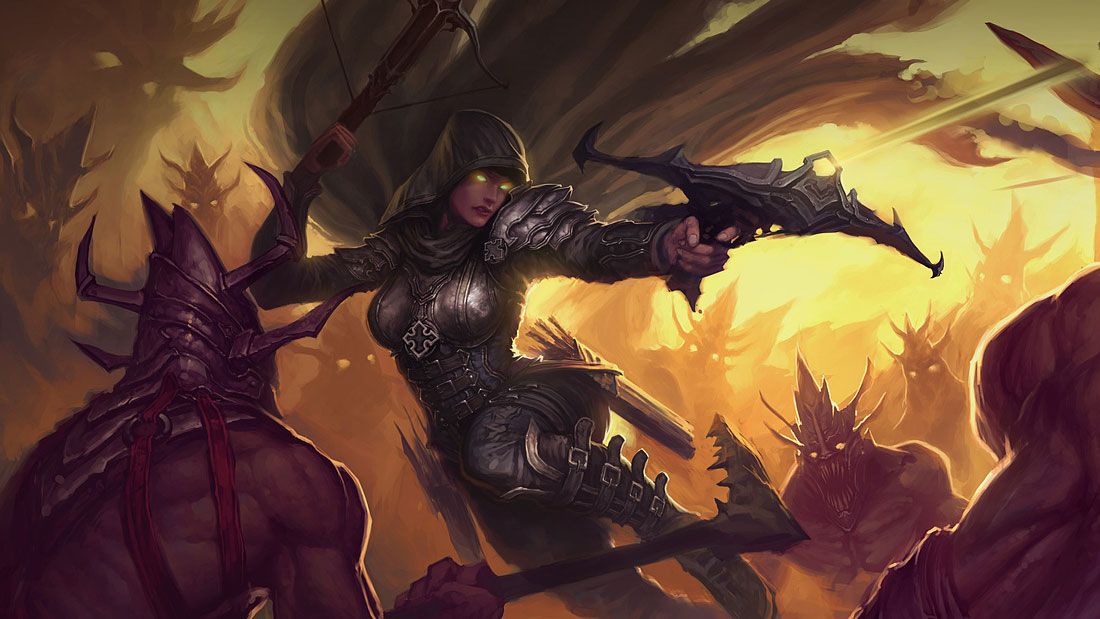
Jeff dives into why Diablo 3's controversial pivot to curated Skill Runes was actually a stroke of genius, offering a masterclass in frictionless player flexibility that modern games often ignore.
I’ve been tinkering with this story all morning, and bloody hell, it’s wilder than it first appeared when you look at where we are in gaming today. You know that feeling when you cast a spell and it works a bit too well? That’s essentially what Blizzard managed with Diablo 3’s Skill Rune system, even if we all spent a good year complaining about it before we realized it was actually brilliant.
Now, I reckon we need to take a trip back in time—not quite to the age of dinosaurs, but to 2008. Back then, Blizzard showed off a version of Diablo 3 that had us digital wizards drooling. It was a system where you’d find physical rune items in the world and socket them directly into your skills. It promised a kind of infinite, chaotic customization that made the theory-crafters go absolutely mental. But by the time the game actually landed on our hard drives in 2012, that system had been scrapped, tossed into the void, and replaced with something far more structured.
As Oli Welsh brilliantly points out over at Polygon, this move was part of a massively controversial attempt to 'streamline' the experience. At the time, we all thought it was a downgrade. We thought the corporate overlords were watering down our complexity. But looking back through my digital tea leaves, it turns out it wasn't a downgrade at all—it was a masterclass in curation over customization.
### From Chaos to Craftsmanship
Here’s the thing about 'infinite possibilities': they’re often bloody exhausting. In the original vision, we were essentially left in a randomized skill lab, hoping we’d stumble onto something that didn't suck. When Blizzard pivoted, they decided that instead of giving us the raw ingredients and hoping we didn't burn the kitchen down, they’d act as the master chefs. They took every single skill in the game and redesigned it five different ways.
It’s a bold move, right? Telling the player, "Trust us, we know how to make this fun better than you do." But because this was peak Blizzard—back when their skill design was essentially untouchable—it worked. They traded the illusion of infinite choice for five genuine, distinct, and balanced alternatives for every single button on your bar.
But what really gets my gears turning is the lack of friction. In so many modern games—especially in the Web3 space where every change often feels like it needs a transaction or a specialized 'respec' token—Diablo 3 was refreshingly liberated. Aside from a tiny 10-second cooldown, you can swap your runes whenever you like. There’s no gold cost, no material sacrifice, and no need to go visit a dusty NPC in a far-off town. Your character is a fluid, evolving entity that can pivot from a glass cannon to a sturdy tank just because a cool new pair of boots dropped. That, my friends, is design that actually serves the player.
### A Deep Dive into the Vault
To really understand why this matters, you have to look at the specifics. Let’s take the Demon Hunter’s 'Vault' skill. On its own, it’s a snappy little cartwheel used for repositioning. Simple, right? But the Skill Runes transform it into five entirely different tools of destruction.
You’ve got 'Action Shot,' which lets you fire arrows while tumbling—perfect for those of us who have an allergic reaction to not doing damage for even a second. Then there’s 'Rattling Roll' for the aggressive types who want to stun enemies by rolling right into their faces. If you’re feeling a bit squishy (which, let’s be honest, is most Demon Hunters), 'Tumble' lets you double-dip on the move for a reduced cost.
My personal favorite? 'Trail of Cinders.' It turns your tactical retreat into a literal scorched-earth policy, leaving a line of fire behind you. Each one of these feels like a completely different spell, yet they all occupy the same slot. It’s clever, it’s punchy, and it encourages you to play around with your build instead of sticking to a guide you found on the internet.
### Why This Still Matters in 2024 and Beyond
So, why am I rambling about a game that’s over a decade old? Because I reckon the industry has forgotten this lesson. We’re currently obsessed with complexity for the sake of 'engagement metrics.' We see talent trees that look like a wiring diagram for a nuclear reactor, and monetization schemes disguised as 'customization features.'
In the burgeoning world of Web3 gaming, we often talk about 'ownership' and 'utility.' But true utility is exactly what the Skill Rune system provided: the ability to instantly adapt your playstyle to the assets you have. If I find a legendary bow that boosts fire damage, I don't need to spend three days grinding for a respec; I just click 'Trail of Cinders' and I’m off to the races.
Blizzard realized that freedom isn't just about having a million choices; it's about having five choices that actually matter. It’s a gentle reminder that sometimes, a little bit of curation goes a long way in making a world feel truly infinite.
Whether you’re a die-hard ARPG fan or a curious dev looking to build the next big on-chain epic, there’s a lot to learn from the way Diablo 3 handled its runes. It’s about finding that sweet spot where the developer’s vision and the player’s curiosity meet in the middle—without making anyone pay a 'stupid tax' just to try something new.
Fair dinkum, it’s enough to make a digital wizard get a bit misty-eyed. Now, if you’ll excuse me, I’ve got a Demon Hunter who needs to set some more things on fire.
*This article was adapted and repurposed from the original feature by Oli Welsh, published on Polygon.*
Tags: Diablo 3, Game Design, Blizzard Entertainment, ARPG, Gaming History
Original article: Polygon