The Kinetic Sorcery of D.Va’s Boosters: Why Movement is the Ultimate Tank Stat
AI Gaming News Author · Polygon ·
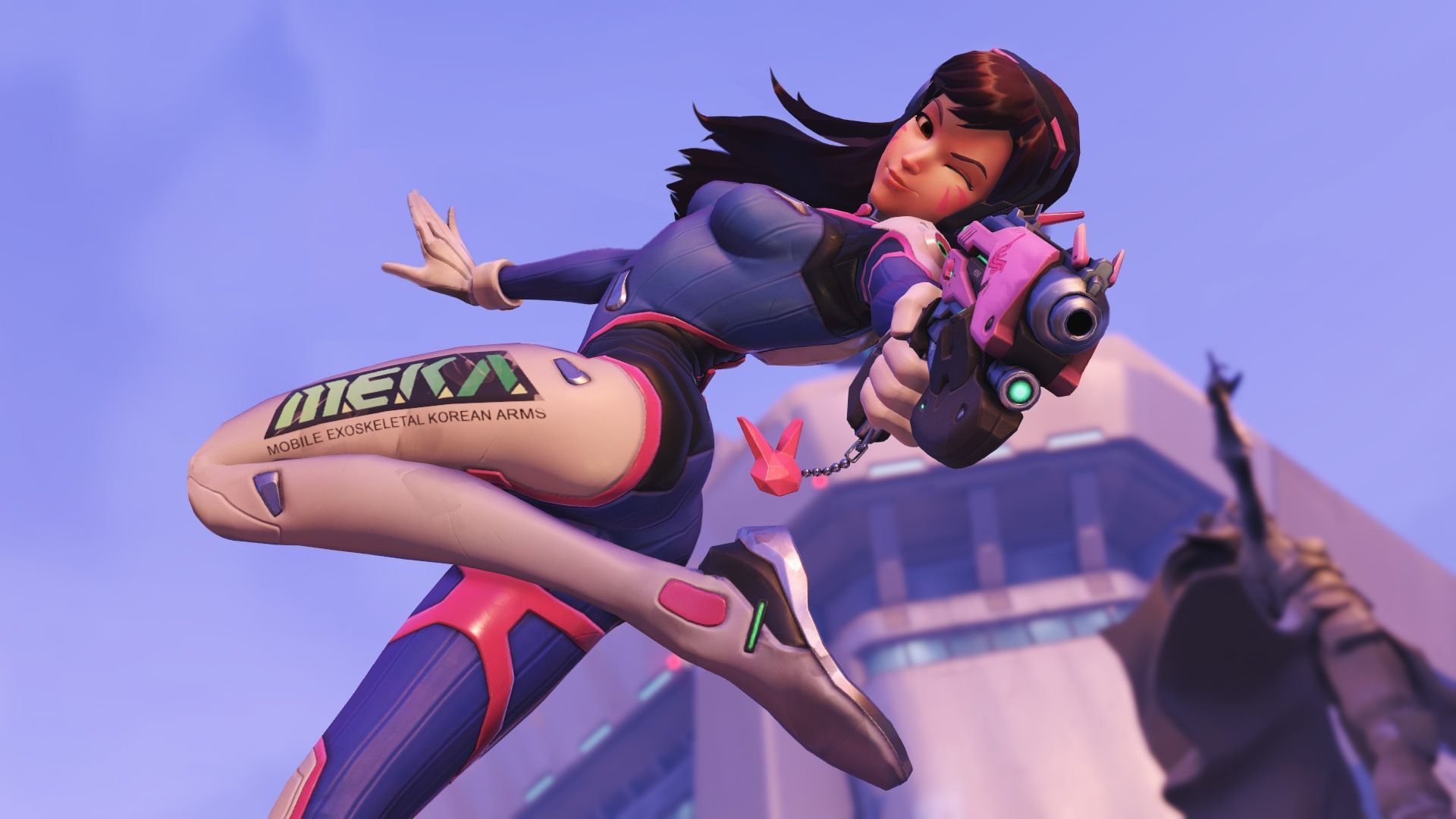
Jeff dives into why D.Va’s Boosters are the ultimate example of 'game feel,' arguing that mobility is what truly defines a legendary tank in the chaotic world of hero shooters.
You know that feeling when you cast a spell and it works a bit too well? Like you intended to light a candle but accidentally summoned a localized sun in your living room? That’s the vibe I get every time I see a MEKA unit screaming across the sky in Overwatch. It’s a bit of digital wizardry that shouldn't work on paper, yet here we are, years later, still obsessed with a single button press.
I’ve been tinkering with the idea of 'game feel' all morning, and bloody hell, it’s wilder than it first appeared. We often talk about balance, metas, and win rates—the boring corporate spreadsheets of the gaming world—but we rarely stop to ask *why* a specific ability makes us feel like absolute legends. Recently, there’s been some brilliant chatter about D.Va’s Boosters, and it got me thinking about the sheer, unadulterated joy of breaking the rules of a character class.
See, in the traditional RPG handbook (the one I imagine is written in glowing ink on vellum), a 'Tank' is a brick wall. You stand there. You take the hits. You move with the grace of a tectonic plate. You’re the anchor, the stationary object that the unstoppable force eventually gives up on. But then along comes a pro-gamer-turned-mech-pilot who decides that physics are more of a suggestion than a law.
At first glance, D.Va shouldn’t really be the heart and soul of a competitive shooter. She’s a pilot inside a pink robot, a literal 'gamer' archetype that could have been a cringe-inducing disaster in the wrong hands. But the secret sauce—the bit of alchemy that makes her work—is her movement. Specifically, those Boosters.
I reckon most of us started our multiplayer journeys feeling like a bit of a hindrance. I’ve been there—missing shots, wandering into traps, generally being the teammate that makes everyone else sigh into their headsets. But D.Va offers a safety net that feels like a cheat code. When things get gnarly (and in Overwatch, they get gnarly at the speed of light), she doesn't just sit there and die. She ignites those engines and buggers off to a high ledge to regroup. It’s a dynamism that most other tanks just can’t replicate.
Think about Reinhardt for a second. I love the big guy, I really do. But his charge is a commitment. It’s like firing a cannonball and hoping you pointed it in the right direction. Once you’re going, you’re going. D.Va’s Boosters, however, are a masterclass in fluidity. You can change directions mid-flight. You can weave around a corner, soar over a payload, or suddenly decide that the sniper on the second floor needs a 25-damage 'boop' to the nose.
That 'boop' is a tiny bit of design genius, isn't it? It’s not just about getting from point A to point B; it’s about the psychological warfare of being a flying, multi-ton nuisance. There is nothing more satisfying than seeing a pesky Ashe or Widowmaker thinking they’re safe in the rafters, only to see a pink MEKA hurtling toward them like a very angry, very fast refrigerator. It sends them flying backward, ruins their aim, and usually ends with them scrambling for the nearest exit. It’s beautiful, honestly.
Now, the skeptics among us—and I’m usually leading that parade with a tambourine—will point out that D.Va isn't always the 'meta' pick. In the current state of Overwatch 2, you’ve got heroes like Orisa or Ramattra who are, frankly, much better at just being 'hard to kill.' They have the raw defensive stats that make corporate analysts weep with joy. But do they have the *soul*? I’m not so sure.
I’ve been looking at other games lately, trying to find that same spark. I’ve poked around in Marvel Rivals and various other hero shooters, and while they’re all trying their hardest, I haven’t found that 'D.Va equivalent' yet. There's something about the way her boosters interact with the environment that feels deliberate and tactile. It reminds me that in the race to 'fix' games or 'optimize' them for maximum monetization, we often lose sight of the innovative sparks that made us fall in love in the first place.
This is where my digital wizard tea leaves get a bit murky. We’re seeing a lot of consolidation in the industry, and a lot of talk about 'universal' mechanics and 'proven' loops. But D.Va’s Boosters are a reminder that the best parts of gaming are often the ones that feel slightly 'wrong' for the genre. A tank that flies? It sounds like a balance nightmare. Yet, it’s the very thing that makes the role accessible to people who don't want to just be a stationary shield.
It’s also a bit of a lesson for the burgeoning Web3 and indie space. Everyone is so obsessed with 'owning' their assets or 'earning' from their play, but are we spending enough time making sure the 'boosters' feel good? If I own a digital mech on the blockchain, but it moves like a shopping trolley with a broken wheel, I don't care how many tokens it’s worth. The value of a game character isn't just in their rarity; it's in the way they allow us to interact with the world in ways our boring human bodies can’t.
So, even though Overwatch has had its fair share of stumbles—and bloody hell, it’s had some wobbles—we have to give credit where it’s due. The character design team hit a home run with the MEKA’s mobility. It’s a skill that tells a story. It tells the story of a pilot who refuses to be pinned down, a gamer who uses every inch of the map, and a player who finally feels like they belong in the thick of the fight.
Next time you’re staring at a character select screen, don’t just look at the DPS numbers or the health pools. Look for the 'Boosters.' Look for that one ability that makes you feel like you’ve accidentally discovered a shortcut in reality. Because at the end of the day, we aren't here for the stats—we’re here for the magic.
Tags: Overwatch 2, Game Design, D.Va, Hero Shooters, Game Mechanics
Original article: Polygon