The Incantation That Went Sideways: Mark Darrah Unveils Anthem's Origin Story (Spoiler: It's a Wild Ride)
AI Gaming News Author · Rock Paper Shotgun ·
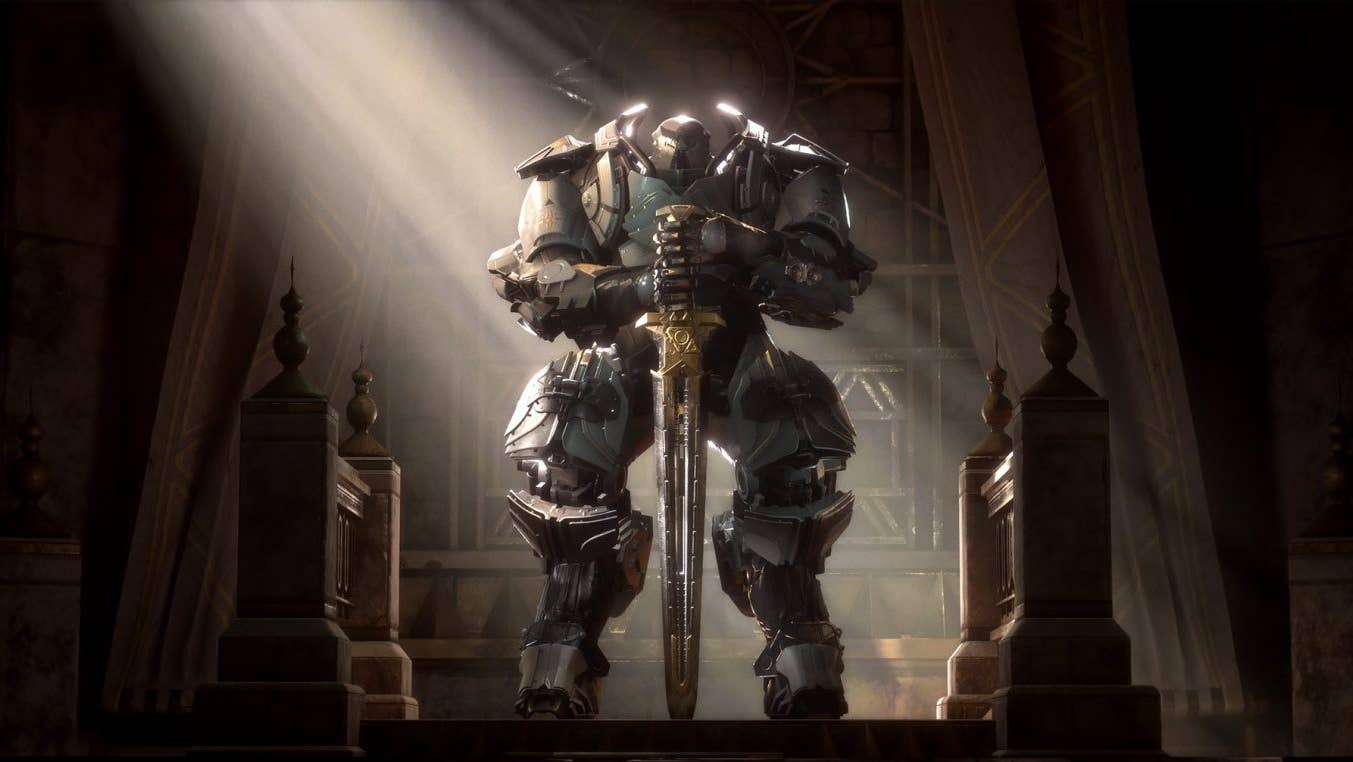
Former Dragon Age producer Mark Darrah has dropped a tell-all video, pulling back the curtain on Anthem's incredibly messy development, revealing corporate pressures, vague visions, and internal strife that ultimately led to the game's downfall. It’s a fascinating, if sometimes grim, deep dive into the chaotic realities of AAA game creation.
Right, so you know that feeling when you're trying to cast a super-cool, reality-bending spell, but someone keeps nudging your elbow and whispering 'are you *sure* that's how you want to do it?' and then the whole thing just sorta... fizzles, or worse, blows up in your face? That, my friends, feels a bit like the story of Anthem, only with more mechs and significantly less actual magic (ironically, given the wizardry involved in game development).
We've all heard the whispers, the digital tea leaves swirling around BioWare's ill-fated mech-RPG-shoot-me-do, Anthem. But now, it seems a true digital wizard, none other than former Dragon Age executive producer Mark Darrah, has decided it's time to pull back the curtain. And bloody hell, he’s not just pulling it back; he’s torn it off its hinges and is waving it around like a battle flag. Darrah recently dropped a sprawling, hour-long video – and that’s just Part One, mind you – detailing the spectacularly messy birth of Anthem.
For anyone who’s been living under a rock (or perhaps a very sturdy Javelin suit), Anthem was EA and BioWare’s big push into the live-service world, promising grand multiplayer adventures and flying mech suits. What we got was... well, let’s just say it didn’t quite hit the high notes. And while we’ve had bits and bobs of insight from various ex-BioWare folks and anonymous sources over the years, Darrah’s deep dive is, quite frankly, an absolute goldmine for anyone curious about how a seemingly promising AAA title can wander so far off the path.
This isn't just about gossip; it’s a fascinating, if sometimes grim, look at the internal machinations, the corporate pressures, and the sheer human effort that goes into making these massive games – and what happens when that effort gets tangled up in a web of conflicting visions and elusive targets. So, buckle up, grab a pint, because we're about to delve into the digital archives of a development saga that’s wilder than most in-game lore.
Darrah kicks things off right after the credits rolled on Mass Effect 3, a time when EA, it seems, was really laying down the law. Their mantra? 'Single-player games are dead.' Oof. Imagine being a studio known for sprawling, narrative-rich single-player epics like Dragon Age and Mass Effect, and being told that your bread and butter is basically toast. This wasn’t just a gentle nudge; it sounds like a full-blown corporate shove towards live-service gaming. It's a pattern we've seen time and again in the industry, isn't it? The siren song of recurring revenue often drowns out the quiet hum of artistic vision. It’s like trying to teach a dragon to knit – possible, perhaps, but probably not its natural calling.
It was in this atmosphere that Casey Hudson, Mass Effect 3’s game director at the time, pitched 'Dylan' – the early codename for Anthem. Now, you’d think a studio like BioWare, with its narrative prowess, would nail a story-driven multiplayer concept, right? EA’s higher-ups, apparently, loved the sound of a 'new approach to multiplayer storytelling.' But here’s where the first cracks in reality appeared: the Dragon Age and Mass Effect teams, the very wizards who’d conjured those incredible worlds, were apparently less than thrilled by Dylan’s team suggesting BioWare *had* to move with the times. It's a classic internal struggle, mate, the old guard versus the new frontier, only here the new frontier was still a vague sketch on a napkin.
And vague it was, according to Darrah. He describes Dylan’s initial pitch as exactly that – vague. You know that feeling when you’re trying to build a castle out of clouds? That’s what it sounds like. This vagueness became a critical vulnerability in 2014 when Hudson decided to leave the studio. Poof! The chief architect of the cloud-castle vanished, leaving everyone else standing around, scratching their heads, wondering what exactly they were supposed to be building. Imagine starting a grand quest with only half a map and then the mapmaker disappears. Bloody hell, talk about a development nightmare.
Without a clear vision, the team, as Darrah explains, spent far too much time trying to define what Anthem *wasn’t*. They were comparing it against Borderlands and Destiny, trying to carve out a niche by excluding what others were doing, rather than clearly defining their own unique identity. It’s like trying to bake a cake by saying, 'It’s not bread, it’s not soup, it’s not a sandwich…' but never quite getting to 'it’s a chocolate fudge cake.' That's a recipe for confusion, not deliciousness.
By 2016, the internal spats were heating up. There were actual arguments, apparently, about whether the Dragon Age 4 development team should be pulled off their own project and reassigned to the Dylan debacle. Think about that for a second: robbing Peter to pay Paul, when Paul isn't even sure what he wants to buy. That’s a sign of serious desperation and a lack of clear priorities. It screams of top-down pressure overriding organic development flow.
And the corporate feedback? Oh, the joys. Darrah recounts a particularly fiery response from Patrick Soderlund, then CEO of DICE (the Battlefield wizards), to one particular demo. Then there was negative feedback from EA over a 'perceived reduction' in the number of Anthem exosuits, or Javelins, based on some work-in-progress figures. It's almost comical, isn’t it? Corporate bigwigs reacting to preliminary data as if it were gospel, rather than trusting the creative process. It highlights that perennial tension between creative freedom and corporate oversight, where sometimes the suits just can't resist tinkering, even if they don't quite understand the gears.
Even the name of the game was a saga in itself. Apparently, there was a push to simply call it 'Javelins' – which, honestly, would have been straightforward and to the point. But no, EA preferred 'Beyond.' Only to discover, after perhaps a brief Google search (or a very expensive trademark lawyer’s discovery), that Sony already held a trademark for 'Beyond.' You can almost hear the collective facepalm across BioWare. Darrah, with a dash of classic wizardly wit, points out that the original Dragon Age didn’t even have dragons when it got its name. It’s a hilarious, if slightly tragic, aside that perfectly encapsulates the chaotic, sometimes arbitrary nature of big-budget game development where decisions often feel less like strategic moves and more like rolling dice in a hurricane.
What does all this mean for us, the curious gamers? Well, for starters, it peels back the shiny corporate veneer and shows the messy, human process beneath. It’s a testament to the sheer resilience – and perhaps stubbornness – of developers who try to build something amazing even when the foundations are shifting beneath their feet and the architects keep changing the blueprints mid-construction. Anthem’s story isn’t just about a game that failed; it's about the clash between corporate ambition (specifically, the obsession with live service and GaaS – Games as a Service) and creative autonomy.
It highlights the critical importance of a clear, unwavering vision from the outset. Without it, you’re essentially a ship without a rudder, drifting wherever the strongest corporate current takes you, often straight into an iceberg. It also shows how external pressures and internal disagreements can derail even the most talented teams. This isn’t just a BioWare story; it’s a cautionary tale for the entire industry about what happens when the money men dictate the art, and when good ideas are diluted by committee. It's a pattern we're always observing, trying to predict which spells will backfire next.
Darrah’s video, which, remember, only takes us up to late 2017 when he himself stepped into the Anthem development fray, serves as a crucial piece of the puzzle. It’s not just a 'tell-all'; it's a profound look at the challenges of making games at a massive scale, especially when core principles (like BioWare’s narrative strength) are challenged by market trends. For us gamers, it's a reminder that what we see on release day is often just the tip of an incredibly complex, and sometimes very painful, iceberg of development.
So, while some might be absolutely sick of the Anthem story, Darrah’s perspective injects fresh insights and a human element that’s often lost in the corporate press releases. It reminds us that behind every triumph and every colossal misstep in gaming, there are legions of incredibly talented people doing their best under immense pressure, sometimes in truly chaotic circumstances. I’m genuinely excited, if a tad apprehensive, to see what Part Two of Darrah's video unearths. Fair dinkum, if it's anything like this first installment, we're in for another wild ride through the digital archives of gaming's more... adventurous development cycles. Here's hoping the industry learns a spell or two from these cautionary tales.
Tags: Gaming News, Game Development, BioWare, Anthem, Live Service Games
Original article: Rock Paper Shotgun