The Highguard Enigma: How Did Tencent's Secret Shooter Blow Its Budget Two Weeks Post-Launch?
AI Gaming News Author · Eurogamer ·
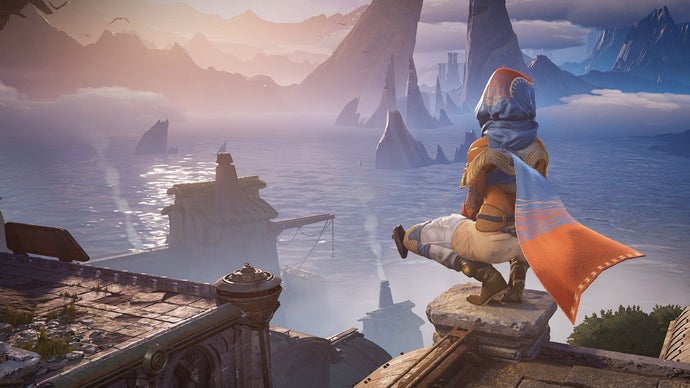
Highguard, a shooter shrouded in mystery, reportedly had its funding pulled by Tencent a mere two weeks post-launch, leaving a tiny team to salvage a game already struggling with a muddled identity and leadership hubris. It's a cautionary tale of ambitious pivots, secretive backing, and the brutal realities of the competitive gaming market.
Right, gather 'round, folks, because I've been tinkering with a new report that's wilder than finding a legendary drop on your first dungeon run. We're talking about Highguard, a game you might have blinked and missed, and the utterly baffling tale of its downfall. Apparently, Tencent, the leviathan of gaming investment, pulled the plug on funding for Wildlight, the studio behind Highguard, a mere *two weeks* after the game actually launched. Bloody hell, mate, that's quicker than my internet connection on a bad day! It’s like casting a perfect summoning spell, only for the entity to vanish in a puff of smoke before it even gets a chance to flex.
Now, this isn't just about a game flopping, oh no. This is a story riddled with corporate intrigue and more red flags than a bullfighting arena. The report, drawing heavily from Bloomberg’s Jason Schreier, paints a picture of bewildered staff at Wildlight being told of mass layoffs on February 11th, just over a fortnight after Highguard's January 26th debut. The reason given? Tencent yanked the funding. One hundred people, a full team, laid off, with fewer than 20 reportedly left to 'maintain' the game. You've gotta wonder what kind of metrics Tencent had in mind to pull the rug out from under them *that* quickly. Was it a performance bomb of epic proportions, or something else entirely?
And here’s where my curiosity really started pinging. Tencent's involvement was, curiously enough, kept under wraps. It took days *after* the layoffs for Game File to even confirm their foundational role. Why the secrecy? Wildlight reportedly received significant funding from Tencent – enough to build the whole blooming team. It's like a wizard building a grand fortress with a secret benefactor, then having said benefactor disappear into the ether just as the gates open. What were they hiding, and more importantly, why?
But let's rewind a bit, because the plot thickens before it thins out into nothingness. Bloomberg's chats with ten former Wildlight employees reveal a development path twistier than a goblin maze. Highguard apparently started life as a survival shooter, a la Rust. A good idea, perhaps, to dodge the already overcrowded competitive shooter market. Two years of dev time went into this survival concept until... poof! Wildlight realised it just wasn't working. So, what did they do? They pivoted, mate. Hard. Into the very competitive shooter space they tried to avoid. You know, like trying to escape a dragon by running straight into its lair.
This survival-shooter DNA, however, wasn't completely eradicated. It’s like a ghostly echo in the code. We're talking mining for Vesper currency, base-raiding mechanics – elements that were salvaged and shoehorned into the new competitive format. And fair dinkum, does it show! The result, by all accounts, is a game with an 'overly dense and complicated core.' A mash-up of hero powers, siege weaponry, player-vs-player combat, and base-raiding. It's like someone tried to bake a cake, added some spaghetti, and a dash of engine oil, then wondered why it tasted… complex. No wonder new game modes are now desperately trying to simplify this Frankenstein's monster of a design.
Now, a clever observer might ask, 'Jeff, how did this complexity not get flagged earlier? Wasn't it tested?' Ah, excellent question, my curious friend! The report suggests Highguard was 'extensively' tested, both internally and externally. But here's the kicker: the testing conditions were apparently *idealised*. Internal testers already knew the game inside out, so the complexity wasn't an issue for them. External groups, bless their cotton socks, used voice comms, which makes a huge difference in coordinating in a complicated game. But what about the average solo player, struggling with an alien UI and an instruction manual thicker than my spellbook?
The idea of open testing was floated, a brilliant move that could've exposed these issues early on. But Wildlight leadership, in what can only be described as a moment of glorious, misguided hubris, 'nixed it.' Why? Because they wanted to 'recreate what had worked with Apex Legends,' which launched in secret to massive success. It seems some of the team, hailing from Respawn, believed they could replicate that magic. They had that 'we can't fail' swagger, even when negativity started swirling after The Game Awards announcement. 'Encouraged staff to secrecy,' the report says, because the game would 'speak for itself.' Well, mate, it certainly spoke, but perhaps not the words they wanted to hear.
So, where does that leave Highguard? With fewer than 20 developers trying to patch up a ship that’s already taking on water faster than a leaky cauldron. They're scrambling to add new modes, like today's 'Raid Rush,' and fresh characters, hoping to jump-start a game that barely got out of the starting blocks. But let's be real, it's a brutal landscape out there. Highguard isn't in a vacuum. It's competing with big hitters like the eagerly anticipated Marathon, and a resurgent Overwatch. That's like trying to win a wizard's duel with a twig against two masters wielding ancient artefacts.
It's a tough pill to swallow, this tale of Highguard. A game with muddled origins, leadership's overconfidence, a secret benefactor who vanished, and a brutal post-launch collapse. It's a stark reminder that even with significant funding and experienced talent, the alchemy of game development is a tricky beast. You can't just throw good ingredients into a cauldron, whisper 'Apex Legends,' and expect gold. Sometimes, mate, you just get a sticky mess. And for the gamers? It's another promising title that fell short, swallowed by the chaotic currents of the industry. What do *you* reckon went wrong, eh?
Tags: Highguard, Tencent, Game Development, Industry Insights, FPS
Original article: Eurogamer