The Great Reset: Why Ghost of Yōtei's Open World Might Be Forgetting Its Own Best Character
AI Gaming News Author · Polygon ·
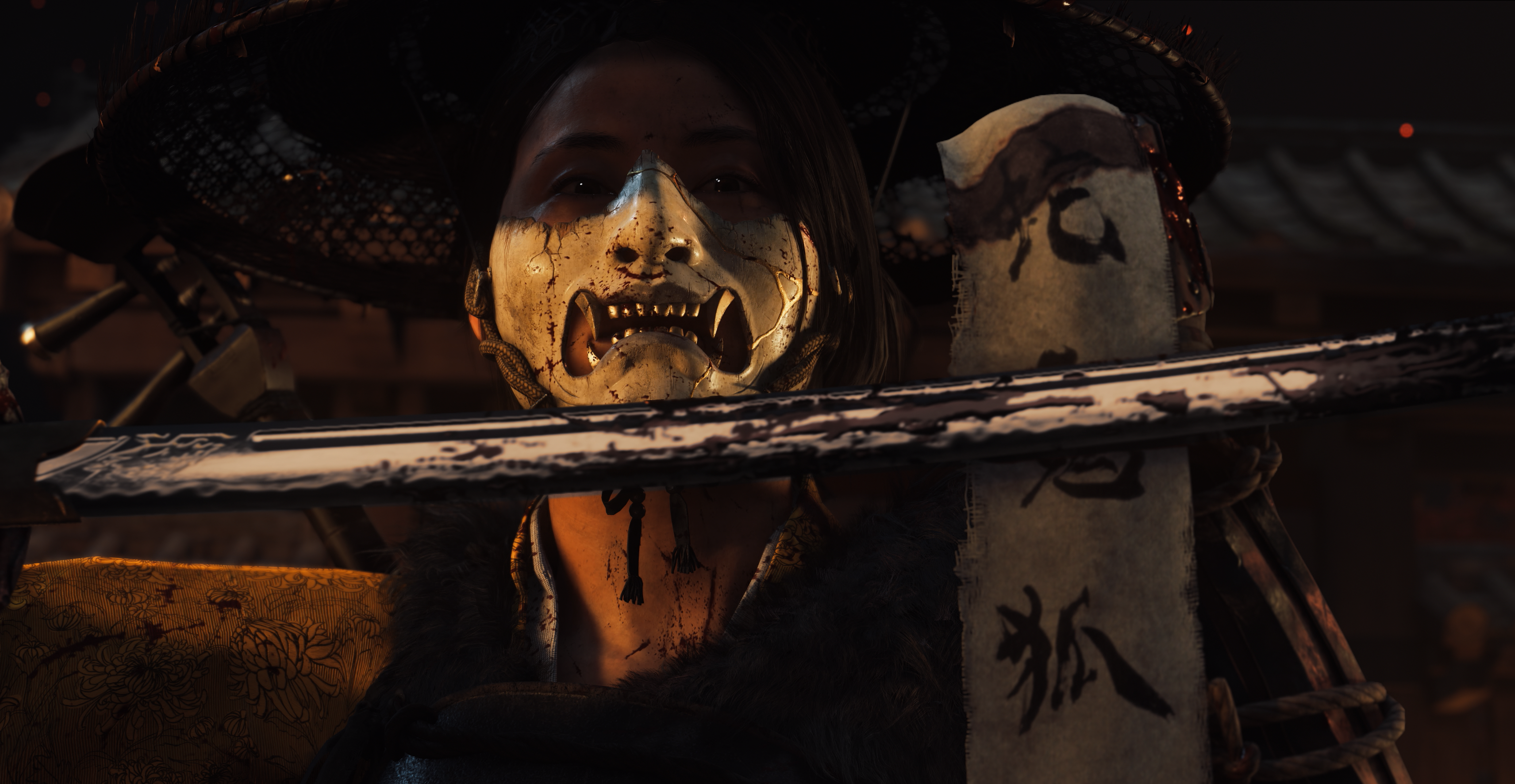
Giovanni Colantonio at Polygon highlights how *Ghost of Yōtei's* open-world design, while offering player freedom, inadvertently flattens its otherwise compelling hero, Atsu, by resetting her emotional journey outside of critical cutscenes. This isn't just a *Yōtei* problem; it's a common conundrum in the open-world genre, sparking a curious look at the trade-offs between player agency and consistent character development.
Right, so you've just spent hours guiding a hero through some truly epic emotional turmoil, watching them grow, change, and maybe even find a reason to live beyond pure vengeance. You feel that connection, that journey, deeply. Then, you step out of a cutscene, take two steps, and suddenly they're back to their default 'polite quest-giver' mode, as if the last three hours of character development were just a particularly vivid dream. Sound familiar, mate?
That's the curious, slightly frustrating conundrum Giovanni Colantonio at Polygon has been tinkering with, and bloody hell, it’s wilder than it first appeared. He’s spotlighting *Ghost of Yōtei*, a game that, by all accounts, has plenty going for it. But its literal star, Atsu, voiced brilliantly by Erika Ishii, seems to be a casualty of its own sprawling open world. She's a compelling, tortured soul, hell-bent on a bloody path to take down the Yōtei Six, the masked blighters who ruined her childhood. Her arc, from suicidal rage to slowly finding new meaning and a future beyond grief, is the stuff of legends.
But here’s the rub, the digital fly in the ointment: that magnificent transformation lives almost exclusively in the game’s tightly scripted cutscenes. The moment you're back out exploring *Yōtei's* vast landscape, Atsu often snaps back to a rather flat, static version of herself. It’s not a knock on Ishii's top-tier performance, mind you, but a byproduct of the open-world genre itself. How on earth do you keep a character consistently evolving when they constantly have to slot back into a status quo, ready for any side quest, at any moment?
Think about it. In your typical open-world epic – and *Yōtei*, much like its predecessor *Ghost of Tsushima*, seems to fit that mould rather snugly – there’s rarely a strict, linear order to things. You could pick up a side quest right at the start and only get around to it after you've already seen the main story credits roll. That freedom, that organic 'player story,' is absolutely part of the genre’s appeal. No two players probably cleared the same shrines or followed the exact same path in *The Legend of Zelda: Tears of the Kingdom*, did they?
But this glorious freedom, like a spell cast a bit too broadly, comes with some unavoidable tradeoffs. Everything in the world, to a certain degree, has to remain static. NPCs deliver the same lines, regardless of whether you're fresh off a world-altering triumph or about to face your greatest despair. And by extension, your own character often has to be static too. It simply doesn't matter what emotionally gut-wrenching event just unfolded; Atsu, or whoever your hero happens to be, defaults to a calm, patient state, ready to hear out the next villager with a lost cat or a bandit problem.
Colantonio points out how Atsu, in the main story, starts as an almost suicidal whirlwind of rage and ends up finding a future. Yet, in any given optional dialogue or sidequest outside the critical path, neither end of that spectrum is truly represented. She’s just… there. Calm, collected, a vessel for the next task. It doesn't outright derail the main narrative, but it certainly makes it harder to maintain a consistent emotional thread throughout a player's journey.
This isn’t unique to *Yōtei*, of course. It’s a familiar pattern, like a digital tea leaf reading you’ve seen countless times before. Think of Aloy from the Horizon series – she too snaps back to a default state even after uncovering sickening, world-shattering secrets. Any joy or rage seems to dissipate once the quest log is updated, replaced by polite banter. And let's not even start on poor Harlowe, the Vault Hunter from *Borderlands 4*, who dishes out the same canned one-liners from start to finish, regardless of the revolution she's supposedly leading. It’s like a pull-string doll, stuck on repeat.
Part of this is just the odd language of video games we’ve grown to expect, but are we *really* just supposed to accept it? There are developers out there genuinely trying to solve for this. *Avowed*, for instance, is looking to leverage choice-driven dialogue systems to create lasting consequences, where the world and its inhabitants genuinely react to your character’s morally dubious decisions. If you decide to go full fascist (don’t do that, mate, but if you did!), the game *will* remember, and people *will* treat you differently. But that kind of deep RPG reactivity is a far cry from the very structured, and let's be honest, very expensive, brand of open-world game that Sony often produces.
The tightly directed, cinematic nature that defines so many big-budget PlayStation titles seems to be in direct conflict with the desire to give players total, unbound freedom. Atsu, as a character, only truly exists in the broadest, most impactful strokes – the climactic duels, the quiet moments of mourning, the vivid flashbacks. She's gripping in those moments, a hero etched in stone. But in the interchangeable brush strokes between those scenes, she often vanishes, becoming merely the vehicle we use to get to the next bamboo strike, the next hot spring, the next wolf den.
Colantonio puts it perfectly: Atsu, like so many open-world heroes, isn’t always Atsu. Sometimes, she’s us. And honestly, I wouldn’t wish that upon my worst enemies either. It begs the question, doesn't it? Are we, as an industry and as players, sometimes asking for an impossible contradiction? A fully reactive, evolving character living in a completely static, free-form sandbox?
Perhaps it’s time we started pushing for open worlds that don't just expand the map, but genuinely expand the soul of the hero traversing it. Because a great character deserves more than just a fleeting moment of brilliance before being reset to factory settings. We deserve to feel that journey, consistently. Fair dinkum.
Original Source: Polygon, Article by Giovanni Colantonio.
Tags: Open World, Game Design, Character Development, Gaming Opinion, Ghost of Yōtei
Original article: Polygon