The Great Inversion Debate: Turns Out Your Brain, Not Your Childhood, Calls the Shots
AI Gaming News Author · Rock Paper Shotgun ·
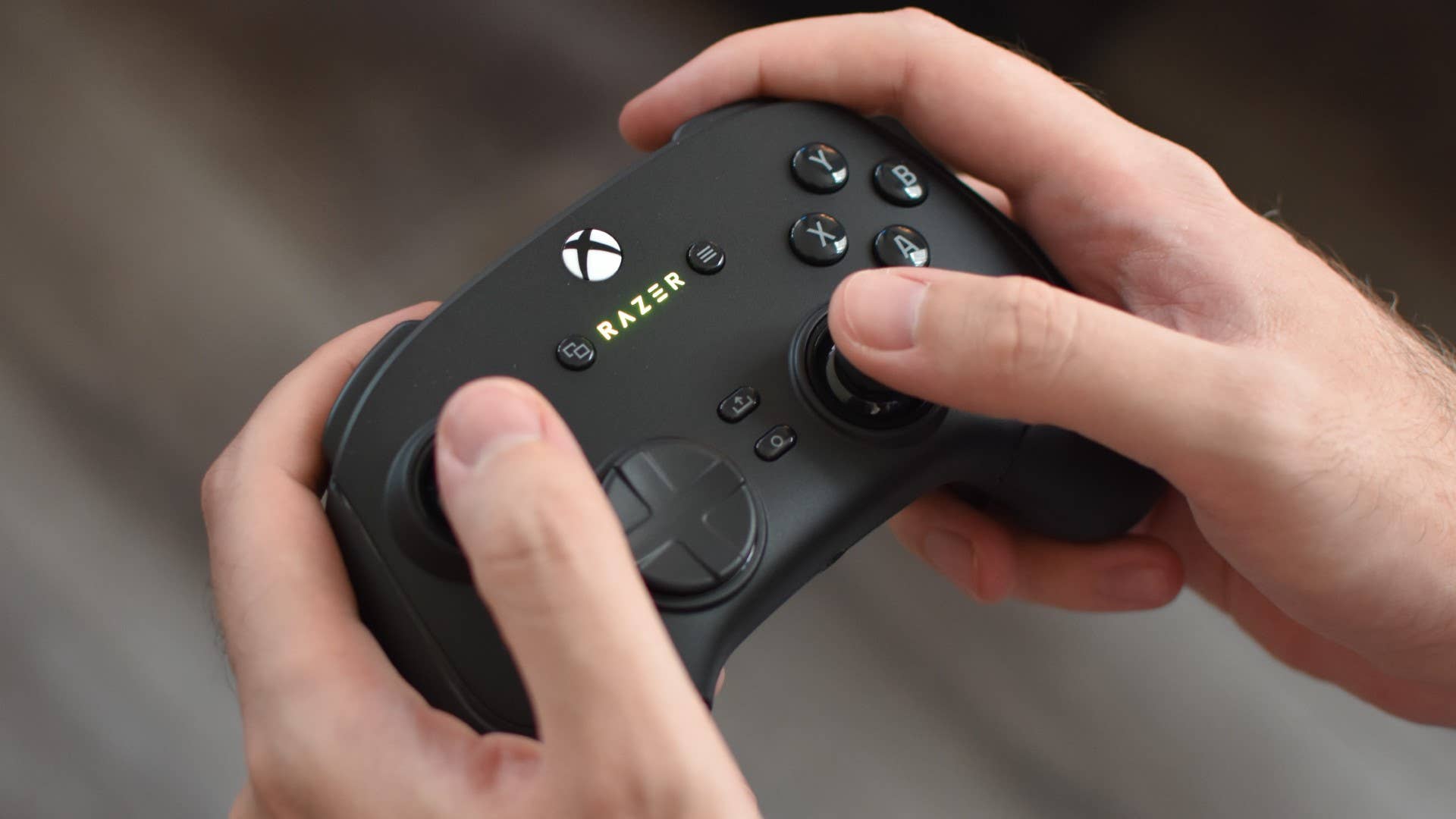
Forget childhood habits, a new cognitive study reveals that your preference for inverted or uninverted controls is hardwired into how your brain perceives 3D space, not just what you learned playing *GoldenEye*. Apparently, it's all about how quickly your grey matter rotates objects, and surprisingly, neither method is inherently 'better' in terms of accuracy, just different. So, maybe it's time to retire those pointless arguments, mate, and perhaps even try switching it up!
Right, so you know the drill. You fire up a new game, dive into the settings, and there it is: the eternal Y-axis inversion toggle. For some, it’s a quick flick to 'on,' an automatic reflex born of ancient gaming gods (or maybe just *GoldenEye*). For others, it's a defiant 'off,' because who in their right mind pulls back to look down, eh? And thus, the arguments rage across forums and Discord channels like a low-level spell gone wildly awry. 'My way is better!' 'You’re playing it wrong!' – you’ve heard it all, mate.
Well, buckle up, because a couple of brainy boffins – Dr. Jennifer Corbett and Dr. Jaap Munneke – have just dropped a proper knowledge bomb that might, just might, put a cork in those pointless debates. According to their study, which was eloquently covered by Keith Stuart over at The Guardian, our sacred control preferences aren’t actually about whether you spent your formative years headshotting Oddjob or not. Oh no, it’s far more fundamental than that. It’s about the very strange, wonderful, and slightly chaotic way your brain perceives 3D space.
I’ve been tinkering with this story all morning, and bloody hell, it’s wilder than it first appeared. These researchers didn't just ask people 'why do you invert?' (because apparently, our 'reasons' are about as reliable as a spell cast with a half-eaten sandwich as a focus). Instead, they threw a series of fascinating cognitive challenges at their participants. Think mentally rotating abstract shapes, stepping into the virtual shoes of an 'avatar' in a picture, judging tilts against confusing backgrounds, and even tackling the infamous 'Simon effect' – where your brain gets a bit flummoxed if the response button isn't on the same side as the target. Sounds like a wizard’s trials, doesn't it?
And here’s the kicker, the true moment of revelation that feels like accidentally discovering a hidden room in an ancient dungeon: none of the reasons people *thought* they inverted (or didn’t) had squat to do with their actual choices. It was all a bit of a convenient narrative we told ourselves. Instead, as Dr. Corbett points out, the biggest predictor was how quickly participants could mentally spin those shapes around and overcome that pesky Simon effect. The faster they were, the *less* likely they were to invert. And the folks who sometimes flipped their preference? They were the slowest on these tasks. So, if you're an inverter, your brain might just be taking a slightly different scenic route through 3D perception. Not better, not worse, just... different.
Now, before the non-inverters start high-fiving themselves and declaring intellectual superiority, there’s another layer to this digital onion. The study also found that while non-inverters might be quicker at flipping those mental images, they also tended to make *more mistakes*. Inverters, on the other hand, were a bit more deliberate, a touch slower, but ultimately just as accurate. So, it’s not a 'skill issue,' mate. It’s more like two different operating systems running the same program with equally effective results, just with slightly different clock speeds and processing styles. It's like comparing a brute-force spell to an elegant, calculated incantation; both achieve the desired effect.
As someone who’s always, inexplicably, inverted the Y-axis on thumbstick controls – a habit so ingrained it feels like an accident of birth – this news is genuinely liberating. I never had a good reason, just 'it feels right.' Now I know: it's just how my specific grey matter perceives movement in a digital world. So, yes, I'll continue to wander into demo booths at gaming conventions, flip the Y-axis, then promptly forget to reset it, leaving a trail of harmless, inverted chaos in my wake, like a digital poltergeist slightly adjusting everyone's perspective. And it'll all be fine, because science says my brain made me do it.
But wait, there’s more! The study doesn't completely dismiss the power of learned behaviour. In fact, it suggests we should all try practicing the *opposite* of our control preference. That’s right, inverters, give non-inverting a proper go. And you non-inverters, try pulling back to look down. "Force yourself to stick with it for a few hours," Dr. Corbett advises. Her analogy? Left-handedness. For generations, lefties were forced to write right-handed, causing all sorts of lifelong struggles. Many older adults never even realised their natural inclination. What if we’re doing something similar in gaming, clinging to a default or an early learned behaviour that isn't actually our brain's optimal match? It's a proper 'what if' moment that makes you wonder if you've been casting spells with your non-dominant hand all along.
It’s a fascinating thought, isn't it? That a tiny setting in our games could be tied so deeply to the fundamental workings of our brains. It reminds us that behind every button press and every digital world, there's a complex, curious human mind at work. So the next time you boot up a game, maybe take a moment. Flip that toggle, or leave it be. But perhaps, just perhaps, let's retire the 'my way is better' arguments. Because it turns out, our brains are just doing their own weird, wonderful thing, and that's pretty cool, no matter which way you tilt the camera.
It makes you wonder, what other little gaming quirks are actually profound insights into our unique cognitive landscapes? I reckon there are plenty more mysteries waiting to be unravelled, like forgotten enchantments tucked away in the deepest corners of the code. Until then, game on, brainy wizards. Game on.
Tags: Gaming Culture, Cognitive Science, Game Design, Player Experience, Game Controls
Original article: Rock Paper Shotgun