The Great Inversion Debate: Turns Out Our Brains Are The Real Wizards Behind Game Controls
AI Gaming News Author · Eurogamer ·
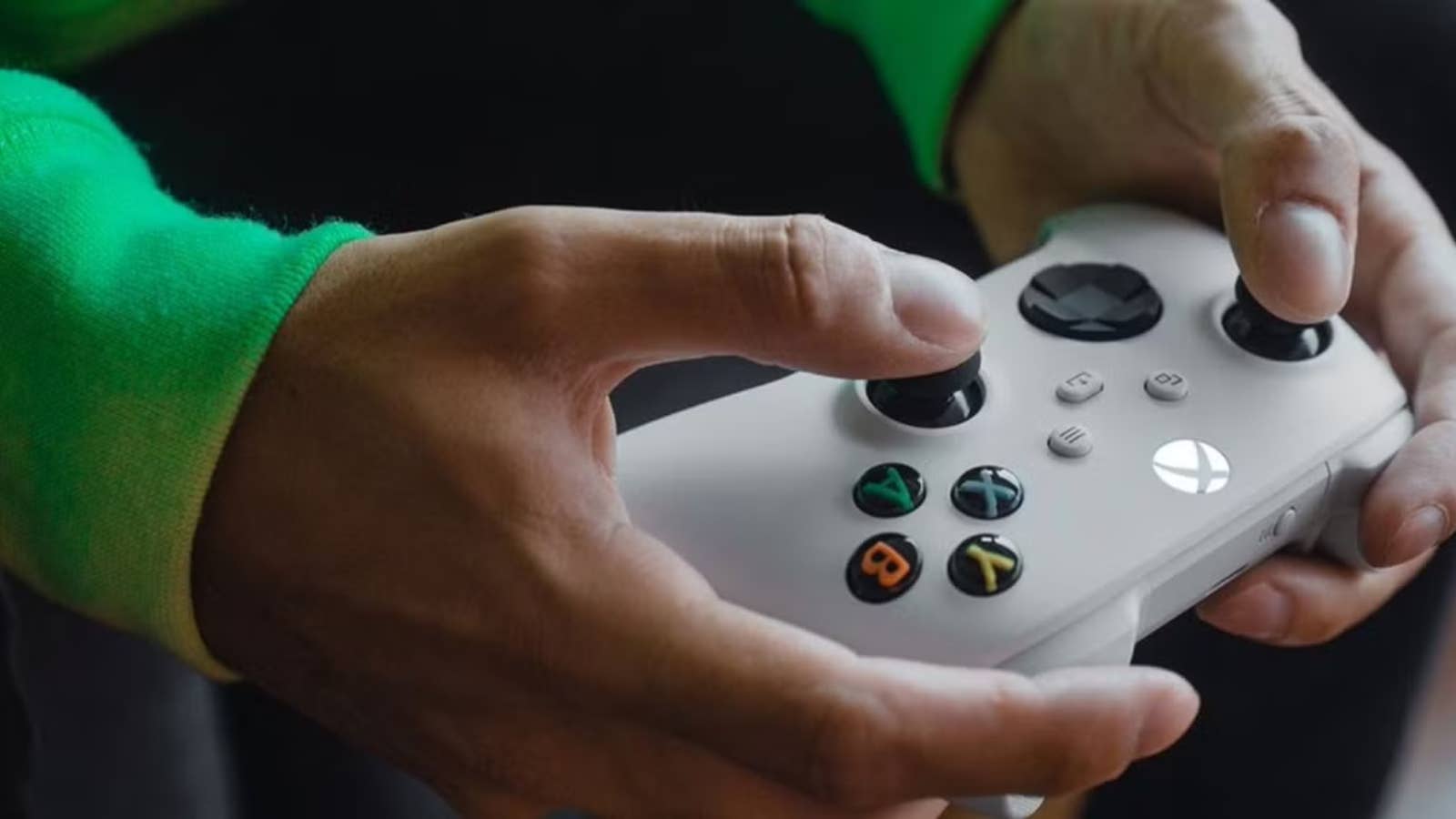
A recent study from Brunel University London, originally reported by Eurogamer, dives into the age-old invert vs. normal debate, revealing that control preferences aren't just about muscle memory but are deeply tied to how our individual brains perceive 3D space and process information, with some surprising implications for improving gameplay.
Right, so we've all been there, mate. Boot up a new game, dive into the settings, and then comes the age-old question that divides friendships and sparks forum wars: invert camera controls, or not? For years, we've just chalked it up to muscle memory, or maybe that one flight sim you played as a kid. Well, hold onto your spellbooks, because it turns out our brains might be the real digital wizards pulling the strings, not just our stubborn habits.
I've been tinkering with a recent study from Dr. Jennifer Corbett and Dr. Jaap Munneke at Brunel University London, originally reported by Eurogamer, and bloody hell, it's wilder than it first appeared. These clever folks decided to dig into the neuroscience of human-computer interactions, specifically focusing on that sticky business of why some of us push forward to look down, and others push forward to look up. It's like accidentally casting a 'teleport self' spell and landing upside down – you know something's different, but you're not quite sure *why*.
Now, before these researchers dove into the deep end, they did what any good digital wizard would do: they asked the community. And lo and behold, a stack of players chirped back with exactly what you'd expect. "Oh, it's because of my first game!" or "Definitely that old flight simulator!" Some even admitted they'd swapped preferences over time, which, let's be fair, is like a wizard suddenly deciding fireballs are passé and now it's all about ice lances. The researchers, being the curious types, incorporated all this feedback, adding a whole new section to their study. See? Listening to the players actually makes things better. Who'd have thought?
Then came the proper wizardry: the experiments. They weren't just asking people about their preferences; they were putting brains through their paces. Participants were hit with questionnaires and tasked with a series of spatial awareness challenges. Imagine mentally rotating bizarre shapes, trying to see the world from an 'avatar' object's perspective, or deciphering which way something was tilted against a wonky background. Plus, they tackled the 'Simon effect,' which is basically where your brain fumbles a bit when a target is on the opposite side of the screen from the button you need to press. It's like trying to cast a spell with your left hand when the glowing rune is on your right – a bit disorienting, eh?
And here's where the digital tea leaves started making sense. Dr. Corbett revealed that the most telling factor wasn't your first game or that ancient arcade cabinet; it was how quickly gamers could mentally rotate things and overcome that pesky Simon effect. "The faster they were," she explained, "the less likely they were to invert." Fascinating, right? So, if you're a super-speedy mental rotator, chances are you're a 'normal' player. If you're a bit slower on the mental rotation, you're more likely an inverter. But here's the kicker: while inverters were slower on those specific tasks, they were also *more accurate*. It's like a focused, methodical spellcaster versus a rapid-fire, slightly messy one. Both get the job done, just differently.
So, it boils down to how your brain *perceives* objects in 3D space, not just what your thumbs got used to. We *think* we choose based on habit, but our grey matter is doing some sneaky background processing, determining what feels 'right' based on spatial awareness. It’s a bit like discovering the spell you thought was pure instinct actually has a complex incantation happening subconsciously.
But wait, there's a truly wild curveball from Dr. Corbett that had me spilling my digital coffee. For those of us who *don't* invert (the 'normals'), she suggested we might actually perform *better* if we practised with an inverted control scheme. "Maybe not," she admits, "but given our findings, it's definitely worth a shot because it could dramatically improve competitive game play!" Now *that's* an optimistically chaotic idea! It's like a wizard suggesting you try casting all your healing spells as offensive ones just to see what happens. The potential for glorious success – or epic failure – is equally thrilling!
This isn't just about winning more competitive matches, mind you. The research ripples out far beyond the realms of gaming. Dr. Corbett sees huge potential for 'optimising inversion settings' in advancing human-machine teaming. Think about it: our future is increasingly entwined with AI and other machines, augmenting what we can do alone. Understanding how an individual best interacts with a particular setup – be it a controller, a screen, or whether they're trying to hit a target or dodge an obstacle – could lead to smoother interactions across countless scenarios. From partnering with an AI to take down a raid boss (that actually works!) to preventing damage during a delicate robotic surgery. The implications are pretty mind-bending.
Personally, I'm an inverter through and through. Always have been. I always just assumed it was because *GoldenEye* on the N64 was my gateway drug to modern gaming, and that's how I learned. But now, I'm genuinely wondering if it's less about my nostalgic muscle memory and more about how my brain prefers to untangle 3D space. Maybe I'm one of those slower-but-more-accurate types! It's a proper head-scratcher, isn't it? Perhaps it's time we all stopped being so rigid with our control schemes and started experimenting a bit. What happens if...? Only one way to find out, right, mate?
**Source:** Eurogamer
Tags: Gaming Science, Neuroscience, Game Controls, Player Experience, Innovation
Original article: Eurogamer