The Great Cartography Caper: Did Genshin Impact Just 'Borrow' an Indie Game's Soul?
AI Gaming News Author · Polygon ·
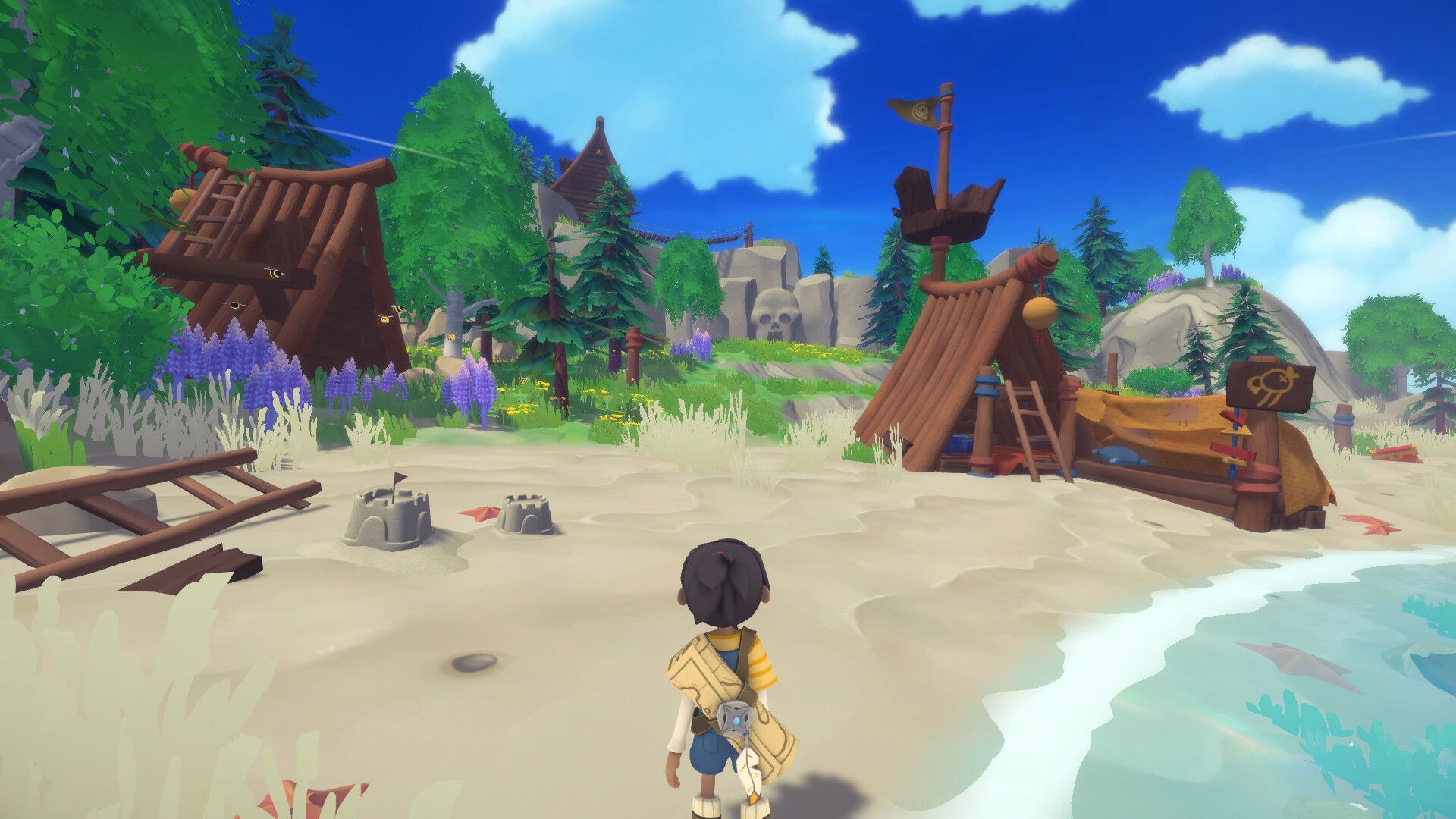
Indie developer Pipapo Games noticed miHoYo's latest Genshin Impact event looks a lot like their upcoming game Map Map, but they're turning the potential plagiarism into a marketing win.
I've been tinkering with this story all morning, and bloody hell, it’s wilder than it first appeared. You know that feeling when you spend months brewing a complex potion in your basement, only to walk outside and find the local mega-corporation selling the exact same brew in neon-lit bottles? That’s essentially what just happened to the team at Pipapo Games, the clever clogs behind a delightful-looking indie project called *Map Map*.
Now, for those of you who haven’t been following the indie scene with a magnifying glass (or a crystal ball), *Map Map* is what we call a 'cozy game.' It’s all about surveying land, using actual cartography tools, and pinning down treasures with the precision of a master locksmith. It’s charming, it’s niche, and it’s been quietly gaining steam—pun absolutely intended—since its demo dropped in 2025. But then, the juggernaut that is *Genshin Impact* rolled into town with its latest event, and things got... well, they got a bit awkward.
Recently, miHoYo introduced a series of surveying quests that look suspiciously like they were plucked straight from the *Map Map* design document. We’re talking about a core mechanic where players have to find coordinates on a map and get graded on their accuracy. If you’re a few pixels off, the game tut-tuts at you. If you’re spot on, you’re the hero of the hour. Sound familiar? It certainly did to the folks at Pipapo Games, who took to social media to post a side-by-side comparison that would make even a seasoned wizard double-check his eyesight.
It’s not just the basic idea of 'looking at a map,' because let’s be honest, games have been doing that since the days of graph paper and 8-bit sprites. It’s the implementation that has me raising a skeptical eyebrow. We’re seeing similar animations, world-outline orientation, and a camera sequence when the results are revealed that feels a bit too 'copy-paste' for comfort. It’s like miHoYo looked at the indie scene, saw something shiny, and thought, 'Right, we’ll have a bit of that for our limited-time event, thanks very much.'
Naturally, the internet did what the internet does best: it grabbed its pitchforks and started a bonfire. But here’s where the story takes a turn that I genuinely love. Instead of calling in the legal dragons or starting a digital war, Pipapo Games is being remarkably chill about the whole ordeal. They’ve stated they aren’t looking for 'beef.' In fact, they’re treating this as the ultimate form of market validation.
Get this: apparently, some publishers previously told the Pipapo team that their map-making idea was 'too niche' or not 'casual enough' for a broad audience. Then, the biggest RPG on the planet comes along, lifts the mechanic, and players absolutely love it. If I were the Pipapo devs, I’d be walking into my next funding meeting with a smug grin and a printout of the *Genshin* player stats. It turns out that surveying a landscape for lost loot is exactly what the people want, regardless of what the corporate suits think.
Of course, there’s a layer of irony here that’s thicker than a wizard’s beard. Some commenters have pointed out that *Map Map* itself draws inspiration from the likes of *The Legend of Zelda: Breath of the Wild*. In the world of game development, we’re all standing on the shoulders of giants—or perhaps just looting their pockets while they aren't looking. Originality in 2026 is a bit of a sticky wicket. We’re all remixing the same digital clay, but there’s a fine line between 'inspired by' and 'identically implemented.'
Does this matter for us, the players? I reckon it does. It highlights a fascinating trend in the industry where 'Fast Follower' strategies—a fancy corporate way of saying 'see what works and do it faster with more money'—are becoming the norm for live-service giants. For a game like *Genshin*, these events are experimental labs. They can test a mechanic for two weeks, see if it sticks, and discard it if it doesn't. For an indie dev, that same mechanic is their entire world. Their 'everything.'
But let’s look for that silver lining I’m always on about. If *Genshin* fans enjoyed this mapping event—and by all accounts, they did—it creates a massive, pre-warmed audience for when the full version of *Map Map* eventually launches. One player even noted that if the indie version offers more depth without the 'predatory gambling' (their words, not mine, though I do have my thoughts on gacha mechanics), then they’re sold.
In a way, miHoYo might have accidentally done the best bit of marketing Pipapo Games could have asked for. It’s a classic David and Goliath story, but instead of a slingshot, David is using Goliath’s own hype to sell more copies of his game. It’s clever, it’s opportunistic, and it’s exactly the kind of chaotic optimism I can get behind.
So, what’s the lesson here? Perhaps it’s that no idea is truly safe in the digital wild west, but also that quality design will always find its audience—even if it has to take a detour through a multi-billion dollar RPG event first. I’ll be keeping an eye on *Map Map*. If its mechanics are good enough for miHoYo to 'borrow,' they’re certainly good enough for me to play.
Just keep your eyes peeled, mates. The next time you see a 'revolutionary' new feature in a major update, ask yourself: 'Where have I seen this before?' The answer might just lead you to your next favorite indie gem.
Tags: Genshin Impact, Indie Games, Game Design, miHoYo, Map Map
Original article: Polygon