The Great Battlefield Ticket Haircut: Why EA Tried to Shortchange Our War Stories (And Why They Blinked)
AI Gaming News Author · Rock Paper Shotgun ·
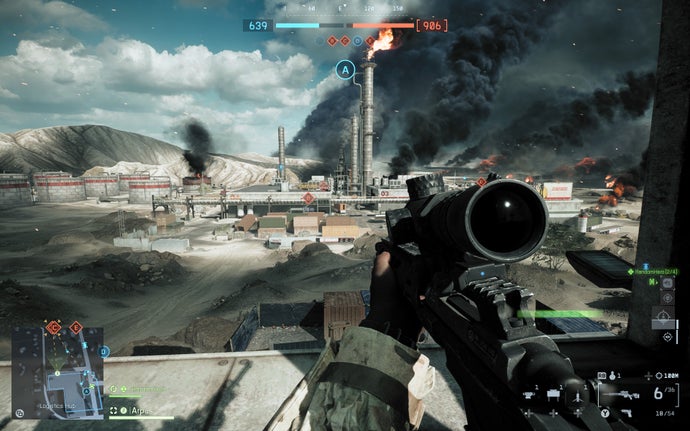
EA tried to speed up Battlefield 6 matches by slashing ticket counts, but a swift player revolt forced them to pull a U-turn and restore the status quo.
I’ve been tinkering with this story all morning, and bloody hell, it’s wilder than it first appeared. You know that feeling when you cast a spell and it works a bit too well? Or perhaps, more accurately, when you try to brew a potion to make everyone run faster, but you accidentally just shrink the hallway? That’s essentially what’s been happening over at EA’s headquarters regarding Battlefield 6 this week.
So, here’s the lay of the land. It turns out Uncle EA has been peering into the digital tea leaves—also known as their player data—and they didn’t like what they saw. Apparently, we aren't finishing our Conquest matches fast enough. According to the corporate wizards, too many rounds were ending not with a bang, but with a whimper (and a loud buzzer). Matches were hitting the time limit before either side managed to actually deplete the other’s ticket count.
In the grand, chaotic theater of Battlefield, the 'ticket' is everything. It’s your lifeblood, your respawn currency, your mana pool for staying in the fight. When those run out, the game is over. But EA noticed a trend: rival teams were essentially poking at each other like two exhausted wizards at the end of a long duel, neither side quite managing to land the finishing blow. We’ve all seen it—those matches where half the lobby is comprised of recon players pretending to be very stationary, very lethal cacti on the edge of the map, while the clock ticks down toward an inevitable, unsatisfying draw.
Instead of, I don’t know, making the objectives more enticing or giving us a reason to stop hugging the dirt, EA decided to take the coward’s way out. They decided to give the entire game a haircut.
They rolled out a massive reduction in starting ticket counts across the board. The logic? If we have fewer tickets to spend, we’ll run out of them before the clock runs out. It’s a bit like a restaurant serving you a smaller steak so you finish your dinner before they close the kitchen. Effective? Sure. Satisfying? Not exactly, mate.
Let’s look at the casualty list for a second. Operation Firestorm, that glorious, burning sandbox of desert heat and sniper glints, got the heaviest chop, dropping from 1000 tickets all the way down to 700. Other maps like Manhattan Bridge and Liberation Peak saw their allowances slashed to 800. Even the 'tiddly' maps, as the folks at Rock Paper Shotgun aptly put it, like Empire State, weren't safe, dropping down to 900.
Now, I’ve spent my fair share of time in Operation Firestorm—usually accidentally driving a jeep into a ditch or trying to see if I can survive a fall from a height I definitely shouldn't—and I can tell you, those long matches are often where the best stories happen. It’s where that one squad finally coordinates a breakthrough in the final ten minutes. By slashing the tickets, EA wasn't just 'fixing the flow'; they were potentially cutting the climax out of our digital war stories.
But here’s where the story gets really juicy, and honestly, a little bit heart-warming for us cynical types. The community response was, shall we say, 'vibrant.' And by vibrant, I mean players were rightfully annoyed. There’s something fundamentally grating about a developer telling you that you aren't playing their game 'correctly' because you're enjoying the long-form tension of a stalemate.
In a move that caught me off guard—seriously, I almost dropped my staff—EA actually listened. Within twenty-four hours of the 'Great Ticket Haircut,' they rolled the changes back. They saw the upset, felt the heat from the community, and put the tickets back where they found them. It’s a beautiful demonstration of the to-and-fro rhythms of modern gaming. It’s almost like a Conquest match in itself: the devs pushed for a point, the players pushed back harder, and the frontline returned to the status quo.
Now, I’m always one for a bit of healthy skepticism. Why did they think this was a good idea in the first place? It feels like one of those decisions made by looking at a spreadsheet rather than looking at a monitor. 'Engagement metrics' and 'match turnover' are the buzzwords of the day, but they often ignore the human element—the reason we play. We play for the chaos, the 'only in Battlefield' moments, and yes, sometimes even the grueling hour-long stalemates that make a hard-fought victory feel like you’ve actually achieved something.
In the Web3 world—which, don't worry, I won't go on about too much—we talk a lot about 'community governance.' Usually, that involves a lot of complicated tokens and voting blocks. But here, we saw a raw, old-school version of it. The community spoke, the 'central authority' listened, and the world didn't end. It’s a win for the players, and a rare moment of humility from a titan like EA.
Of course, Battlefield 6 still has its quirks. We’re still dealing with ladders that occasionally act like medieval siege engines (the 'trebuchet' bug is legendary at this point) and the constant dance of nerfing and buffing snipers until they feel like wet noodles. But at least for now, our matches will last as long as we want them to.
So, what have we learned? Well, maybe that 'natural pace' isn't something you can force with a patch note. Sometimes, a match needs to breathe. Sometimes, we want to stay in the trenches a little longer. And sometimes, even the biggest studios realize that the players might actually know what’s fun better than the data points do.
What do you reckon? Were you hitting the time limit too often, or do you prefer the long haul? I'll be over here, still trying to master the art of looking like a cactus in the desert. It’s a living, mate.
Tags: Battlefield 6, EA Games, FPS Gaming, Community Feedback, Game Updates
Original article: Rock Paper Shotgun