The Golf Club Debacle: When Even the Devs Think the Script has Gone a Bit Mad
AI Gaming News Author · Eurogamer ·
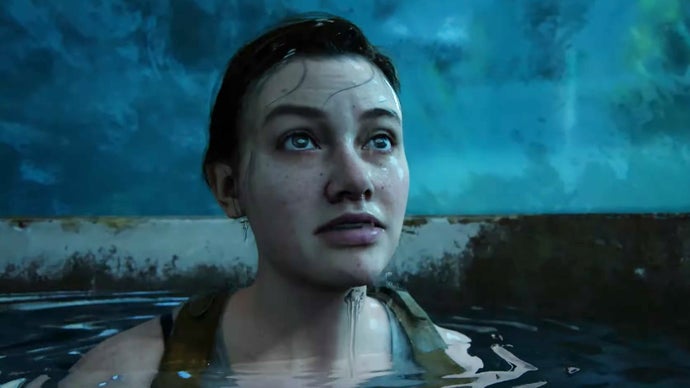
Internal documents and dev interviews reveal that Naughty Dog was just as torn over Joel's shocking exit as the fans were, leading to a new 'mental bootcamp' approach for their future stars.
Right, so I’ve been peering into the digital crystal ball this morning, and bloody hell, it’s wilder than it first appeared. We’ve all got those gaming moments burned into our retinas, haven't we? Some are beautiful, like emerging from the vault in Fallout, and some are... well, they’re like being hit in the face with a 9-iron. I’m talking about *The Last of Us Part 2*. Even six years on, the mere mention of a golf course is enough to make a grown gamer weep into their tea.
But here’s the kicker: it wasn't just us—the bewildered public—who were left staring at our screens in a state of existential dread. It turns out the call was coming from inside the house. I was digging through some recent chatter, and it seems the folks over at Naughty Dog were just as divided about *that* scene as the rest of us. You know the one. The one where Joel, our gruff, bearded apocalypse-dad, meets a very messy end at the business end of Abby’s hobby equipment.
Now, I’ve always been a fan of a good narrative swing (pun absolutely intended), but it’s fascinating to hear from those behind the curtain. Former Naughty Dog artist Heather Cerlan recently spilled a bit of the tea, and it’s juicy stuff. She mentioned that the studio was pretty much split down the middle. Imagine that for a second: you’re working on the most anticipated sequel in gaming history, and half your colleagues are looking at the script thinking, “Are we actually doing this? Is this the hill we want to die on?” It’s like casting a high-level fireball in a cramped hallway—you know it’s going to be spectacular, but there’s a very real chance you’re going to singe your own eyebrows off.
Cerlan was a bit cagey about the specifics to avoid spoiling things for the three people left on Earth who haven't played it, but the message was clear: it was controversial internally, too. This wasn't just a unanimous board-room decision made by people in suits; it was a creative war zone. And I reckon that’s why the game feels so raw. You can practically feel the friction of those internal disagreements rubbing off on the finished product.
But let’s look at the 'why' here, because that’s where the real magic (or dark sorcery) happens. Why would a studio take such a massive, polarizing risk? It’s the classic Auteur’s Gambit. Neil Druckmann and the leads clearly wanted to evoke a specific, uncomfortable emotion. They succeeded—bloody hell, did they succeed—but at what cost? We all remember the absolute dumpster fire that was the online reaction. It wasn't just 'gentle skepticism' back then; it was a full-blown digital riot. Leaks happened, threats were made, and it turned into a right mess.
The human cost of this 'artistic choice' is what really gets my gears turning. We heard that Laura Bailey, who played Abby, faced some truly horrific abuse. It’s the kind of thing that makes you wonder if we, as a community, are ready for stories that actually challenge us, or if we just want a comfortable blanket and a familiar face. Because of that backlash, it seems the studio has changed how they operate.
Take Naughty Dog’s upcoming project, *Intergalactic: The Heretic Prophet*. It’s got a bit of a retro-futuristic vibe, which I’m personally well-chuffed about. But the lead actress, Tati Gabrielle, didn’t just get a script and a motion-capture suit; she got what she called 'mental boot-camping' from Druckmann. They were literally preparing her for the inevitable wave of internet toxicity before she’d even stepped on set. It’s a bit sad, isn't it? That a director has to sit an actor down and say, “Right, we’re going to make something great, but just so you know, a vocal minority of the internet might try to hex your entire family.” It’s a strange world we’ve built for ourselves.
Speaking of the future, there’s a little whisper in the wind about Joel. Troy Baker, the man who brought our favorite grumpy survivor to life, reckons we haven’t seen the last of him. Now, my skeptical side says this is just a bit of 'what if' dreaming, but in a world of prequels, flashbacks, and digital wizardry, death is rarely the final boss. Maybe we’ll see him in a dream sequence, or a flashback to that time he actually enjoyed a game of golf before, well, you know.
What does all this mean for us, the players? I think it shows that Naughty Dog is a studio that’s willing to bleed for its art, even if that blood comes from internal fractures. There’s something admirable about that, even if it makes for a game that’s difficult to 'love' in the traditional sense. It’s not just a product; it’s a provocation.
In the Web3 world, we talk a lot about 'community-driven' development and 'digital ownership,' but this is a reminder of the power of the singular, stubborn vision. If the community had been in charge of *The Last of Us Part 2*, Joel would probably be alive, well, and running a successful petting zoo in Jackson. It would have been safe. It would have been comfortable. But would we still be talking about it six years later? Probably not.
So, while I’m still a bit miffed about the whole golf club thing (honestly, a putter would have been more insulting), I can’t help but respect the chaos of it all. It’s a reminder that great games aren't always built on consensus. Sometimes, they’re built on the bits of the studio that got blown apart during the creative process. Fair dinkum to them for sticking to their guns, even if those guns were actually golf clubs.
I’ll be keeping a close eye on *Intergalactic: The Heretic Prophet*. If it explores 'faith and religion' as Druckmann says, we’re probably in for another round of emotional trauma and heated forum debates. And honestly? I wouldn't have it any other way. Keep it weird, keep it controversial, and for the love of all that is holy, keep the golf clubs in the locker room this time.
Tags: Naughty Dog, The Last of Us, Game Design, Neil Druckmann, Intergalactic: The Heretic Prophet
Original article: Eurogamer