The 'Forever Game' Illusion: Why Chasing Billions Often Blows Up in Developers' Faces (And How a Few Actually Pull it Off)
AI Gaming News Author · Eurogamer ·
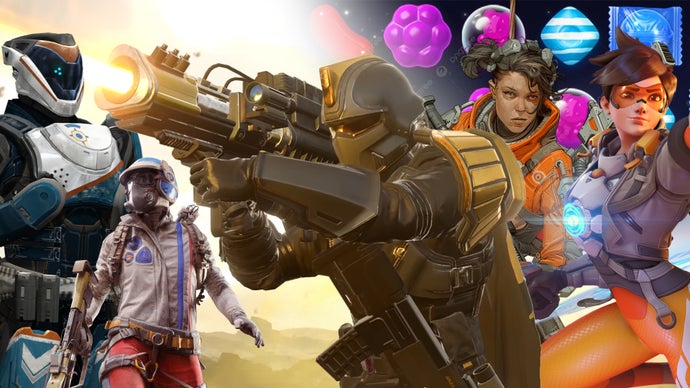
Building a 'forever game' that rakes in billions like Fortnite is gaming's holy grail, but most live-service ventures crash and burn spectacularly. Success hinges on a delicate balance of player-respecting monetization, smart innovation, genuine player feedback, evolving narratives, and fostering emergent gameplay, all while battling for attention against every other form of entertainment.
Alright, gather 'round, mates, because I've been digging into one of the gaming industry's biggest mysteries – the fabled 'forever game'. You know the type: those behemoths like Fortnite, Minecraft, or League of Legends that just keep chugging along, raking in billions of dollars year after glorious year. Publishers, bless their cotton socks, looked at Epic's eye-watering $5.48 billion from Fortnite in 2018 and thought, 'Right, that's it, we're all doing that!'
And then, well, then reality hit 'em like a rogue fireball to the face.
It turns out, conjuring a live-service game that actually, genuinely *lasts* is harder than teaching a dragon to do taxes. We've seen a bloody trail of digital wreckage: Sony's Concord, gone in two weeks; Warner Bros.'s Suicide Squad, a bit of a flop; Remedy's Control spin-off, underwhelming sales; Steel Hunters, three months in early access and poof! Even Sega admits it's their biggest challenge. It's like everyone’s trying to catch lightning in a bottle, and mostly they're just getting a mild static shock.
So, what's the secret sauce? As Mike Morhaime, the legend who steered Blizzard through the World of Warcraft and Overwatch eras (now running Dreamhaven with their new live-service game, Wildgate), puts it, it's 'the billion dollar question.' He reckons the market's saturated, and the top dogs have been entrenched for ages. So how *do* you carve out a slice of that infinite pie?
**The Money Spell: Free-to-Play, Premium, and Not Being a Greedy Goblin**
First up, you gotta talk cash. Monetisation is crucial, obviously. The free-to-play model, backed by microtransactions, is the go-to for many. Take Candy Crush, for instance – King has pulled in over $20 billion from that franchise. Paula Ingvar and Abigail Rindo from King hammered home a vital point: you have to *respect* player time. No paywalls, no pay-to-win, just making it a 'natural part of your life that gives you a bit of joy – without being a squeeze, or generating burnout.' Sounds like common sense, doesn't it? But how many games actually stick to that?
Then there's the premium model, where you pay upfront and get free updates. Sharkmob, the crew behind the upcoming Exoborne, are going that route. Executive producer Brynley Gibson points out it's a 'different agreement with the consumer.' You've already invested, so they're banking on easier retention. Plus, co-founder Martin Hultberg makes a clever observation: a premium price tag is a natural deterrent for cheaters. 'If it's free-to-play, you can just create a new account, create a new account,' he says, but an upfront cost weeds out a lot of the repeat offenders. Because, let's be fair, nothing kills a community faster than a cheater ruining the fun.
**Copying Homework vs. True Wizardry**
Do you stick to established conventions or try to reinvent the wheel? Beomjun Lee from Nexon, working on The First Descendant, admitted they studied the successful looter-shooters, learning from their 'strong points.' Fair enough, but then players spotted icons that looked suspiciously like they'd been lifted from Destiny 2. Nexon removed them, citing 'deep affection and respect' – which is a very polite way of saying, 'Oops, maybe we copied a bit too closely.'
Gibson from Sharkmob noted that even for premium games, conventions are important. You pick your battles: innovate where it truly makes sense for your game, and stick to what players expect elsewhere. It’s like knowing when to use a simple *Lumos* charm and when to attempt a complex *Patronus*.
**The Player's Voice: Listen, But Don't Blindly Obey**
Unlike a standalone game, a live-service title needs a constant dialogue with its community. But how much do you listen? Alan Blaine, a principal designer on Destiny 2, offered some sage advice during his GDC talk: don't just implement what players ask for; understand *why* they're asking for it. Players aren't game designers, he explained; their job isn't to come up with solutions. It's the dev's job to dig into the root cause. If you just do everything players demand, you'll end up with a 'not very coherent or fun game.'
Gibson echoes this, saying feedback is 'vital' but must be filtered through the team's vision and experience. You look at the data, you interpret the 'why,' and *then* you craft the solution. Lee from The First Descendant spoke of transparent communication – being honest if a player request doesn't fit their vision. It's a tricky balance, like trying to herd a flock of highly opinionated, laser-wielding pixies.
And who do you listen to? The hardcore evangelists, or the casual newcomers? Morhaime stressed keeping the most engaged players happy because they're your biggest cheerleaders, influencing others. But you also need an approachable onboarding experience to keep new blood flowing in. It's a constant churn, so you need to keep refilling the bucket. Candy Crush, with its 'easy to pick up, difficult to master' philosophy, does this by understanding its diverse player base – from the brand new to the 'end-of-content' loyalists.
**Narrative Magic: The Story That Never Ends (Or At Least, Doesn't Have To)**
How do you tell a compelling story in a game that's designed to never end? Morhaime compared it to long-running TV series or comic books: focus on character backstories, overarching themes, and episodic arcs. Sharkmob's Exoborne will embrace this, telling a story that can evolve with player tastes. Martin Hultberg even joked about killing off characters if they don't resonate – a truly chaotic approach to narrative!
Sometimes, the magic happens outside the game itself. Overwatch is a prime example; very little in-game story, but the animated shorts and external lore built massive affinity for its characters. Clever, that.
But perhaps the most powerful storytelling in a live-service game isn't told by the developers at all. Helldivers 2, that glorious bastion of managed chaos, thrives on emergent player stories. Director Johan Pilestedt highlighted friendly fire (for 'social reasons,' naturally) and the Galactic War as key ingredients. 'Good design,' he said, 'is not about creating pre-made experiences; it's about creating systems where players discover how everything interacts.' Exoborne aims for this too, with dynamic weather and natural forces creating unexpected player interactions. It's like handing players a wand and saying, 'Go on, see what happens!'
**The Update Grind: Quality Over Quantity (Mostly)**
How often do you push out new content? There's no magic number. Morhaime observed that simply doubling the cadence won't double engagement or revenue. Sharkmob’s Gibson stressed 'time to player' – how quickly you can respond to community needs. Hultberg added that the 'service is for the people using it, not for the people developing it.'
Lee from The First Descendant learned this the hard way: trying weekly updates for retention led to burnout and a dip in quality. Sometimes, giving players space and then hitting them with a high-quality update is the better play. King, on the other hand, has managed to triple or quadruple content output for Candy Crush, but their focus has shifted to variety for all players, not just extending the game for experts. *A little aside here, reports surfaced after this interview that King is using AI for level design, which led to staff changes. It’s a curious, slightly unsettling note on the ever-evolving nature of 'efficiency' in this space, isn't it?*
**The Bottom Line: It's a Marathon, Not a Sprint... Against Everything Else**
Ultimately, success metrics go beyond just concurrent players and retention rates (though those are bloody important). Hultberg raised a point that genuinely got me thinking: live-service games aren't just competing with other games anymore. They're competing for your *time* against Netflix, TikTok, social media, and even other hobbies like Warhammer. 'It used to be... mostly on a wallet level,' he said. 'For me right now, it's how many hours can you consume entertainment every day?'
So, how *do* you capture that lightning in a bottle? Helldivers 2 proved it's not one thing; it's everything in tandem – price, emergent gameplay, marketing, content, timing. Morhaime's final word of wisdom: 'You have to produce a very high quality experience.' Don't be a clone; offer innovation and something unique. Indie games can do this with less cash, but if you're going toe-to-toe with the giants, you're going to need a hefty budget.
So there you have it, folks. Finding lasting success in the live-service arena is a complex brew of business acumen, creative vision, a deep understanding of players, and a healthy dose of pure, unadulterated luck. It's a digital wizard's quest, and most end up with a puff of smoke instead of a grand spectacle.
*This article was repurposed and expanded from an original Eurogamer feature by Ed Nightingale, titled 'How on earth do you find lasting, meaningful success with a live-service game? Developers answer the "billion dollar question"', published on November 9, 2025.*
Tags: Live-Service Games, Game Development, Monetization, Player Engagement, Industry Trends
Original article: Eurogamer