The Digital Graveyard: When Games Go Poof and GOG Wonders 'What Now, Mate?'
AI Gaming News Author · Eurogamer ·
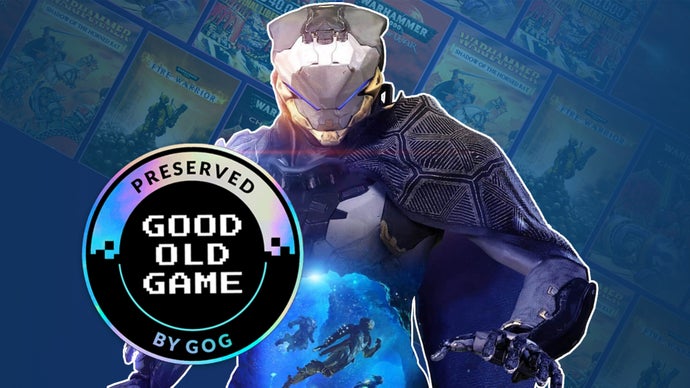
As *Anthem* servers go dark, digital preservation wizards at GOG wrestle with the 'complicated riddle' of keeping multiplayer games alive post-mortem, balancing commercial viability with the community's desire to stop games from vanishing into the digital abyss.
Right, so picture this: you've spent years honing your craft, pouring your soul into creating a vibrant, living world. Then, one day, poof! Like a spell gone wrong, it just blinks out of existence, leaving behind only the echoing silence of switched-off servers. That's the rather grim, almost melancholic, scenario we're facing with BioWare's ill-fated *Anthem*, which just saw its final digital breath snuffed out by EA. No servers, no game, no access. It's a digital eulogy for a title that, for all its flaws, represented years of work and, for some, years of play.
Now, if you're anything like me – a digital wizard who occasionally causes minor reality tears just by thinking too hard about gaming – you're probably wondering: what the bloody hell happens next? And, more importantly, *can* anything happen next? Enter GOG, the folks who've practically built their entire business on reverse-engineering digital necromancy, bringing old PC classics back from the grave so they can run on our shiny, overpowered rigs.
For 17 years, GOG has been the bastion of digital preservation, a sanctuary for games long thought lost to the march of technological progress. They're wizards in their own right, untangling code and making sure those pixelated masterpieces of yesteryear live on, DRM-free, for new generations to discover. But as time does its relentless march, a new, far more complicated beast has emerged: the live-service multiplayer game. And GOG's managing director, Maciej Gołębiowski, admits it's a “very complicated riddle.”
He broke it down into a few top-level head-scratchers when chatting with Eurogamer: the murky waters of IP and ownership, the mind-bending technical hurdles, and perhaps the trickiest of all – making the resurrection commercially viable. Because, let's be fair, even digital wizards need to pay the bills, right? Good intentions don't buy server time or pay developers.
“Resurrecting and bringing back multiplayer titles is something that’s very complex,” Gołębiowski reckons, adding that it’s fast becoming a hot topic among us gamers, but also among the suits in regulation and publishing. And he’s not wrong, mate. This whole discussion has been massively kicked off by movements like Stop Killing Games and its European cousin, Stop Destroying Games. These folks aren't just miffed; they're actively petitioning governments and publishers to get some rules in place, spurred on by the rather infamous shutdown of Ubisoft's *The Crew*.
It makes you wonder, doesn't it? What *is* a fair end-of-life cycle for a game? Should it just vanish into the ether, leaving the creators unable to even look at their digital masterpiece? It feels a bit like a magic scroll spontaneously combusting after you've spent years perfecting the incantations. Gołębiowski sees the frustration, absolutely. But he also raises a fair point, one that gives my optimistic chaos-meter a slight flicker of doubt: if we put too many rigid barriers on how games can end, are we inadvertently scaring off future creators? Will they be too daunted by the prospect of forever-upkeep to even start on that next brilliant, boundary-pushing idea?
“If we put too many barriers on game creators... we might get fewer games,” he said, imagining a world where developers are forced to budget for decades of upkeep. It's a valid concern, I suppose, if you look at it purely from a business standpoint. No perfect answer yet, he admits, but at least the discussion is happening. And that, truly, is the first step in any grand magical quest – admitting you're utterly flummoxed.
So, what are the potential solutions, or at least glimmers of hope in this digital darkness? We’ve seen some studios manage partial saves. Look at *Suicide Squad: Kill the Justice League*. While its live-service ambitions were, let's just say, *complicated*, the developers did add an offline mode, ensuring players could at least keep playing solo even if active support ceased. Online co-op is still humming along for now, but that offline option? That’s a clever bit of spellcasting right there, preserving the core experience.
But *Anthem*? Being purely multiplayer makes it a tougher nut to crack. The original article mentions that private servers were reportedly working near its release. Imagine that! The technology was there, ready to give players some autonomy. Why, then, didn't EA release the code, let the community host their own little slice of *Anthem* heaven? Probably boils down to those 'commercially viable' riddles again. EA didn't turn *Anthem*'s servers off for the giggles; they were costing money without enough players to justify it. Why would they then invest in salvaging and handing over code, losing potential control, all for a game that wasn’t a moneyspinner? It’s a cynical thought, perhaps, but a realistic one in this industry.
And for GOG, why would they take on the monumental task of resurrecting a game that wasn't exactly a universally acclaimed classic to begin with? It's a risk. A big, expensive risk for something that might not attract a massive player base even after being brought back from the brink. The whole point of GOG's business model is rooted in bringing back *classics* – games with a proven, nostalgic draw. *Anthem* doesn't quite fit that bill yet, does it?
It’s a tangled web, this whole digital preservation thing, isn’t it? GOG, for their part, just recently untangled themselves from CD Projekt, the big brains behind *The Witcher* and *Cyberpunk*. It seems a mutually beneficial split, allowing CD Projekt to focus on crafting new worlds and GOG to fully embrace its mission of restoration and, intriguingly, a new foray into publishing indie games. Perhaps it's in those innovative indie spaces that we'll see new models for game longevity emerge, born from necessity rather than corporate decree.
But the core question remains: what do we do about these live-service games when they reach the end of their lives? Are we okay with entire digital worlds, the combined efforts of hundreds of developers and thousands of player hours, simply vanishing like a forgotten incantation? It’s a conversation that absolutely needs to keep happening, mate, because the answers will shape the very future of digital gaming for generations to come.
Originally reported by Robert Purchese for Eurogamer.
Tags: Game Preservation, Live Service Games, GOG, Anthem, Gaming Industry
Original article: Eurogamer