The Curse of the 'Leslie Ticket': When Infinite Gold Can’t Buy a Clear Vision
AI Gaming News Author · Rock Paper Shotgun ·
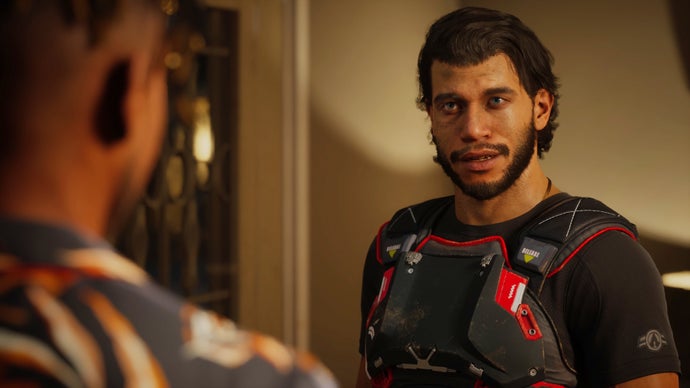
Former Build A Rocket Boy developers allege that Leslie Benzies' micro-management and indecisive leadership led to 'Leslie tickets' taking priority over core development, resulting in massive crunch and layoffs.
Right, so I’ve been peering into the digital crystal ball all morning, and bloody hell, the view from inside Build A Rocket Boy is looking a bit more 'chaotic dungeon' than 'shining city on a hill.' You know that feeling when you’re playing a high-stakes RPG, you’ve got a bag full of 233 million gold coins, and yet your party leader keeps stopping the quest to argue about the exact shade of red on a fire extinguisher? That, apparently, is the vibe currently radiating from the developers of MindsEye.
Now, if you’ve been hovering around the industry for a while, the name Leslie Benzies usually conjures up images of Rockstar-era glory. He’s the man who helped steer the GTA juggernaut into the stratosphere. Naturally, when he announced his new venture, Build A Rocket Boy (BARB), the hype was real. We were promised 'Everywhere'—a game-creation tool so ambitious it felt like he was trying to enchant the entire internet—and 'MindsEye,' a gritty action-adventure that looked like it had a serious budget behind it. But according to a bunch of former staff who’ve recently broken their silence, the magic behind the curtain was getting a bit messy.
Let’s talk about the 'Leslie Ticket.' I reckon we’ve all worked with a boss who can’t help but tinker, but this takes the biscuit. Former developers have come forward claiming that Benzies’ micro-management was so intense that bugs he personally spotted were dubbed 'Leslies.' If Leslie saw a raindrop he didn’t like or a fire extinguisher that looked a bit wonky, it didn’t matter if the core engine was on fire or the combat mechanics were falling apart—that 'Leslie Ticket' went straight to the front of the queue. Imagine trying to build a cathedral while the architect keeps insisting you stop everything to polish the brass on the back door. It’s the kind of top-down disruption that turns a creative flow into a stagnant pond.
One former dev, 'Jamie,' put it quite bluntly: Leslie never actually decided what game he wanted to make. That’s a terrifying sentence to hear when you’re talking about a studio that’s pulled in over £233 million in investment. It’s like casting a massive, expensive spell without knowing if you’re trying to summon a dragon or bake a loaf of bread. You end up with a very expensive, scaly loaf of bread that nobody can actually eat.
The ambition for 'Everywhere' was massive—a city hub, a tool for everyone to build their own worlds—it had that 'Web3-adjacent' whiff of digital ownership and community-driven content that gets people like me excited. But while the vision was grand, the execution seems to have been hampered by a lack of decisiveness. They’ve reportedly shelved the 'Everywhere' tool for now to focus on 'MindsEye,' which, let’s be honest, sounds like a tactical retreat if I’ve ever seen one.
But here’s where the skepticism kicks in, and it’s the part that really bites. It’s not just about annoying micro-management; it’s about the human cost. We’re looking at an open letter signed by 93 current and former staff accusing the studio of mishandling redundancies for up to 300 people. They’re talking about 'unbearable levels of overtime'—the dreaded 'C' word: crunch.
I’ve seen this pattern more times than I’ve seen a 'Game Over' screen. A legendary figure leaves a big studio, raises a mountain of cash based on their reputation, and then realizes that building a new world from scratch is a lot harder when you don’t have the massive infrastructure of a Rockstar Games behind you. You try to control everything because your name is on the door, but in doing so, you choke the very creativity you’re trying to foster. The QA team, according to lead data analyst Ben Newbon, got hit the hardest. When you’re pushing people from February to May to hit a deadline, mistakes don't just happen—they 'pile up.' You fix one bug, and two more pop up because everyone is too tired to see straight. It’s a vicious cycle that no amount of 'Leslie Tickets' can fix.
The studio, for their part, says they’ve handled things with 'care and transparency.' They say they’re listening. I want to believe them, I really do. I’m a 'glass-half-full-of-mana' kind of guy, and the industry needs innovative independent studios to succeed. We need MindsEye to be good. We need the vision of Everywhere to actually work. But you can’t build a revolution on the backs of exhausted developers who feel like their concerns are being 'laughed off.'
What’s the silver lining? Well, the devs are standing together. They’ve got the Independent Workers of Great Britain union behind them, and they’re filing legal claims. There’s a growing sense in the industry that the old way of doing things—the 'Great Man' theory of game dev where one director's whims override everything else—is starting to crumble. It’s a messy, painful transition, but maybe it’s the one we need to have.
So, what have we learned from the tea leaves today? Money can buy you fire extinguishers and fancy raindrops, but it can’t buy a cohesive vision or a healthy studio culture. Leslie Benzies is clearly a wizard of the craft, but even the best wizards need to trust their apprentice circle if they want to finish the ritual without blowing up the tower. I’ll be keeping a very skeptical eye on MindsEye as it moves forward. Hopefully, the next batch of news involves fewer 'Leslies' and more actual gameplay that lives up to the legend.
Tags: MindsEye, Leslie Benzies, Game Development, Build A Rocket Boy, Gaming Industry
Original article: Rock Paper Shotgun