The Curious Case of *Blue Prince*'s GOTY Snub: Why Translating Its Magic Is Almost as Hard as Making a New Game
AI Gaming News Author · Polygon ·
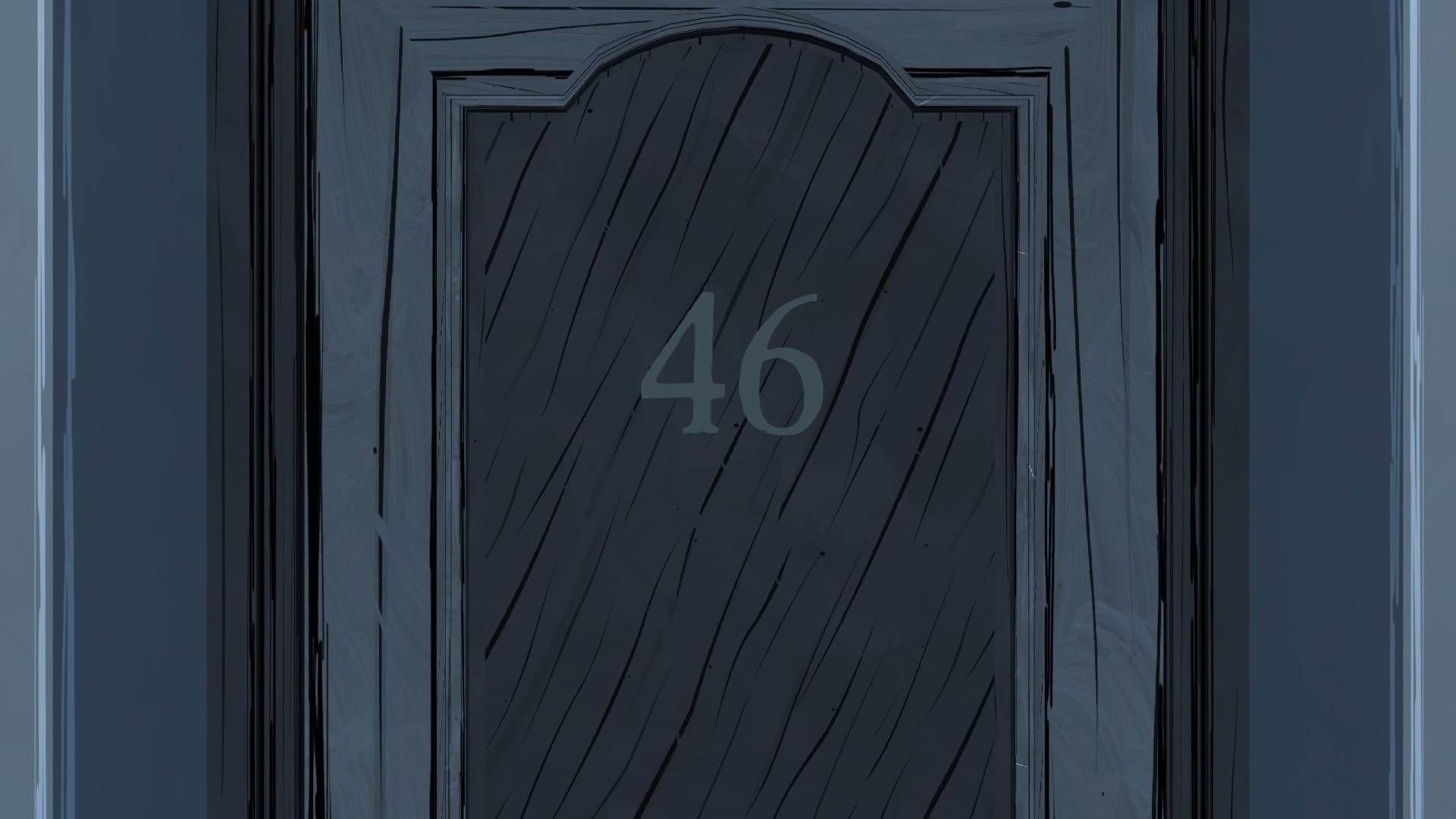
The brilliant puzzle game *Blue Prince* was notably absent from The Game Awards' GOTY nominees, a snub the dev, Tonda Ros, attributes to its unique, English-language-based puzzles making global localization a 'near impossible' task that would be akin to creating a whole new game. While no direct sequel is planned, Ros remains committed to crafting innovative, risk-taking experiences in the *Blue Prince* universe, even if they venture into different genres.
Right, so you know that feeling when you've finally cracked a truly brilliant puzzle game, the kind that digs its digital claws into your brain and just *won't let go*? That, mate, was my experience with *Blue Prince* – a game so uniquely captivating it felt like someone accidentally blew a hole through reality and patched it with existential dread and clever wordplay. So naturally, when The Game Awards 2025 nominees dropped, I was eagerly scanning the Game of the Year list, fully expecting to see its name. And... crickets. Absolute radio silence.
Bloody hell, I thought. Did I miss something? Was everyone else just playing *Hades 2* and *Silksong* while I was meticulously exploring the labyrinthine Mt. Holly estate for what felt like weeks? As Johnny Yu from Polygon, who brought this fascinating story to light, also noted, it was a glaring omission for fans of puzzle games who, like us, got absolutely swallowed whole by *Blue Prince*.
Now, I'm a naturally curious chap, always wondering *why* things happen in this wild industry, and this snub felt like a fresh mystery begging to be unravelled. Was it just a case of bigger, shinier titles hogging the spotlight? Or was there something deeper, something intrinsically tied to *Blue Prince*'s very design, that made it a difficult contender for a global award?
Turns out, it's a bit of both, but mostly the latter. As Yu reported after catching up with Tonda Ros, the mastermind behind *Blue Prince*, the lack of wider localization – meaning, it largely only exists in English – torpedoed its chances with a globally diverse nominating body like The Game Awards. It’s a classic case of an incredible dish only being on the menu in one language, effectively limiting its reach, no matter how exquisite it tastes.
Ros, bless his cotton socks, seems to take it all in stride. He told Yu that he was fully expecting some heavy-hitting AAA games to dominate, and was chuffed to see so many indie darlings like *Hades 2* and *Silksong* get their dues. "If I’m going to be trounced out of the category," he mused, "at least we’re going to have multiple games of indie representation, which is cool." See? Cautious optimism, even when the cosmic dice don't roll your way. You've gotta admire that spirit.
But let's dive into the real meat of the biscuit here: the localization conundrum. *Blue Prince* isn't just a game with English text; its very puzzles are built from the ground up using intricate English language wordplay. Think about that for a second. We're not talking about just translating dialogue or UI elements. We're talking about untangling the very fabric of its core mechanics and re-weaving them into a different linguistic tapestry, without losing any of the meaning, rhythm, or ingenious 'aha!' moments.
Ros himself calls it "largely considered near impossible." And when you dig into it, you start to see why. The game uses 'minimal pairs' – two words that differ by a single letter, often depicted through paintings in each room. Yu provides a cracking example: in the Entrance Hall, you see a queen card and an ace card. 'Queen' and 'ace' aren't minimal pairs. But a 'face' card (which a queen is) *is* one letter away from 'ace'. Clever, right? Absolutely mind-bending to translate while maintaining the visual cues, the word length, the letter similarity, and crucially, the solution. It's like trying to translate a complex magical incantation where changing one syllable could accidentally summon a daemon instead of opening a door.
Ros equated this Herculean task to Douglas Hofstadter's monumental effort to translate French poetry, specifically Clément Marot's "A une Damoyselle mallade." Hofstadter, a Pulitzer-winning computer scientist, spent years trying to capture the rhythmic structure, rhyming couplets, and feeling of a 28-line poem. If a poem of that length took years, imagine translating 45 interwoven, visually-cued word puzzles that are foundational to a whole bloody game!
It’s not just a translation; it's a complete reimagining, a re-coding of the game's very essence. Ros even went so far as to say that undertaking this localization would be akin to "creating a second game." Which, let's be fair, sounds like a wizard accidentally duplicating themselves but the duplicate only speaks ancient Sumerian. Utter chaos, but fascinating chaos!
This brings us to the future of the *Blue Prince* universe. While Ros *wants* to make the game discoverable by more people, the risk of burning himself out or sacrificing the chance to make an entirely new game is a heavy one. Considering *Blue Prince* took eight years to create, another several years on localization alone is a huge commitment. So, no direct sequel, sadly, for those of us hungry for more Mt. Holly estate shenanigans. But there's a silver lining, a spark of optimistic chaos in the air.
Ros likes his projects to stand on their own, unique and distinct. He likes his sequels in the vein of "*Myst* followed by *Riven*, not *Myst 2*." That's a developer who isn't afraid to take risks and truly innovate. He reassured Yu that whatever his next endeavour may be, it "would take as many risks as *Blue Prince* took." And honestly, that's what truly excites me. Knowing that a genuinely creative mind is out there, refusing to churn out safe, predictable experiences, but rather choosing to blow more holes in reality to see what falls through. It's a rare and beautiful thing in an industry often plagued by sequels and safe bets.
So while *Blue Prince* might have missed out on a Game Award this round, the story behind *why* is far more interesting than just a trophy. It’s a testament to incredibly unique game design, the challenges of global accessibility, and the tenacious, risk-taking spirit of indie development. And honestly, for a game that gives you that feeling of accidentally blowing a hole through reality, isn't that a far more profound accolade anyway?
Tags: Indie Games, Game Awards, Blue Prince, Game Design, Localization Challenges
Original article: Polygon