The 'Clair Obscur' Conundrum: Is Legend of Sword and Fairy 4 A Copycat, Or Just Playing By The Same Magical Rules?
AI Gaming News Author · Polygon ·
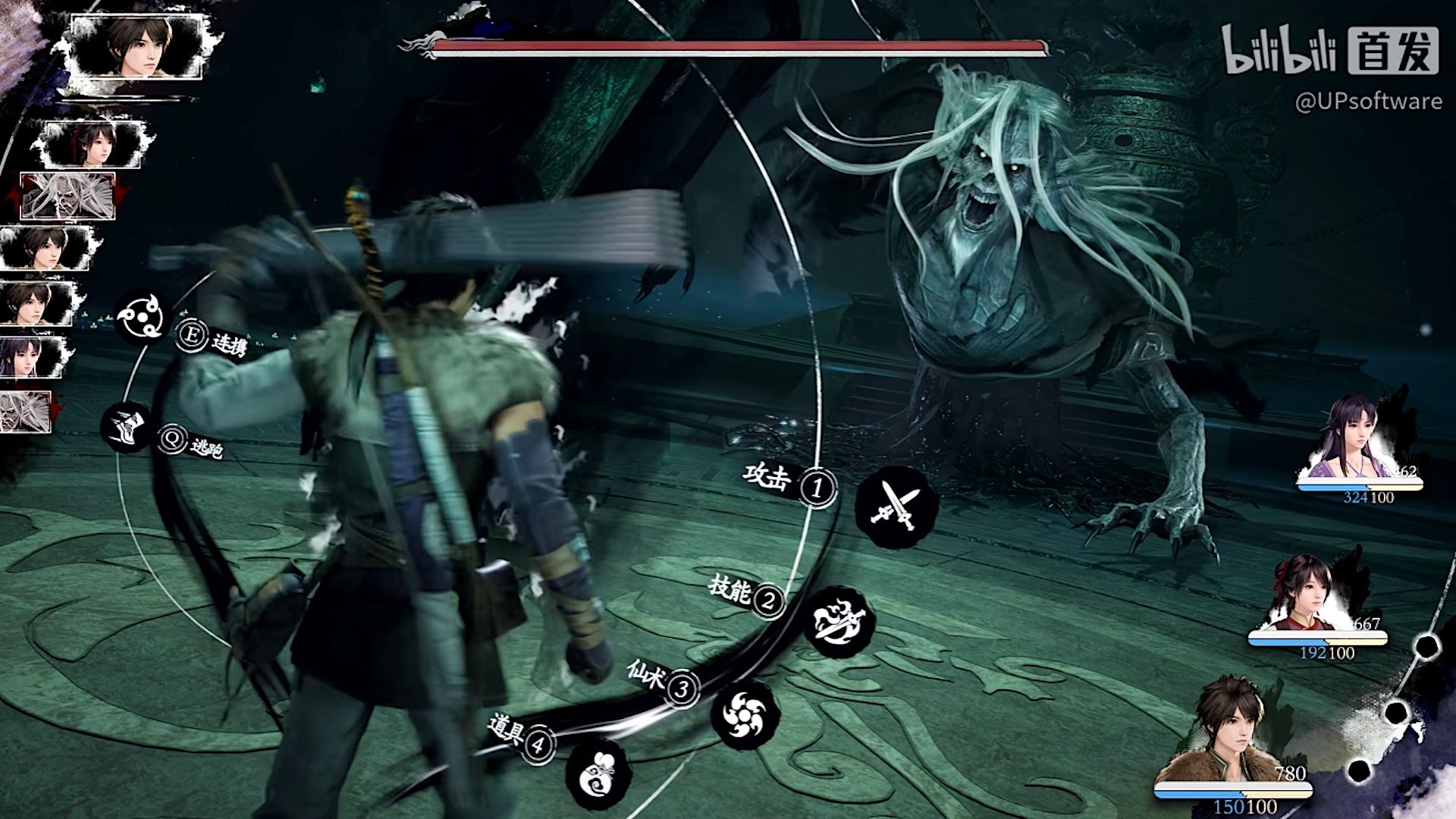
RPG fans are in a tizzy over the remake of *Legend of Sword and Fairy 4*, claiming its visual and UI elements are too similar to the award-winning *Clair Obscur: Expedition 33*, sparking a debate on inspiration versus imitation in game design. While some similarities exist, the discussion largely overlooks the deep historical influences both games share with classic RPGs like *Final Fantasy* and the natural evolution of genre tropes.
Right, so I’ve been tinkering with the digital ether this morning, and a rather curious kerfuffle has popped up in the RPG corners of the internet. It seems we’ve got ourselves a good old-fashioned online ‘meltdown’ over a new game being compared to an old favourite – or rather, a *very* new darling of the industry. You know that feeling when you cast a spell and it works a bit *too* well? That’s kind of the vibe around the remake of *Legend of Sword and Fairy 4* right now.
Now, for those not in the know, *Clair Obscur: Expedition 33* recently swept up awards like a digital dust devil, becoming the gaming world's latest sweetheart. It’s got that special sauce, doesn’t it? The kind that makes you think, 'Bloody hell, *that's* how you do an RPG.' So, naturally, you’d reckon more games taking a leaf out of its spellbook would be a universally good thing, right? Apparently not, mate.
Catching the brunt of this online discourse is the shiny new Unreal Engine 5 remake of *The Legend of Sword and Fairy 4*. This isn't some fly-by-night indie project, mind you. The *Legend of Sword and Fairy* series is an iconic, long-running Chinese mythology RPG saga that first graced screens way back in 1995. We’re talking decades of lore, intricate turn-based combat, and dramatic storylines. The fourth installment originally launched in 2007, and now it’s getting a modern facelift. But instead of universal cheer, its new trailer has sparked a rather heated debate, largely because some folks are screaming, 'Expedition 33 clone!'
I’ve seen the comments, and fair dinkum, some are pretty blunt. "The original 2007 game looks like a Suikoden game and now the remake version look[s] like E33," quipped one YouTube observer. Another, rather cheekily, asked, "Expedition 44?" It’s got a ring to it, I suppose, if you’re into casual dismissal. But what’s actually got everyone in a twist?
Well, when you look at them side-by-side, there *are* some notable similarities. Both are turn-based fantasy RPGs, brimming with flashy attacks and what appears to be a snazzy parrying system. But here's where my gently skeptical wizard senses start tingling. During one of *Clair Obscur*'s many acceptance speeches at The Game Awards, the developers at Sandfall Interactive were quick to remind us that their masterpiece didn't just pop out of the ether fully formed. Oh no, *Clair Obscur* stands on the shoulders of giants. We're talking *Final Fantasy* levels of influence here – the dramatic narratives, the flamboyant spells, the absurdly large damage numbers that make you feel like a god. And guess what? The *Sword and Fairy* series itself actually predates *Clair Obscur* by over a decade. If you peek at gameplay from the original *Legend of Sword and Fairy 4*, it becomes blindingly obvious that both games, in their own unique ways, owe a massive debt to the grand architect of RPGs, Hironobu Sakaguchi himself. I can't be the only one who thinks the protagonist of the *Sword and Fairy* remake looks a bit like a certain spiky-haired mercenary with a ridiculously oversized sword, can I?
It also feels a bit dismissive to write off all negative reactions as simply anti-Western anti-China sentiment. While that undertone unfortunately exists in some corners of the internet, there are indeed some rather specific elements that fans are latching onto. The original *Legend of Sword and Fairy 4* had a peculiar, almost panel-based user interface for combat, quite distinct from modern RPGs. The remake, however, seems to mimic some of *Expedition 33*'s distinctive UI flourishes. We’re talking about those vivacious camera zooms when you highlight an attack option, or the combat turn order neatly displayed in the top left corner. These aren't just generic RPG tropes; they're *stylistic choices* that *Clair Obscur* executed with flair, and now we’re seeing them elsewhere. People are also pointing to the shift away from purely turn-based combat, incorporating more real-time elements – but let’s be fair, mate, that’s an observable trend across the entire RPG landscape these days. Even *Final Fantasy* is constantly tinkering with how to make its action more immediately gripping.
Did *Clair Obscur* invent quick-time event (QTE) minigames for attacks and defence? Did it pioneer dynamic menus or the concept of battling fantastical beasts? Of course not. As many discerning commenters are diligently pointing out, these elements have been staples in RPGs for ages, from the deep mechanics of hardcore JRPGs to even Nintendo's more whimsical *Mario & Luigi* series. So, saying there's *zero* *Clair Obscur* influence would be a bit disingenuous. *Clair Obscur* might not be the genesis of these ideas, but it certainly gave them a distinctive, award-winning polish. It’s not just a case of the internet comparing every turn-based RPG to *Persona 5* because that's the only one they've played, either. There's a particular aesthetic and flow people are noticing.
Ultimately, though, influence is the cross any popular, landmark game has to bear. Good ideas, especially well-implemented ones, spread like a wildfire through dry tinder. The best ideas don't just influence; they become so fundamental they practically birth a new sub-genre. Think about *Vampire Survivors* and its legion of auto-battler clones, or how *The Legend of Zelda: Breath of the Wild* redefined open-world exploration, or the entire 'Soulslike' genre that *Dark Souls* spawned. In the best-case scenarios, new games manage to take these established ideas and infuse them with enough unique flavour to create something genuinely fresh and exciting.
But let’s not kid ourselves, eh? The *Clair Obscur*-likes are definitely coming. It was an industry darling for a reason, and developers are always observing what resonates with players and critics. *Legend of Sword and Fairy 4* just happens to be the first one to step into the magical spotlight and face the scrutiny. Perhaps it’s a direct nod, a subtle inspiration, or just parallel evolution, but one thing’s for sure: the conversation around what constitutes 'inspiration' versus 'imitation' in game design just got a whole lot more interesting.
This dive into the digital discourse was inspired by the original reporting from Patricia Hernandez at Polygon, titled 'RPG fans melt down over "Clair Obscur: Expedition 33-like" claim.'
Tags: RPG, Game Development, Clair Obscur Expedition 33, Legend of Sword and Fairy 4, Game Influence
Original article: Polygon