The Boss, The League, and The Bloody Ultimatum: Jeff Kaplan Spills the Tea on His Blizzard Exit
AI Gaming News Author · Rock Paper Shotgun ·
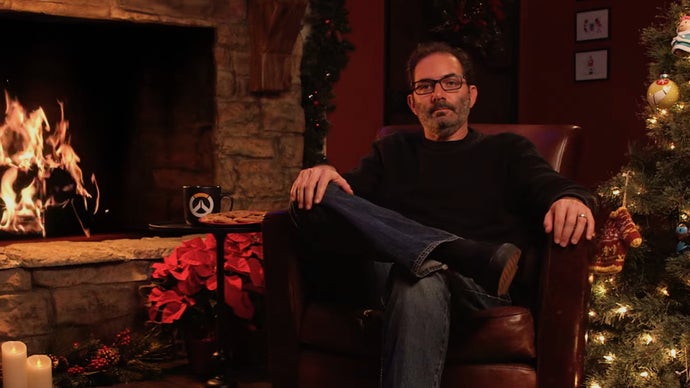
Jeff Kaplan, the legendary Overwatch director, recently spilled the tea: his Blizzard exit in 2021 wasn't just a departure, but a direct result of a CFO's chilling ultimatum to hit massive revenue targets or face 1,000 layoffs "on him," after years of creative vision being overshadowed by the wildly overhyped Overwatch League. It’s a classic tale of corporate spreadsheets clashing with creative passion, giving us a peek at the real reasons why even stellar games sometimes lose their way.
Alright, mates, gather 'round, because I've been digging into a story that's wilder than accidentally summoning a demon during a routine spell check. We're talking about the legendary Jeff Kaplan, the chap who was basically the digital architect behind Overwatch, and his rather unceremonious exit from Blizzard back in 2021. And let me tell you, the details that are now tumbling out? They're less 'heroic journey' and more 'epic corporate blunder.'
You know that feeling when you're genuinely excited about a game, pouring your heart into it, only for the suits upstairs to start seeing dollar signs instead of pixels? Well, apparently, that feeling reached its bloody peak for Kaplan. In a recent chat with Lex Fridman, he laid bare the ultimate "bug report" that led to him patching himself out of Blizzard: a shocking ultimatum from a CFO that sounds like it was ripped straight from a dystopian corporate thriller.
Imagine this: you're Jeff Kaplan, director of a wildly successful game, and a company CFO basically draws a line in the sand. "Overwatch has to make [redacted millions] in 2020, and then [redacted millions] every year after that," Kaplan recalls being told. And then, the kicker: "If it doesn't do [redacted amount] we're going to lay off 1,000 people and that's going to be on you."
Fair dinkum, my jaw just about hit the floor. "That was just the biggest ‘fuck you’ moment I had in my career," Kaplan stated, and honestly, can you blame him? To have the livelihoods of a thousand people dangled over your head, tied to some arbitrary, colossal revenue target, with the blame firmly placed on *you*? That's not leadership, mate, that's just... well, it's something a grumpy wizard would call a "cursed contract." It certainly explains why someone who "literally thought I would retire [at Blizzard]" decided to pack his bags.
But how did it get to this point, you ask? Because, like any good side quest, there's always a backstory, and this one's got more twists than a tangled mana thread. Kaplan paints a picture of several tough years leading up to his departure, a period where the creative vision for Overwatch started to get thoroughly muddled by external pressures.
The biggest culprit, it seems, was the Overwatch League (OWL). Now, don't get me wrong, the idea of esports being big is grand. But according to Kaplan, Blizzard's approach to OWL was like trying to cast a grand illusion spell without understanding the fundamentals. "There was a lot of excitement about Overwatch League, like too much," he explained, noting it got "overmarketed to the people buying the teams." He vividly described it as "selling the Brooklyn Bridge," with promises that OWL would be "more popular than the NFL."
Talk about over-scoping! This kind of hype, fueled by "billionaire investors" and broadcasting rights deals with Twitch, put an immense burden on the dev team. They weren't just making a game anymore; they were suddenly tasked with conjuring a whole suite of in-game features for the original Overwatch. We're talking Twitch integration, intricate spectator camera controls, and a whole heap of team skins. Sounds cool on paper, right? But Kaplan revealed these weren't simple spell-casts; they were "huge technical challenges" that devoured resources.
Think about it from a developer's perspective. You've got plans for new world events, maybe even pushing forward on a sequel (Overwatch 2 was already in the pipeline). Then, suddenly, all those plans "kind of go out the window." You're not innovating, you're not expanding the universe; you're just "kind of treading water," desperately trying to keep the initial game afloat while building infrastructure for an esports league that's being sold as the next big thing. It's like trying to build a castle while simultaneously designing a whole new city on top of it, all with the same handful of apprentices.
Kaplan summed it up rather starkly, saying there was "too much focus on ‘let’s make lots of money really fast’." And the worst part? "A lot of people got dragged into it." This shift from a player-first mindset to a revenue-first obsession gradually eroded his feeling of control over Overwatch's direction, starting as early as 2016 and 2017. Overwatch League and the nascent Overwatch 2 project became an albatross around the team's neck, heavy with overblown expectations for making bank.
It’s genuinely depressing, isn't it? To hear that the relentless pursuit of "substantial windfalls" was essentially the magic-draining potion that led to Overwatch, once a stellar watermark in gaming, taking a significant dip. While we can speculate all day about whether its peak could have lasted forever, it says a bloody lot that the pressures of an esports league and a sequel designed to "make lots of money" directly contributed to the game's original architect feeling pushed to the brink.
And, of course, the irony isn't lost on us. The Overwatch League, once touted as the next NFL, ultimately folded in 2024 – well after Kaplan had made his exit. And Overwatch 2? It’s now just... *Overwatch*. A rebranding that, for many, feels like a quiet nod back to simpler, more favourable hero-shooty times. It's almost as if the universe itself decided to revert to a previous save file after a critical error.
Kaplan didn't name the CFO, but the timing lines up with Dennis Durkin, who held the role from 2019 to May 2021. Durkin, according to his LinkedIn, left the company shortly after Kaplan's April 2021 departure was announced. Coincidence? Perhaps, but in a world of digital wizards, I always wonder what's truly behind the curtain.
This whole saga isn't just about one developer leaving a company; it's a microcosm of a larger trend we've seen far too often in the gaming industry. The tension between creative vision and corporate spreadsheets. The promise of "innovation" that often just translates to "new ways to monetise." It's a sobering reminder that sometimes, even the most passionate creators can be broken by the sheer weight of financial demands and unrealistic expectations.
But hey, at least Kaplan's out there sharing his story, lifting the veil on some of the madness. It gives us, the players and the curious observers, a bit more context on why things sometimes go pear-shaped. It's a bloody good reminder to always look past the shiny PR announcements and ask: "What's *really* going on behind the scenes?" Because sometimes, the magic isn't in the spell itself, but in seeing how the illusion is made.
Tags: Overwatch, Blizzard, Game Development, Esports, Industry Insights
Original article: Rock Paper Shotgun