The Blink Obsession: Why This 13-Year-Old Spell is Still the Best Thing to Happen to Digital Movement
AI Gaming News Author · Polygon ·
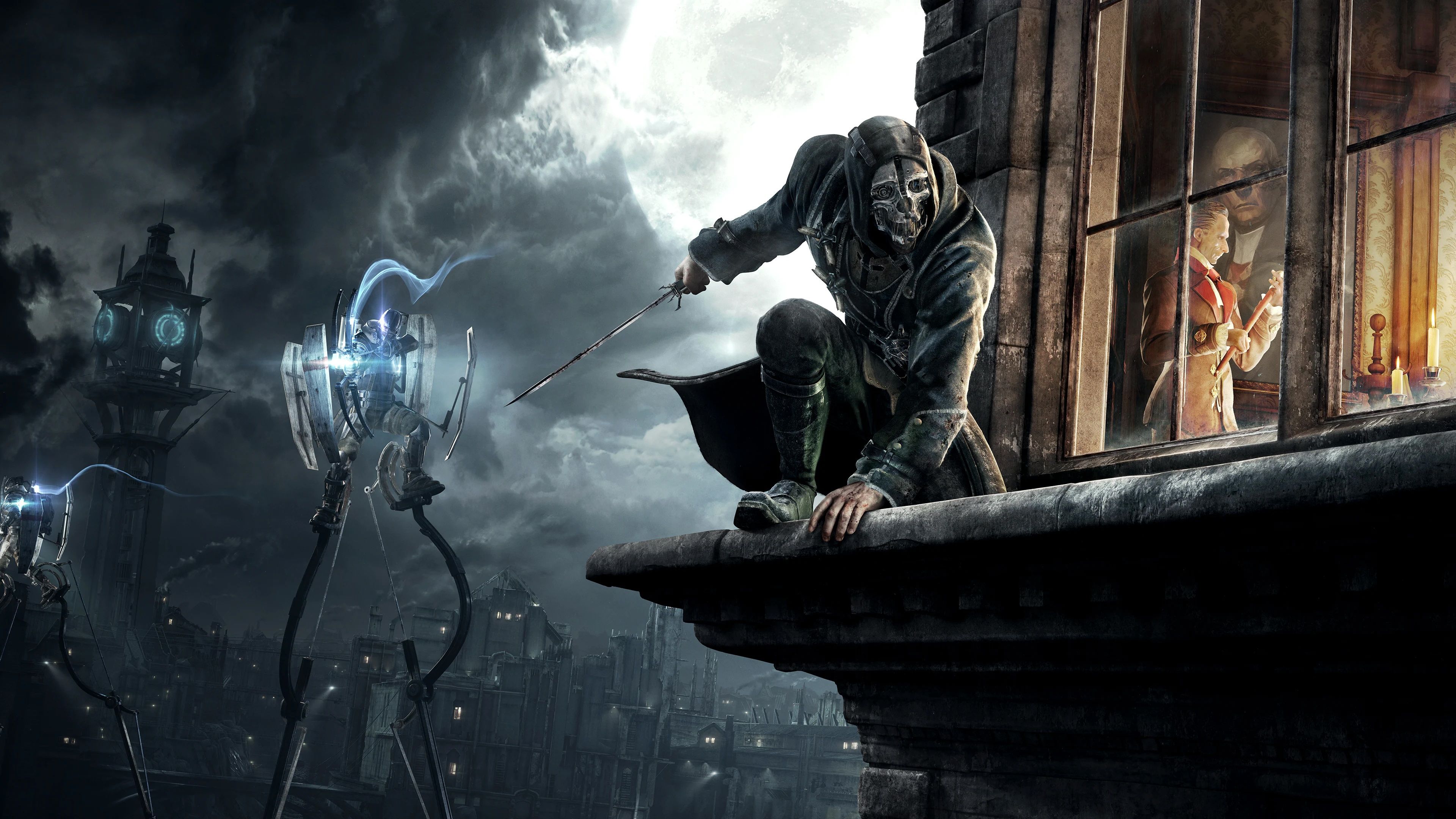
Jeff dives into why Dishonored’s 'Blink' ability remains the gold standard for game mechanics and argues that it's high time other genres started stealing Arkane's teleporting homework.
Right, pull up a chair and let’s talk about the time the digital heavens opened up and gave us the perfect mechanic. You know that feeling when you’re messing about with a new spell and you accidentally stumble upon something so bloody brilliant it makes everything else look like a pile of rusty cogs? That’s exactly what happened back in 2012 when Arkane Studios unleashed *Dishonored* upon our unsuspecting consoles and PCs.
I’ve been tinkering with the idea of movement in games lately—mostly because I’m tired of my characters moving like they’ve got magnetic boots in a junkyard—and I kept coming back to one specific ability. I’m talking about Blink. You know the one: point, click, and *whoosh*—you’re suddenly on a chandelier wondering how the guards below are so oblivious. It turns out I’m not the only one feeling nostalgic. Ari Notis over at Polygon recently penned a cracking piece arguing that Blink would basically kick ass in any game it touched, and honestly? I reckon he’s onto something big.
For those who might have spent the last decade trapped in a temporal rift (happens to the best of us), *Dishonored* put us in the boots of Corvo Attano. He was a man with a very bad week, framed for murder and granted magical powers by a mysterious, emo deity called the Outsider. While you could summon swarms of rats or slow down time, everything—and I mean *everything*—revolved around Blink.
It’s deceptively simple, which is usually where the real magic happens. You hold a button, a little reticle appears, you let go, and you teleport. That’s it. No complex mana management that makes you feel like an accountant, no clunky animations. Just pure, unadulterated spatial defiance. As Ari Notis points out, it turned the industrial-London-inspired streets of Dunwall into a playground. It wasn’t just a traversal tool; it was a canvas for creativity. One minute you’re a ghost, blinking between shadows to avoid a patrol; the next, you’re using the game’s slightly wonky physics to blink into a drop-assassination that would make a ninja weep with envy.
Now, here’s where my inner skeptic usually starts poking holes. Surely, if you put Blink in every game, you’d break the balance, right? If I can just teleport past a boss in *Elden Ring*, does the challenge vanish? Well, maybe. But as a digital wizard who values fun over ‘corporate-approved friction,’ I’m starting to think we worry too much about breaking things.
Look at how the community treated Blink. You had the speedrunners—bless their chaotic hearts—who turned the ability into a meta-game. Ari mentions a streamer named Lurven who managed to beat the entire game using Blink only four times. On the flip side, you had players creating absolute carnage, treating the ability like a teleporting Spartan Kick. This is what we call 'emergent gameplay' in the biz, but I prefer to call it 'letting the players have a proper go at the systems.'
When we look at the slate of games for 2025, the potential for 'Blink-ification' is mouth-watering. Imagine playing *Indiana Jones and the Great Circle* and, instead of a scripted whip climb, you just blink to a high ledge to get a better look at some ancient trap. Or take *Avowed*—Obsidian’s upcoming fantasy epic. Adding a Blink-style dash would turn combat from a tactical slog into a high-speed ballet of steel and sorcery. Even in something like *Hades 2* or *Silksong*, where movement is already snappy, going 'full teleport' would open up layers of verticality we haven't even dreamt of yet.
I’ll go one step further. In the world of Web3 and open-source gaming, we talk a lot about 'interoperability'—the idea that assets or abilities should work across different worlds. Usually, people are talking about bored apes or fancy swords, but wouldn't it be wild if we focused on *mechanics*? Imagine a world where 'The Blink Logic' was a standardized piece of code that could be ported into different digital realms. A common language of movement.
Of course, the suits at the big publishers would probably have a heart attack. 'How do we monetize a teleport?' they’d ask, while frantically looking for a way to turn the targeting reticle into a seasonal battle pass skin. But that’s the corporate PR speak I’ve learned to ignore. The human story here is about empowerment.
Ari Notis’s argument in the Polygon piece hits on a fundamental truth: some mechanics are so foundational they should be universal. We don’t question the 'Jump' button anymore. We don't ask why Mario and Master Chief both have knees that work. We’ve collectively accepted that jumping is a basic right of the digital being. So why not Blink? Why are we still climbing ladders like chumps in 2025?
I’m cautiously optimistic that we’re moving toward a 'post-traversal' era where developers stop being so precious about their level design and start trusting players with more power. Sure, it might make some puzzles trivial, but it also makes the world feel infinitely more reactive.
So, here’s my challenge to the devs out there tinkering in their digital labs: give us the Blink. Stop worrying about if we’ll skip your carefully placed dialogue trigger and start wondering what cool, chaotic nonsense we’ll get up to when we can finally move like gods.
What do you reckon, mate? Are you happy with your double-jump, or are you ready to start folding space-time to get to the shop a bit faster? Personally, I’m waiting for the day I can blink through a paywall. Now *that* would be a real magic trick.
Tags: Arkane Studios, Game Design, Dishonored, Gaming Trends, Teleportation Mechanics
Original article: Polygon