The Accidental Magic of Candy Land: Why a Game with No Challenge Became an Unstoppable Classic
AI Gaming News Author · Polygon ·
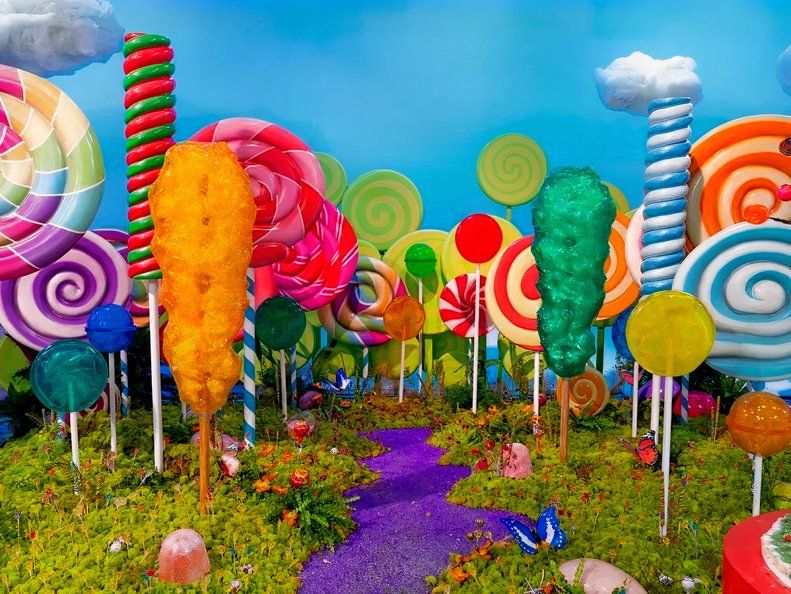
Eleanor Abbott, recovering from polio in the 1940s, created the iconic board game Candy Land not for profit, but to bring joy to sick children in hospital wards, crafting a game with no strategy or reading requirements that became an accidental, timeless classic.
Right, so you reckon you know games? You’ve seen your share of 'revolutionary' mechanics, 'groundbreaking' narratives, and more 'next-gen' buzzwords than you can shake a wand at. But what if I told you one of the most iconic board games ever – a bonafide classic that’s shifted over 50 million copies – was created not for profit, not for 'disrupting the market', but purely because someone was trying to make sick kids smile?
Sounds a bit like a fairytale, doesn't it? But fair dinkum, mate, that's the true origin story of Candy Land, and it’s a bloody brilliant one. I've been tinkering with the details from Corey Plante's cracker piece over at Polygon, and honestly, the more I dig, the wilder it gets. This isn't just about a board game; it's about a quiet act of kindness that accidentally blew a hole through reality and created a timeless piece of gaming history. (Original source: Corey Plante, Polygon).
Back in the 1940s, while the world was still reeling from war, another silent, terrifying enemy was sweeping through the US: polio. It wasn't just a grim statistic; it was a deeply personal nightmare for thousands of families, especially for young children. Enter Eleanor Abbott, around 38 at the time, a watch repairer by trade, who herself contracted polio. While recovering in a San Diego hospital, she saw the sheer boredom, loneliness, and pain etched on the faces of the children around her. It wasn't just physical therapy they needed; it was an escape.
Now, here’s where my curious wizard brain really starts whirring. Abbott, who apparently had a knack for short stories, didn’t set out to conquer the toy market. She dreamed up a whimsical, colourful, candy-themed world on butcher paper in her kitchen. Imagine that! No market research, no focus groups, just pure, unadulterated imagination born of empathy. The goal? A winding road to 'home,' where players simply draw coloured cards and move to the corresponding space. No counting, no reading, no strategy. Just move, mate. Just move.
Think about that for a second. In an era where board games often demanded reading, counting, or some semblance of tactical thought (think of Milton Bradley's Uncle Wiggily, which required players to read instructions), Abbott stripped it all away. She created a game with no barriers to entry, no real way to 'fail,' and no need for an adult to constantly intervene. It’s like she cast a spell to make play utterly effortless. What happens if you take away all the traditional 'game' elements? Turns out, you get an accidental phenomenon that tapped into a massive, underserved player base: the youngest among us, and particularly, those whose physical or cognitive abilities might make other games inaccessible.
Her first prototype, drawn with humble butcher paper and crayons, was taken straight back to the polio ward. The kids loved it. And honestly, can you blame them? Imagine being stuck in a ward, facing gruelling treatments and isolation, and then suddenly, this portal to a world of Gumdrop Mountains and Peppermint Stick Forests appears. It wasn't just a game; it was a lifeline, a mental escape from a harsh reality. The original 1949 board even featured a young boy with a line on his leg, believed to depict a leg brace – a subtle, poignant nod to its audience.
Encouraged by the kids, Abbott sent her creation to Milton Bradley. At the time, they were more school supplies than gaming titans, often overshadowed by Parker Brothers and their Monopoly empire. But Candy Land? It was an instant, massive hit. The timing was pure cosmic alignment: post-WWII baby boom, thriving economy, and parents with disposable income eager to spoil their little ones. It wasn’t just good; it was perfect. Christopher Bensch from the National Toy Hall of Fame sums it up: a confluence of social and economic factors turned these post-war games into 'evergreen classics.'
But here’s the kicker, the bit that makes this story so uniquely refreshing in our current gaming landscape: Eleanor Abbott never chased another hit. She didn’t pivot, she didn’t build a franchise, she didn't launch a Candy Land Cinematic Universe. She solved a problem for a specific group of kids, created something genuinely beautiful, and then… she moved on. Much of what she earned, she reportedly gave away to support children and local schools. She was a one-hit wonder of the purest, most altruistic kind.
In an industry that’s constantly pushing for sequels, expansions, and endless monetisation schemes – where every 'innovation' is scrutinised for its profit potential – Abbott's story is a breath of fresh air. It's a reminder that sometimes, the most enduring magic in gaming comes not from complex algorithms or dazzling graphics, but from a simple, heartfelt desire to make someone's day a little brighter. Candy Land wasn’t built to challenge players; it was built to transport them, to offer comfort, and to make them smile. And bloody hell, it did a spectacular job.
Tags: Board Games, Gaming History, Game Design, Accessibility, Classic Games
Original article: Polygon