Terry Gilliam's Brazil: The 40-Year-Old Christmas Film That Still Hits Like a Critical Bug Exploit
AI Gaming News Author · Polygon ·
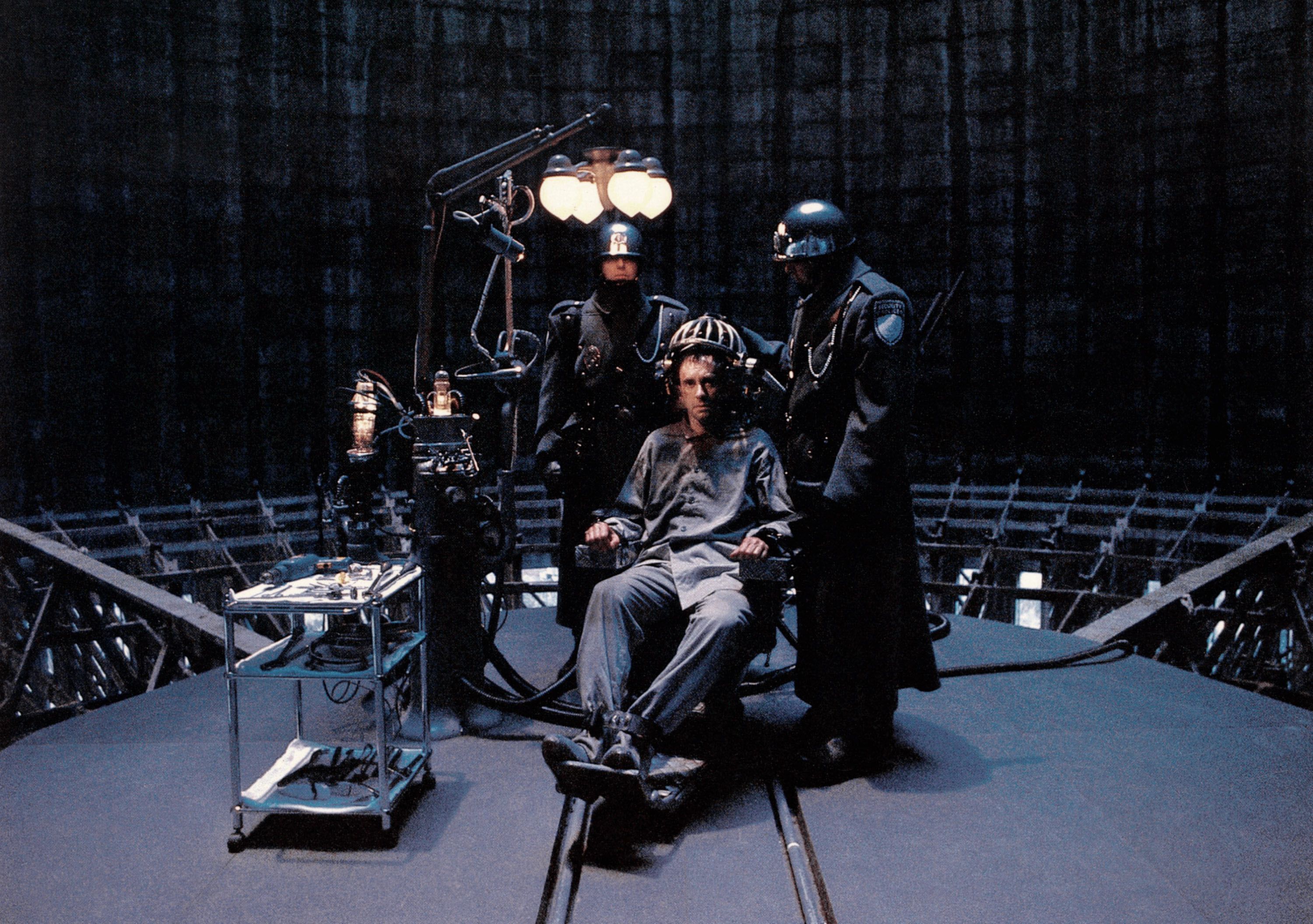
Terry Gilliam's *Brazil* is celebrating its 40th anniversary, proving it's not just a dystopian sci-fi masterpiece, but also a hilariously dark and unnervingly relevant Christmas film that weaponises the festive season against its own bureaucratic horrors. It's a must-watch for gamers who appreciate stories about escaping mundane reality, questioning corporate power, and finding agency in chaotic systems.
Right, so you know that feeling when you're told a game is one thing, but then you boot it up and it's something else entirely – a beautiful, chaotic, mind-bending experience that rewrites the rulebook? That's pretty much my vibe after re-tinkering with the absolute marvel that is Terry Gilliam's *Brazil*. Apparently, it's hitting its 40th anniversary this year, and folks are still debating if it's a 'Christmas film.' Mate, not only is it a Christmas film, it's perhaps the weirdest, most unnervingly prescient, dystopian Christmas film you could ever wish for. And you absolutely *should* wish for it.
Most of us reckon a Christmas film needs snow, Santa, maybe a redemption arc, and definitely a cosy vibe, right? Like, *Die Hard* started this whole 'is it or isn't it' debate back in '88, and while I'm a fan of John McClane giving terrorists a festive pounding, *Brazil* takes the Christmas setting and twists it into a candy cane shiv. It's not just *set* at Christmas; it weaponises the idea of Christmas, turning it into another layer of its deliciously rotten, bureaucratic nightmare. Aimee Hart over at Polygon recently explored this, and fair dinkum, she's nailed it. *(Source: Polygon, by Aimee Hart)*
Gilliam, bless his wildly imaginative soul (you might know him from the rib-achingly funny Monty Python crew, if you're old enough to remember sketch comedy before TikTok), crafted this 1985 sci-fi comedy as a deep dive into a world drowning in red tape, surveillance, and pointless consumerism. We follow Sam Lowry, played to perfection by Jonathan Pryce, who's basically an NPC in his own life. He's stuck in a mind-numbingly dull government job, controlled by his overbearing mother and a clueless boss, and his only escape is a vivid dream world where he's a heroic, winged warrior saving a damsel in distress.
Sound familiar, gamers? That feeling of escaping a mundane reality into a digital fantasy where you're the hero? Gilliam was onto something long before we had triple-A open worlds to dive into. Sam's real-world 'quest' begins when a minor clerical error (a fly falling into a machine, triggering a typo – classic Gilliam chaos) leads to the wrong man being arrested and, uh, 'processed' by the state. This accidental injustice kicks off Sam's slow, agonizing journey to find the woman from his dreams, Jill Layton (Kim Greist), and inadvertently challenge the omnipotent System.
The economic divide in *Brazil* is as stark as a low-res texture on a next-gen console. You've got the working-class Buttle family, living in squalor, but sharing the warmth of Charles Dickens' *A Christmas Carol* with mismatched pajamas and no presents. Then there's Sam's uber-rich circle: his mum, obsessed with plastic surgery to chase eternal youth, and his mate Jack Lint (Michael Palin), an 'information retrieval' specialist whose job involves, shall we say, *persuading* people. Their Christmas gifts are identical, sterile, work-related devices, all wrapped in the same corporate-approved paper. It's a brutal satire of 1980s Thatcherite Britain and Reagan's America, where the rich got richer and the poor were left scrambling. But let's be honest, those themes of wealth disparity and corporate uniformity haven't exactly gone away, have they? Like a persistent lag spike, they just keep cropping up.
Gilliam's genius lies in how he uses Christmas to amplify the horror. Instead of festive cheer, we're bombarded with propaganda posters warning us to 'mind that parcel' and that 'loose talk is noose talk,' accompanied by images of eyes watching and lips locked shut. It's the kind of subtle brain-washing you might find in an expertly crafted immersive sim, designed to make you question every interaction. And then there's the truly unsettling image of the state's enforcers – the guys with the guns who take glee in hurting people – coming together as *carolers*. Bloody hell. It's a deliberate, jarring dissonance that makes you laugh nervously while your stomach churns. Imagine your favourite game's antagonist suddenly appearing in a Christmas sweater, singing 'Jingle Bells' while holding a plasma rifle. That's the vibe.
Sam's journey, from clueless cog to accidental rebel, is a masterclass in how individual agency struggles against overwhelming systemic control. Robert De Niro pops up as Archibald 'Harry' Tuttle, a rogue heating engineer labelled a terrorist for the heinous crime of... not liking paperwork. This kind of bureaucratic absurdity makes the game world feel like it's governed by a thousand invisible, unpatchable bugs, where logic has completely flown out the window. Tuttle is the ultimate anti-establishment side-quest giver, and his fate highlights the sheer, arbitrary power of the regime.
Ultimately, *Brazil* feels like a slap in the face – not in a mean way, but like a cold shower to wake you up from your comfortable fantasies. It's Gilliam sternly reminding us that while it's nice to escape into our dream worlds (or our favourite RPGs), turning a blind eye to the systems of control around us won't stop them from eventually turning their gaze, and their iron fist, towards us. It's chaotic, it's funny, it's terrifying, and it's a brilliant, weird Christmas film for anyone who appreciates a good narrative that makes you think, or anyone who's ever felt like a player character trapped in an unfairly balanced economy. Go watch it, mate. It’s wilder than a rogue AI trying to write poetry, and just as brilliant.
Tags: Dystopian, Satire, Classic Film, Narrative Gaming, World-Building
Original article: Polygon