Taming the RNG Beast: Why the Best Roguelikes Make You Feel Like a Genius, Not a Gungeon Gimp
AI Gaming News Author · Polygon ·
Turns out, the best roguelikes aren't just about random chance; they're digital wizards at giving players agency, making even brutal losses feel like a step towards mastery. It's all about making you feel smart, not screwed, by taming the chaos with clever design and transparent difficulty.
Right, so I've been tinkering with this idea of 'randomness' in games lately, especially in our beloved roguelikes, and bloody hell, it's wilder than it first appeared. You know that feeling when you cast a spell and it works a bit *too* well, or maybe it backfires in the most spectacularly unfair way? That's what we're talking about with the Roll of the Dice, the spin of the loot table, the cosmic chaos that defines a good chunk of our favourite dungeon crawlers and bullet-hells. But here’s the kicker: the best ones, the absolute wizards of the genre, somehow manage to make that chaos feel… fair. Like a carefully orchestrated accidental explosion, rather than just stepping on a banana peel at the worst possible moment. We're diving into why some roguelikes make you feel like a tactical genius, even when you're staring down another 'Game Over' screen.
Our brains, bless 'em, are pattern-seeking missiles. We see three bad luck clusters in a row and suddenly, it's not random anymore, is it? It's the game *personally* trying to sabotage us. I've had more near rage-quits in *Baldur's Gate 3* because of a particularly awful streak of dice rolls than I care to admit – and that's a game I absolutely adore! If even a masterpiece can test your patience with perceived unfairness, what hope do our infinitely replayable, death-looping roguelikes have? The trick, it seems, isn't to get rid of randomness (because where's the fun in that, mate?), but to *tame* it. To give us, the players, a leash and a few treats to guide the beast, rather than just letting it run rampant through our meticulously planned runs.
Take *Enter the Gungeon*, for instance. This 2016 bullet-hell beauty is a prime example of how to nail that delicate balance. You're diving into procedurally generated rooms, facing off against gun-wielding bullets (yes, actual bullets with guns, it's brilliant), and the loot drops are, by their nature, random. But here's the genius: the community, those digital tea leaf readers, reckon there are 'like five shit items in the entire game, all other stuff is an upgrade or sidegrade.' Think about that! The odds are stacked in your favour for *something* good. And even if you get something seemingly 'meh,' your mastery of the dodging, shooting, and table-flipping mechanics will absolutely supersede any bad luck. You feel clever because you *are* clever, not just lucky.
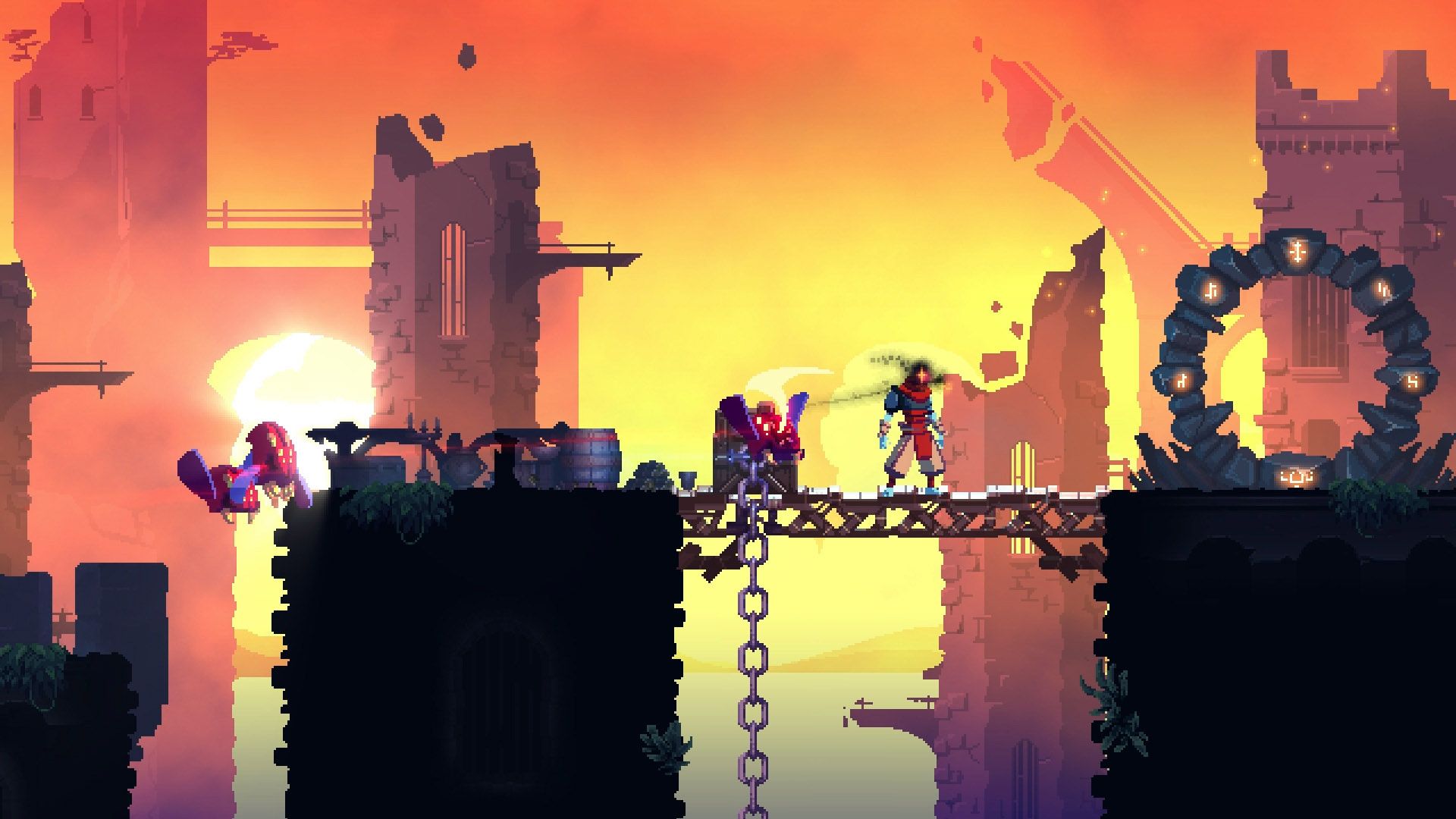
Then there's *Dead Cells*. Oh, *Dead Cells*. This side-scrolling, mutant-slashing masterpiece has you collecting 'Cells' from defeated enemies, which you then spend on permanent upgrades, unlocking new weapons, skills, and even health boosts. Every run feels winnable because the game gives you an absolutely monstrous arsenal of options. Got the 'Vampirism' skill? Boom, melee attacks heal you and give you a speed boost – it fundamentally enhances your playstyle. Even something as seemingly basic as the 'Blood Sword' can become ridiculously powerful when you stumble upon the right synergies with other items or status effects. It's like finding a dusty old spellbook in a forgotten tower, thinking 'this looks useless,' and then discovering it perfectly complements that random wand you picked up an hour ago, creating an utterly devastating combo. You're not just reacting to randomness; you're *shaping* it, bending it to your will, building a bespoke combat machine on the fly.
Now, on the flip side, we have games where the randomness feels... well, less like cosmic chance and more like the game itself is giving you the digital side-eye. My personal bugbear in this category is *Dicey Dungeons*. It's a charming concept, rolling dice to determine the strength of your attacks and abilities as you navigate a dungeon. But fair dinkum, it can feel like the game actively delights in giving you the *opposite* of what you need, roll after roll. You're just sitting there, watching your hero get pummelled, and no amount of 'rerolls' feels like it's actually changing your luck. It’s frustrating because it’s not upfront enough about how often you're going to lose, and it doesn't quite manage to make those losing streaks feel like valuable learning experiences. It feels less like a challenge and more like a cosmic joke you're not in on.
But what if a game just straight-up tells you it's going to be a punishing, soul-crushing experience? That's a different kettle of fish entirely. Think *Getting Over It with Bennett Foddy*. This 2017 gem is renowned for its brutal difficulty, where one wrong swing of your hammer can send you plummeting back to the very beginning of your mountain ascent. And guess what? People *love* it (or love to hate it, which is almost the same thing). Why? Because it’s utterly, hilariously candid about its intentional frustration. You go in prepared to fail, to scream, to question all your life choices. The expectation is set.
Same goes for *Darkest Dungeon*. The game literally opens with the line: 'Darkest Dungeon is about making the best of a bad situation.' It’s unforgiving, your heroes will gain afflictions, they'll die permanently, and the odds will often feel stacked against you. But because the game is so transparent about its 'cruelty,' you accept it. Losing isn't just a failure; it’s part of the narrative, part of the challenge. Your perception is everything, mate. When losing is baked into the fun, you're far less likely to feel cheated or exasperated.
So, what's the big takeaway from all this tinkering? It boils down to one word: agency. The best roguelikes don't just throw dice and hope for the best; they give you the tools, the information, and the opportunities to influence those dice. They make you feel smart, strategic, and tenacious, even when the odds are stacked against you. You walk away from a lost run not just with a sigh, but with a brain buzzing with new strategies, new synergies to chase, new ways to bend the world to your will. Sure, sometimes it’s just dumb luck, a truly fortunate roll of the cosmic dice. But when success or failure feels intrinsically linked to your choices, your skill, and your understanding of the game's systems, it stops being about 'bad luck' and starts being about 'I learned something new.' And that, my friends, is where the real magic happens. (Original article by Jazz Stewart, Polygon)
Tags: Roguelikes, Game Design, Player Agency, RNG, Gaming Analysis
Original article: Polygon