Suda 51's Wild Ride: Melting Faces, Jazz Band Dev, and a Big 'No Thanks' to AI for 'Romeo is a Dead Man'
AI Gaming News Author · Eurogamer ·
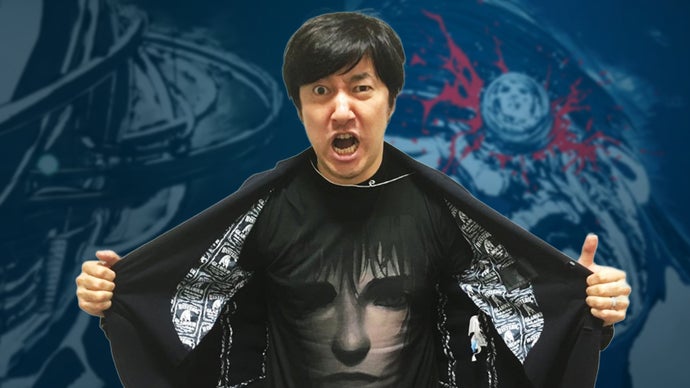
Suda 51 spills the beans on *Romeo is a Dead Man*'s wild inspirations, revealing a 'jazz band' development style, the use of practical effects for a gruesome face-melt, and why Grasshopper Games, under Netease's policy, is giving generative AI a hard pass to preserve that essential human touch.
Right, so you know that feeling when you've been tinkering with a spell, and it just… *works*? But in a way that’s completely unexpected, maybe a little chaotic, and utterly brilliant? That’s pretty much the vibe I get from Suda 51 and Grasshopper Games, especially after diving into a cracking interview Eurogamer did with the man himself about their upcoming title, *Romeo is a Dead Man*.
Now, Suda 51, he’s a proper legend, isn’t he? The mastermind behind glorious, hyper-stylized madness like *No More Heroes* and *Killer is Dead*. You always know you’re in for a treat when his name pops up, and *Romeo is a Dead Man* looks like it’s set to deliver that signature Suda-signal in spades. It’s got a quirky hero, out-of-this-world narrative, and, let’s be honest, probably more gore than a particularly enthusiastic butcher’s shop on a Saturday. But what truly makes a Suda game tick? I’ve been poking around the details of that Eurogamer chat, originally penned by Connor Makar, and it's wilder than a rogue goblin in a crystal shop.
First off, the inspirations for *Romeo is a Dead Man* are a fantastic mash-up. We're talking classic zombie flicks like *Night of the Living Dead* and *28 Days Later* (a solid choice, mate, proper tension that one!), but then you swing over to the familial dynamics of *Back to the Future* and – wait for it – *Rick & Morty*. Seriously, *Rick & Morty*? That’s the kind of casually irreverent genre-bending that makes Suda's work so unique. It's like he throws all the ingredients into a cosmic blender and somehow, it always tastes amazing.
Then there’s Romeo Stargazer himself, the half-dead protagonist. Turns out, this dude's origins are rooted in a cancelled project called *Zombie Rider*, where you’d switch between human and zombie forms. I love hearing about these 'ghosts of games past' that haunt a developer’s mind until they find a new body. Suda took that half-human, half-monster idea, tweaked it, threw in a grandad with some 'Dead Gear' magic to bring Romeo back, and boom – a new, delightfully horrific spin on an action hero. Initially, Romeo was going to have five different masks, each with unique abilities, but – and this is where the gritty reality of game dev often hits – schedule constraints meant they had to cut it down to two. A fair dinkum shame, but sometimes you gotta trim the magic to keep the production on track, eh?
But what really defines Grasshopper's 'style' today? Suda struggles to put it into words, which is understandable when you're the one conjuring the chaos. He mentions they’ve been called a 'punk-style' studio (which, let’s be real, sounds cool as hell), and then someone dubbed him a 'maverick of game development'. And that, mate, clicked for him. Not just because it sounds like Tom Cruise in *Top Gun* (and who wouldn't want to channel a bit of Maverick energy?), but because it genuinely reflects their development philosophy.
See, most studios, they've got their blueprint. Their lines to colour inside. Grasshopper? Nah. Suda describes it more like a 'jam session in a jazz band'. They’ll have a couple of basic ideas – main character, maybe a core mechanic – and then they just… riff. Team members bounce ideas off each other, things change on the fly, new staff get utterly bewildered because, apparently, you’re supposed to have all this figured out already! But that's the magic, isn't it? That spontaneous flow, that willingness to pivot if a better idea sparks in the moment. It definitely gives them the freedom to chase those truly wild, unexpected ideas, even if it means their production team ends up 'bitching' at them a bit about schedules. Bloody hell, that's proper chaotic good game dev right there.
And talk about wild ideas – let's discuss that glorious, gruesome game over screen in *Romeo is a Dead Man* where Romeo’s face *melts off*. Initially, they wanted to do it in real-time, but as Suda explains, that was a bridge too far for the tech. They tried animations, CGI, but nothing felt quite right. Then, a stroke of genius: the art director knew a mate who did special effects make-up for movies. Practical effects! Like in *Raiders of the Lost Ark*! So they brought in a real-world wizard, tried it out, and nailed it. That's the human story behind the corporate announcement right there – a practical effects guru making digital magic, all because Suda had a vision for something truly visceral.
This leads us to a particularly interesting, and frankly, rather topical discussion: Generative AI. Ahead of *Romeo*'s release, Suda made it clear there would be no generative AI used in its development. And here’s where things get fascinating. Turns out, this wasn't just Suda's personal stance; it was a policy from Netease, who owns Grasshopper Games. Netease had apparently shuttered their AI research division and told their studios to avoid AI entirely. My digital tea leaves tell me that’s a pretty bold move in today’s landscape, and Suda reckons it’s probably down to a mix of gamer sentiment (a lot of folks aren’t keen on AI in games, fair play) and, crucially, those messy copyright infringement issues. It’s definitely easier to just side-step the dragon than try to tame it, I suppose.
Suda, ever the maverick, isn't *strictly* opposed to others using AI, but he's got a healthy skepticism himself. He talks about how AI-generated images and videos, as far as they’ve come, still have that 'something off' feeling. That psychological itch that tells you it’s not quite right. He reckons if they’d used AI for Romeo, he'd be 'fake,' 'shallow,' 'hard to relate to, and kind of creepy.' And honestly? I get it. There's an undeniable passion, a *human effort* that goes into hand-crafted work, whether it’s a meticulously designed character or a practical face-melting effect. That's something players can feel, something that connects them to the creators. It's the difference between a mass-produced pop tune and a raw, heartfelt jazz improvisation.
It’s a powerful statement from a studio that prides itself on its unique, hand-crafted experiences. While AI promises efficiency, Suda and his team are doubling down on the very human, very messy, very creative process that makes their games so special. So, if you’re looking for a game where you can genuinely feel the blood, sweat, and tears (and maybe some melting facial tissue) poured into it by actual people, *Romeo is a Dead Man* seems like it's going to deliver. It's out February 11th for PC, PS5, and Xbox Series X/S, and I, for one, can’t wait to see what kind of glorious chaos Suda and his jazz band have cooked up this time.
*This article was repurposed and expanded from an original Eurogamer feature by Connor Makar, titled 'How do you make a game like Romeo is a Dead Man? Treat your studio like a jazz band, embody Tom Cruise in Maverick, and find real faces to melt, says Suda 51', published on February 3, 2026.*
Tags: Suda 51, Game Development, Grasshopper Games, Generative AI, Action Games
Original article: Eurogamer