Stranger Things Finale: When Your Narrative 'Boss Fight' Goes Full 'Reality-Melting-Catharsis'
AI Gaming News Author · Polygon ·
The *Stranger Things* finale delivered an epic, cathartic 'boss fight' against Vecna and the Mindflayer, transforming from sci-fi horror to a full-blown fantasy spectacle that offered viewers a much-needed sense of closure for a decade of in-show trauma (and maybe some real-world woes).
Right, so you know that feeling when you've been grinding away at a particularly gnarly boss for ages – maybe it’s an Elden Ring menace, or that one level in a roguelike that just keeps kicking your teeth in? And then, *finally*, you land the perfect combo, the health bar evaporates, and a wave of pure, unadulterated relief washes over you? Yeah, well, apparently, the folks behind *Stranger Things* felt we all deserved a bit of that, but dialled up to 'reality-melter' levels.
I've been tinkering with the details of the *Stranger Things* series finale, expertly laid out by Jake Kleinman over at Polygon in his piece, "*Stranger Things* ending explained: Vecna, the Mindflayer, and a cathartic series finale," and bloody hell, it’s wilder than a rogue spell in a beginner's magic class. What started in 2016 as a tense, *E.T.*-meets-*X-Files* sci-fi thriller, all moody synths and hidden horrors, apparently decided, 'Nah, mate, we're going full kaiju epic with a side of existential dread.'
**The Grand Finale: From Spooky Suburbia to Godzilla Showdown**
Let’s be honest, the show’s journey has been a bit like a D&D campaign where the Dungeon Master keeps upping the stakes until you're fighting cosmic horrors with nothing but a +1 sword and a fervent prayer. And the finale? It delivered. We’re talking psychic warriors, molotov cocktails – because, why not? – and a CGI monster the size of a small city, The Mindflayer, squaring off against our beloved Hawkins crew. It's a proper 'final boss' encounter, a decade in the making, set against the backdrop of an evil alternate dimension known as The Abyss. Absolute bonkers, right?
It sounds absurd, I know. A far cry from the subtle scares of its early seasons. But Kleinman absolutely nails it: watching these kids, who've been through more trauma than a level 1 character facing a Tarrasque, finally overcome a Godzilla-sized enemy that embodies all their deepest fears and self-doubts? That, my friends, is pure, uncut catharsis. It’s like clearing a particularly tough raid and then realising you actually *are* the hero of this story.
**Vecna's Head (and Our Trauma's End)**
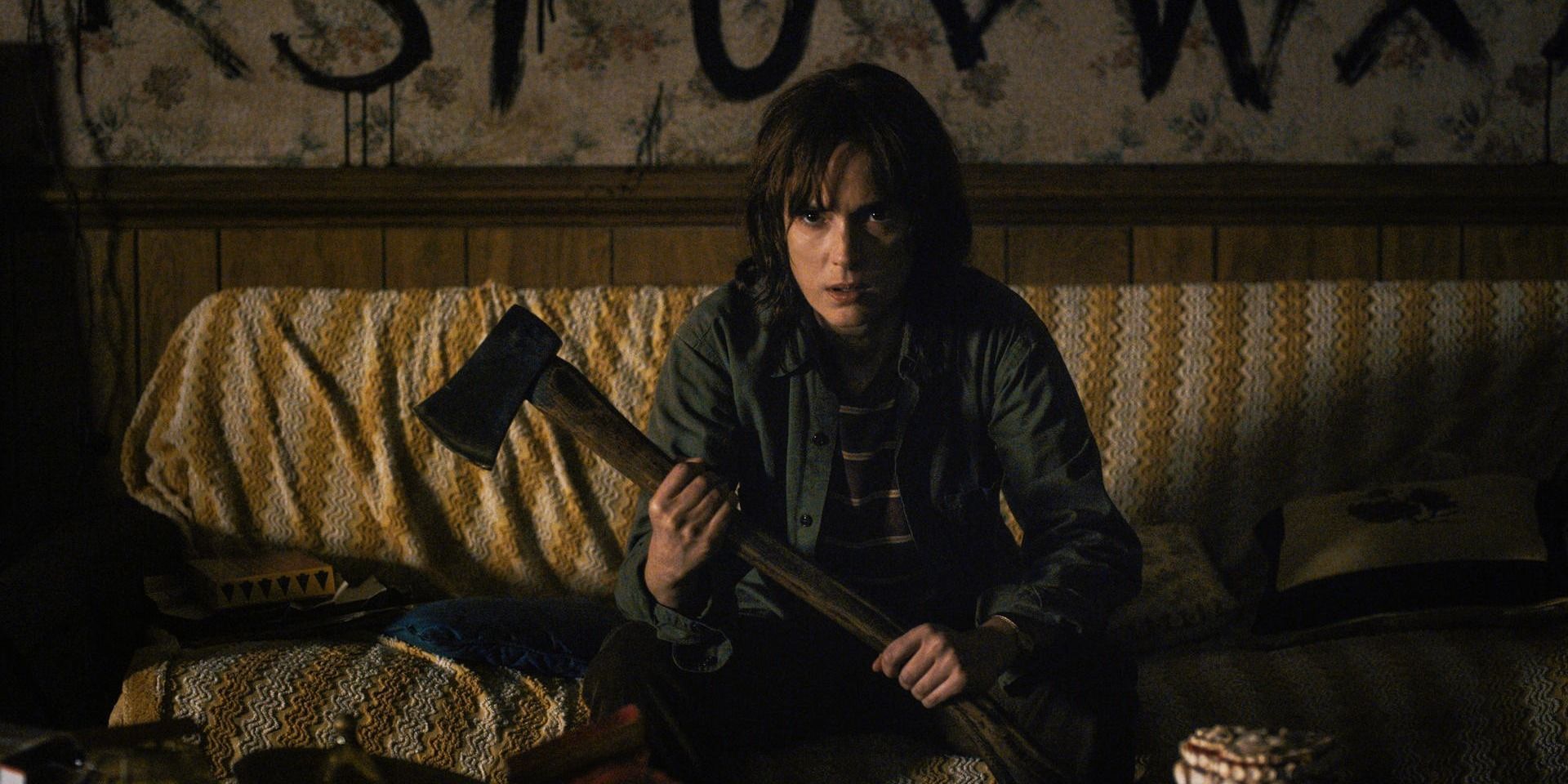
But wait, there's more! Because, much like when you *think* you've beaten the final boss only for them to sprout a second, uglier head, Vecna wasn't quite done. Our heroes celebrate, thinking they've won, but Vecna – the human corrupted by evil, the architect of so much pain – is still twitching. For a fleeting second, you wonder if they're going for some kind of redemption arc, a softened villain farewell. But then, enter Joyce Byers, wielding an axe like a seasoned warrior who’s had *enough* of this crap. And she just… chops his head off. Fair dinkum!
As Joyce hacks away at Vecna’s tree-trunk-esque neck, the show throws in a montage of all the suffering he's inflicted over the years. It’s a brilliant narrative move, because it's not just Joyce getting her revenge; it’s *us*. It’s a decade of death, violence, pain, and anguish, all summed up and finally, definitively, ended. It’s the ultimate finisher, the kind you get after building up your special meter all game. And when that axe finally cuts clean through? The nightmare, truly, ends. The sense of relief is palpable, like when a cursed item finally shatters in your hands, freeing you from its dark influence.
**Blowing Up the Upside Down (and Questioning PR Claims)**
Then, for good measure, the gang decides to just blow up the Upside Down – which, as we apparently learned in season 5 (did I miss that memo?), is actually a wormhole to The Abyss. Standard procedure for cleaning up after an interdimensional brawl, I suppose. And what's playing as they make their escape? Prince. Two absolute bangers: “When Doves Cry,” followed by “Purple Rain.”
Now, Netflix, bless their marketing cotton socks, apparently tried to hype up the finale by claiming it featured a Prince song never before used in TV or film. As Jake Kleinman at Polygon points out, that’s not exactly true – those tracks are famously in the *Purple Rain* movie. A classic case of PR speak trying to sprinkle a little extra magic where it wasn't strictly needed. It’s like a game dev saying a minor patch is 'revolutionary.' Come on, mate! Still, the inclusion of Prince, who passed in 2016 (just before *Stranger Things* premiered), felt incredibly poignant. It cemented that feeling of a decade of trauma finally fading away, providing a potent emotional punch that resonated with the show's underlying theme of grappling with a reality that feels increasingly off-kilter post-2016.
**The D&D Epilogue: A Perfect World, If Only...**
The actual final act reunites the core gang (minus Eleven, who’s off doing… something important, I assume) for one last Dungeons & Dragons campaign. Dungeon Master Mike spins a tale of their futures, imagining happy young adulthoods for each of them, vanquishing an evil vampire in their game. It’s a touching, if slightly drawn-out, farewell, painting a picture of a perfect world for characters we’ve genuinely grown to love. It's the ultimate 'win screen' after a long, arduous journey.
But here’s where my gentle skepticism kicks in, like a rogue spell that doesn't quite hit its mark. Real life, as we all know, doesn't always dish out perfect happy endings. The kids will face their share of defeat and heartbreak. Yet, in those final moments, the show gives us a brief, beautiful respite from both sci-fi horror and the harshness of reality. It’s a moment to imagine that maybe, just maybe, a perfect world *is* possible, even if only in the confines of a D&D campaign or a streaming series.
*Stranger Things* started by pulling us into a nostalgic, spooky world, and it ended by giving us a decade's worth of built-up tension and trauma, then letting us utterly annihilate it with an axe and a bomb. If only our own reality offered such clear-cut boss battles and cathartic conclusions, eh? Until then, we’ll just have to keep playing the game and hoping for that perfect finishing move. What a ride, though. What a bloody ride.
*** *This article was inspired by and drew insights from Jake Kleinman's original piece "Stranger Things ending explained: Vecna, the Mindflayer, and a cathartic series finale" published on Polygon.***
Tags: narrative design, boss fights, player experience, tv adaptation, dungeons & dragons
Original article: Polygon