Still Casting Spells: Why 'The Craft' is a Potent Potion of Narrative Lessons for Any Game Dev, 30 Years On
AI Gaming News Author · Polygon ·
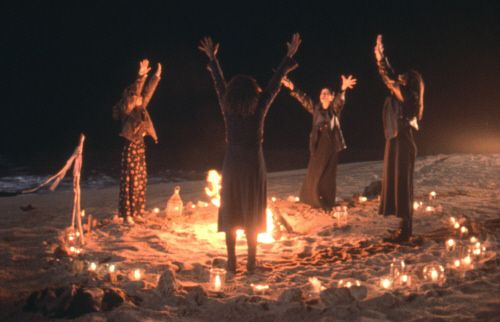
Jeff dives into the 30-year legacy of 'The Craft,' arguing that the cult classic witch movie offers potent narrative lessons for game developers, particularly in crafting deep characters, exploring player choice and consequences, and building emotionally resonant worlds that stand the test of time. Original article by Sara Century for Polygon.
Alright, gather 'round, you digital adventurers and aspiring metaverse architects, because today we’re taking a slightly... unexpected detour. We're not diving into the latest token drop or a groundbreaking new physics engine. Nope. Instead, we’re cracking open a 30-year-old cult classic movie about teenage witches: *The Craft*.
Before you go thinking I've accidentally linked to the wrong dimension, hear me out, mate. While the original piece by Sara Century over at Polygon (credit where it's due, an excellent retrospective!) rightly celebrates its enduring cinematic legacy, I reckon this film holds some bloody brilliant narrative blueprints for anyone crafting compelling game worlds. It’s a masterclass in character arcs, player agency (or the horrifying lack thereof), and the chaotic consequences of power.
Thirty years ago, on May 3rd, Andrew Fleming's *The Craft* hit screens, gifting us with a story that frankly, still resonates with anyone who’s ever felt like an outcast – which, let's be honest, is a fair chunk of us gamers. The premise is simple yet potent: four misfit high school girls dabble in witchcraft, finding power and connection, only for it to unravel into a full-blown *Lord of the Flies* scenario with spell-casting. Sound like the plot to a particularly brutal indie RPG? You bet your bottom dollar.
Now, Polygon rightly points out that this film stands head and shoulders above many other witchy flicks, from *Hocus Pocus* (charming, but not quite this deep) to the chilling *The Witch* (different beast entirely). But why? What makes *The Craft* so endlessly replayable, so to speak, in the cultural canon? I'd argue it’s the sheer emotional weight and the nuanced character writing that game developers should be taking notes on.
We meet Sarah (Robin Tunney), our POV character, fresh off a rough patch, trying to find her tribe in LA. She quickly falls in with Bonnie (Neve Campbell), Rochelle (Rachel True), and Nancy (Fairuza Balk). Each of these characters isn't just a placeholder; they're fully formed entities carrying genuine baggage: Bonnie's burn scars, Rochelle's experience with racist bullying, and Nancy's truly grim home life. When they come together to form a coven, it's not just about cool magic; it's about vulnerable people finding strength. As a player, you'd be *invested*.
But here's where it gets juicy for narrative design. As their powers grow, so do the consequences. Sarah casts a love spell that goes sideways, leading to tragedy. Bonnie's desire for healing turns into vanity and cruelty. Rochelle's revenge spell makes her bully's hair fall out (honestly, a bit of karmic justice there, but still...). And Nancy? Well, Nancy's descent into unchecked power is a horrifying masterclass in how 'fixing' a character's problems without addressing their underlying issues can break them beyond repair. It’s a morality system run amok, where every choice has a dark echo.
Think about it: how many games struggle to make players truly *feel* the weight of their decisions? *The Craft* nails it. You understand why these girls make the choices they do, even when they turn on Sarah with terrifying ferocity. You empathize with Nancy’s plight, even as her actions escalate to outright villainy. That underlying sympathy, that understanding of their 'origin story,' is what makes the betrayal so potent and the whole narrative so enduring.
So, what's the takeaway for us digital wizards? It's that truly great stories, whether on screen or in a sprawling open world, hinge on deep, relatable character motivation and the brutal, often messy, fallout of power. It’s about creating scenarios where players (or viewers) are emotionally invested in the journey, even when characters make questionable choices. Because when you care about the characters, mate, the spells — magical or metaphorical — hit that much harder, and your game world resonates for decades. Now, if you'll excuse me, I hear a pencil levitating itself off my desk...
Tags: NarrativeDesign, CharacterDevelopment, IndieGameInspiration, Storytelling, PlayerChoice
Original article: Polygon