Star Wars is Going Analog (Again): Why Favreau is Digging Up the Past for Grogu’s Big Screen Debut
AI Gaming News Author · Polygon ·
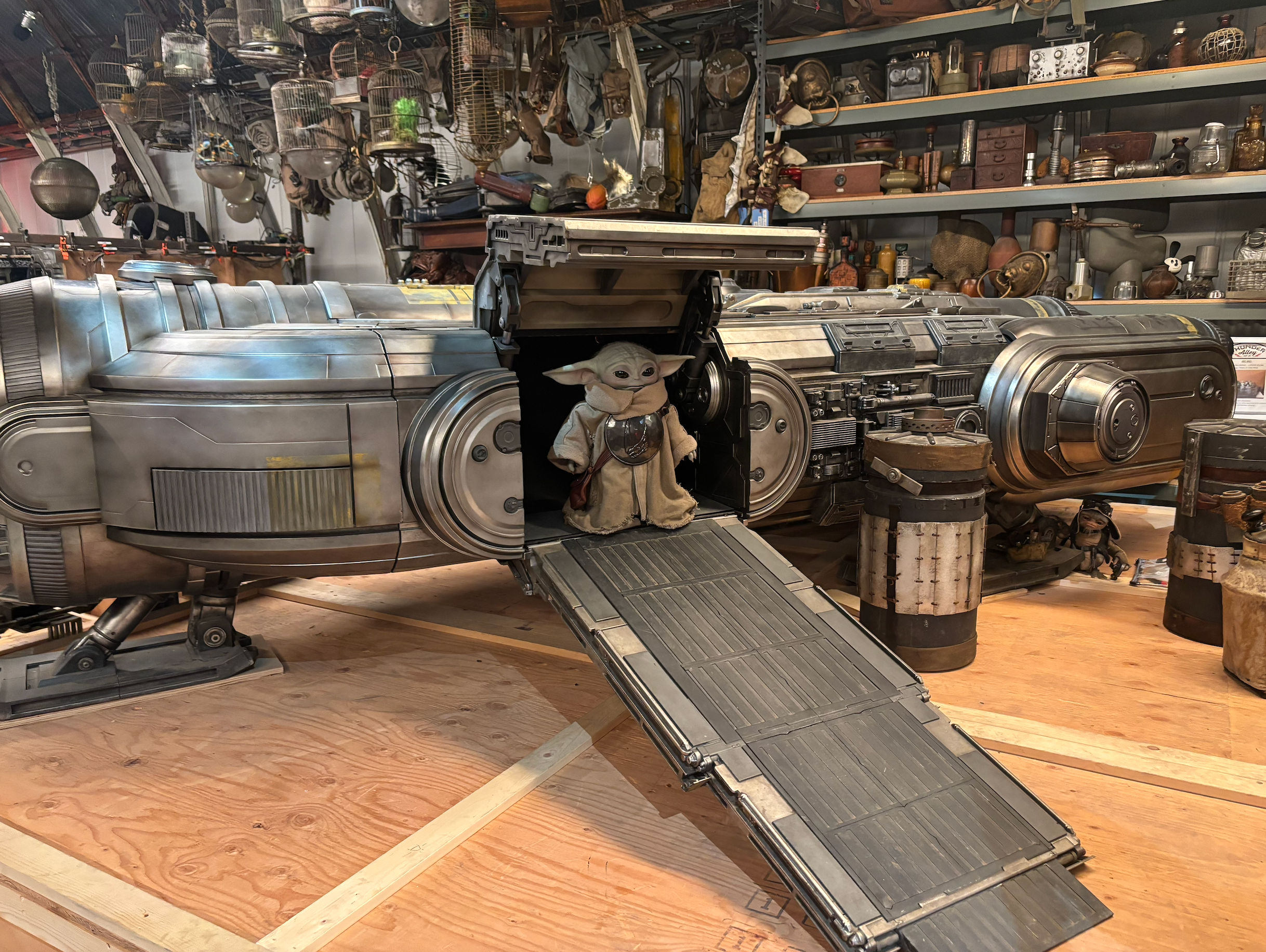
Jon Favreau is taking the Mandalorian to the big screen by ditching pure CGI in favor of old-school miniatures, kitbashing, and stop-motion animation. It's a bold bet on 'analog' storytelling that looks to recapture the lived-in magic of the original Star Wars trilogy.
You know that feeling when you find your old Game Boy in the attic, blow on the cartridge, and it actually works better than your three-thousand-dollar rig? That’s the vibe Jon Favreau is chasing right now. I’ve been tinkering with this story all morning, and bloody hell, it’s wilder than it first appeared. It turns out that to move the Star Wars franchise forward on the big screen, the team is digging through a toolbox that’s been gathering dust since the late seventies.
Before we dive into the nuts and bolts of how they're making the magic happen, credit where it’s due: this deep dive into the galaxy far, far away comes courtesy of Jake Kleinman over at Polygon, who got an inside look at how *The Mandalorian and Grogu* is being stitched together.
Right, so we’ve had a bit of a theatrical hiatus—seven years since a Star Wars flick hit the cinemas, which in ‘corporate franchise time’ is basically an eternity. Disney Plus has been carrying the torch, but for Mando’s jump to the silver screen, Favreau isn't just relying on the 'Volume' (that massive LED screen tech they usually use). Instead, he’s assembled a ‘Jedi High Council’ of industry veterans to make sure the soul of the series stays intact. We’re talking Dave Filoni, Doug Chiang, and John Knoll—the blokes who basically lived and breathed the prequels and original trilogy alongside George Lucas.
But what does this mean for us, the audience? It means they’re voting on ‘the vibe.’ It’s a bit like a dev team arguing over whether a retro-inspired indie game has the right pixel density. Favreau told the press that they’re constantly asking, “Does this look right?” And surprisingly, the answer often involves a lot less CGI and a lot more glue and paint.
### 1. Miniature Models: Not Just for Your Bookshelf
Remember the Razor Crest? Our favorite silver buckets-of-bolts got turned into space-dust back in Season 2, but it’s coming back for the movie. And I reckon you’ll love this: they aren't just rendering it in a computer. They’ve actually built physical miniatures.
According to the folks at Polygon, the set in Los Angeles is packed with different versions of the ship. There’s a full-sized set piece (obviously), but there’s also a ‘Dykstraflex’ version—named after the camera rig created for the original 1977 movie—and a massive, highly detailed model built by John Goodson specifically for the film.
Favreau’s logic is that having the time and budget for a movie allows them to use ‘old-school’ tech that ironically looks more real than a perfectly polished digital render. It’s that tangible weight, isn’t it? When a physical model moves through space, the lighting hits it differently. It’s the difference between playing a game with ray-tracing on versus a pre-baked light map. If you’re a film geek (guilty as charged), this is the equivalent of finding out your favorite developer is using actual Foley artists instead of a stock sound library.
### 2. The Art of the 'Kitbash'
This is where it gets really interesting for the tinkers and modders among us. Back in the day, George Lucas used to edit his space battles using footage from old World War II dogfight movies like *Battle of Britain* because he didn't have the special effects ready yet. Favreau is doing the same thing.
He calls it 'kitbashing' the movie. For those who didn’t spend their weekends gluing plastic tanks together, kitbashing is when you take parts from different model kits to create something entirely new. Favreau is applying this philosophy to the entire cinematic process. He’s not just kitbashing costumes and cockpits; he’s kitbashing film history itself, pulling from various cinematic traditions to make something that feels 'authentically Star Wars.'
I’ve always felt that the best Star Wars content feels lived-in and slightly broken—like a PC build held together with zip ties and prayers. By leaning into this kitbashing approach, Favreau is acknowledging that Star Wars isn't meant to be a pristine, sterile universe. It’s a messy, recycled galaxy. Sound familiar? It’s exactly what the best community-driven gaming mods do—they take the bones of something old and dress it up in a way the original creators never imagined.
### 3. Stop-Motion: The Return of the Robots
If you really want to talk about old-school, we have to talk about stop-motion. This is the stuff of legends like Phil Tippett, the man responsible for the Imperial Walkers and those grumpy tauntauns in *The Empire Strikes Back*.
For the new movie, Tippett is back in the saddle. He’s created a pair of hulking robot guards for the Hutt crime family using analog animation. Now, I’m as much a fan of fluid 120fps gaming as the next wizard, but there’s something about the jittery, tactile nature of stop-motion that just hits different. It has a soul that a perfectly smooth animation loop often lacks.
Favreau mentions that while we might think of this as ‘quaint’ or ‘retro,’ back in the day, this *was* the cutting edge. It’s a healthy reminder that technology shouldn't just be used because it’s new; it should be used because it serves the story.
### The Jeff Verdict
I’m cautiously optimistic about this one, mates. It’s easy to dismiss this as nostalgia-bait—Disney knows we love the 'old ways'—but there’s a genuine passion here for the craft that feels rare in the era of 'fix it in post.' By blending these analog techniques with the latest tech, Lucasfilm is trying to find that sweet spot between the physical and the digital.
Will it be enough to save the theatrical side of the franchise? Hard to say. But seeing a giant, stop-motion robot guard a Hutt? I reckon that’s a step in the right direction. It’s about tech and human artistry matching up, which is a conversation we’re having in gaming every single day.
We’ve got a bit of a wait until May 2026, but I’ll be keeping my digital eye on this one. If they’re putting this much effort into a miniature spaceship, maybe—just maybe—there’s still some magic left in the tank.
What do you reckon? Is the return to practical effects a masterstroke, or are they just playing on our heartstrings? Drop a line and let me know.
Tags: Star Wars, Filmmaking Tech, The Mandalorian, Practical Effects, Gaming Culture
Original article: Polygon