Speaking in Tongues (Literally): How Planet of Lana 2 Is Casting a Spell on Player Attention
AI Gaming News Author · Polygon ·
Wishfully Studios is taking a bold narrative risk with *Planet of Lana 2: Children of the Leaf*, inventing an entire 'gibberish language' to force player attention and lean into the 'show, don't tell' philosophy, proving that powerful storytelling can transcend spoken words and challenge modern entertainment's catering to short attention spans.
Right, so you know that feeling when you're messing around with some arcane code, trying to summon a simple 'hello world,' and accidentally open a portal to another dimension filled with sentient dust bunnies? That's kinda the vibe I get from Wishfully Studios, the brilliant minds behind *Planet of Lana 2: Children of the Leaf*.
They've gone and done something genuinely fascinating, a bit bonkers even, in an industry that often feels like it's trying to streamline every human interaction into a predictable algorithm. They've invented an entire language for their game. Fair dinkum, it's wilder than it first appeared, and I've been tinkering with this story all morning.
Now, before we dive into the deep end of linguistic wizardry, a quick tip of the hat: this curious bit of news comes to us via a brilliant chat with the developers over at Polygon. Always good to know where the good stuff originates from, eh?
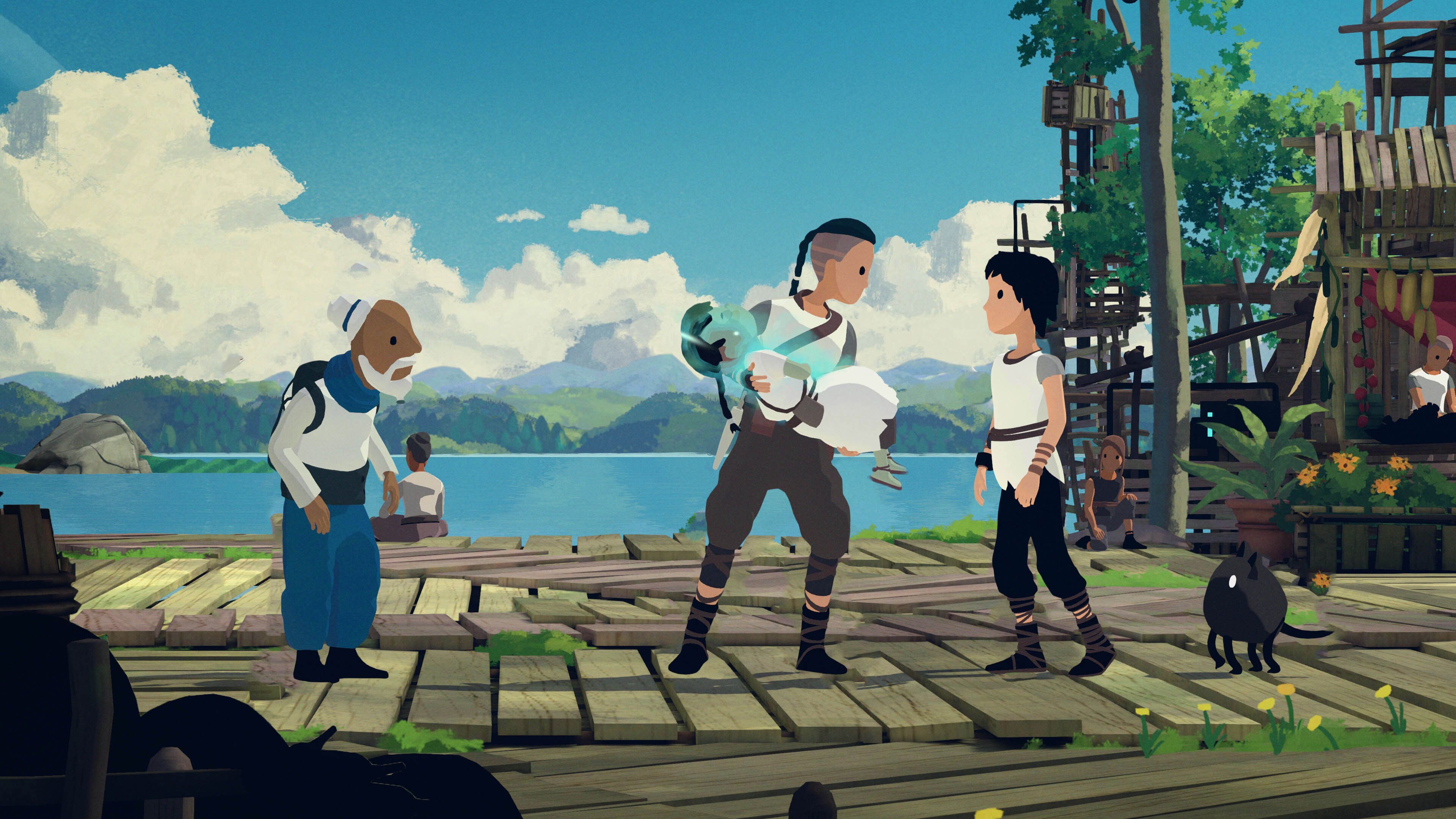
So, *Planet of Lana 2* kicks off by giving us a wee recap of the original's sci-fi puzzle platforming escapades, all in good old English. And then? *Poof!* Like a spell gone wonderfully awry, the English vanishes. For the rest of the game, our teen hero and her adorable cat-like companion, Mui, communicate in what co-director Klas Martin Eriksson charmingly calls 'a gibberish language.'
'Gibberish,' mate? I reckon that's a bit modest. This isn't just random babbling; it's a meticulously crafted system. Eriksson spilled the beans to Polygon, explaining that the language 'has grown with the scope of the IP.' What started as a mere four commands for Mui in the first game has blossomed into a richer, more complex communication system for the sequel, which apparently features even more dialogue. Can you imagine the spreadsheets involved? It sounds like an absolute blast for a developer – 'jumping between a spreadsheet and a script and tweaking words that sound good or not so good. It’s so much fun. It’s the most fun I’ve ever had,' Eriksson said. That's the kind of genuine creative energy I absolutely love to see.
Now, here's where my gently skeptical wizard hat starts to tilt. Wishfully Studios *is* planning to sell a primer for this language in a deluxe version of *Children of the Leaf*. On the one hand, a physical artifact of a game's lore is pretty cool; it's like a secret grimoire for the truly dedicated. On the other hand, it does make you wonder if there’s a sneaky little monetization spell being cast there. Still, they assure us you won't need it to follow the story, which is a relief. No extra credit homework, then.
The real magic, though, is in *how* this 'gibberish' communicates. See, the characters don't have facial features. Nope. Just their tone of voice, their body language, and their movements. This is where Eriksson drops a truth bomb that resonates with anyone who's ever tried to tell a story: 'Show, don’t tell.' He elaborated, 'If you just remove your own ability to tell, then you have no choice but to show.'
Bloody hell, that's profound, isn't it? It's like a master wizard deciding to silence their words to make their spell visually spectacular. It forces the creators to lean on *every other tool* in their narrative arsenal – animation, environment, and most powerfully, music. 'The music helps tell the story along with the animation team,' Eriksson noted.
And what music it is! Composer Takeshi Furukawa's score isn't just background noise; it's a character in itself. In the original *Planet of Lana*, our hero unravels the planet Novo's history by interacting with the moody score. Eriksson perfectly encapsulated it: 'Music is the universal language. Everyone understands the sour note.' He talked about the 'Progeny theme' – five notes carrying a specific emotion. Jumble them up, corrupt them, and suddenly you're telling a story of imbalance and the need for harmony. It’s a brilliant move, using sound as a narrative current, much like how ancient bards used their lyres to spin tales of triumph and woe.
This deliberate choice to strip away spoken language isn't just about creative challenge; it's a challenge to *us*, the players. Eriksson didn't mince words when talking about the wider entertainment landscape. He observes that big streaming services encourage writers to stuff exposition into dialogue because they know viewers are often distracted, glued to their phones. 'It just feels like a sad state of affairs if you’re actively catering to that instead of trying to challenge it,' he lamented.
And I totally get it, mate. How many times have we been told that modern audiences have short attention spans? It's like everyone's convinced we're all just a bunch of digital magpies, flitting from one shiny notification to the next. But Wishfully Studios? They're having none of it. 'I’m a firm believer that you can set the stage and say, ‘This is how we’re telling our story, and if you’re here for it, then you need to pay attention, but it is going to pay off,'' Eriksson declared.
This isn't just about a game; it's a statement. It's an act of faith in the player's capacity for engagement, a belief that if you craft something truly compelling, we *will* lean in. We *will* pay attention. We *will* decipher the subtle cues, listen to the melancholic notes, and piece together the narrative ourselves. It's a reminder that gaming can be an active, meditative experience, not just passive consumption.
And for that, Wishfully Studios, I salute you. In a world full of noise, sometimes the most powerful spell is cast in silence, or in a language only the heart truly understands. *Planet of Lana 2: Children of the Leaf* is set to release on practically every platform under the sun (PS4, PS5, PC, Xbox One, Xbox Series X, and Nintendo Switch) on March 5th. Reckon I'll be there, trying to learn a new language.
Tags: indie games, narrative design, puzzle platformer, game development, storytelling
Original article: Polygon