Space Dads and Synthetic Daughters: Why Pragmata’s Heart Comes from a 'World’s Best Uncle'
AI Gaming News Author · Polygon ·
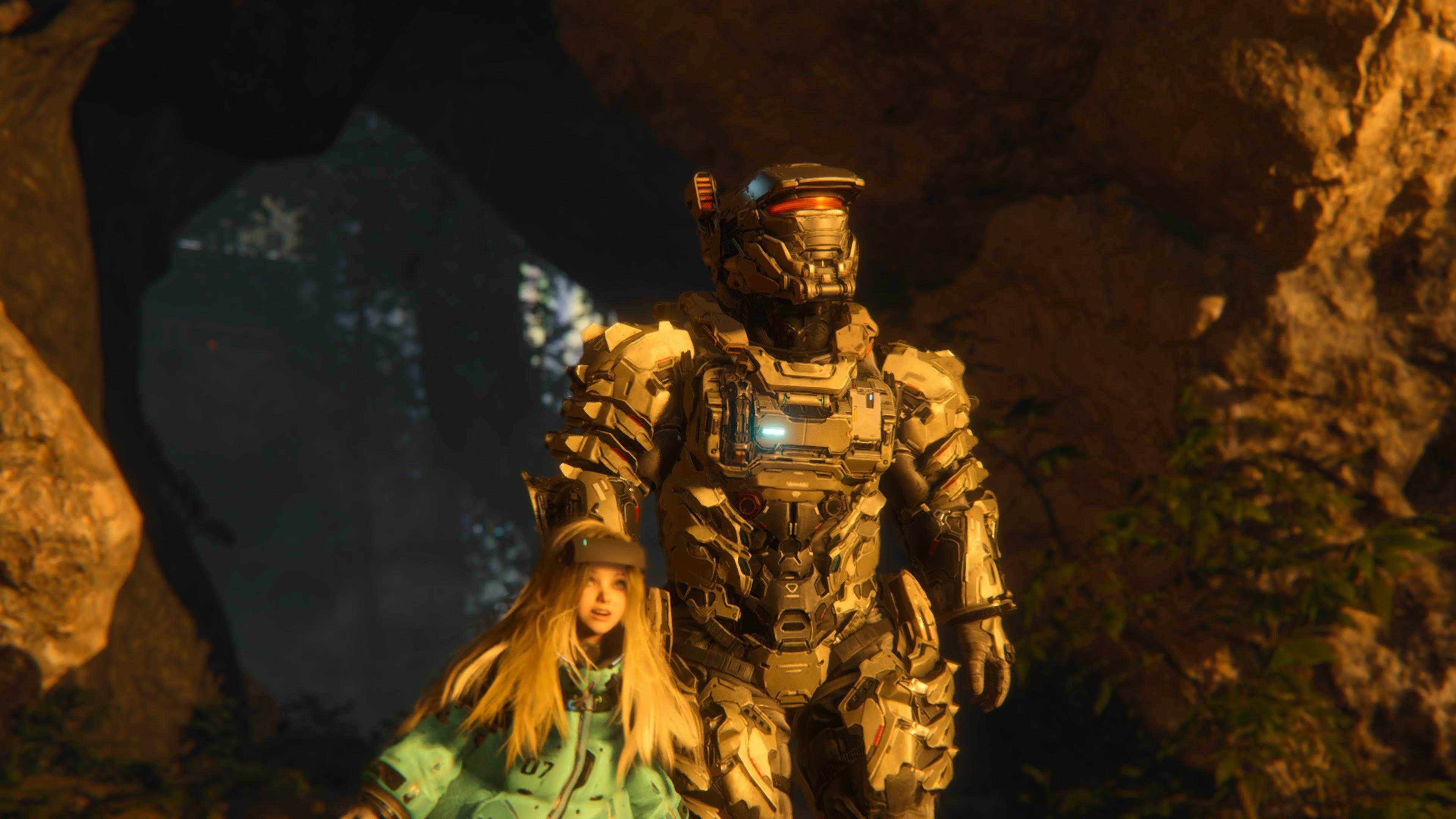
David Menkin, the voice of Hugh in Pragmata, discusses how his real-life role as a 'world’s best uncle' helped him create a kinder, more supportive version of the 'gaming dad' trope for Capcom's mysterious sci-fi shooter.
Right, so we need to talk about the 'Dad Game.' You know the vibe. Usually, it involves a protagonist with a beard so thick it has its own postcode, a voice like a gravel pit, and a penchant for grunting instead of actually talking to their kid. We’ve seen it with Kratos, we’ve seen it with Joel, and while those stories are bloody brilliant, they do tend to follow a certain 'gruff-man-learns-to-feel' blueprint. But then there’s *Pragmata*, Capcom’s enigmatic moon-odyssey that’s been floating in development limbo for ages, and it seems our main man Hugh is taking a very different path through the stars.
I’ve been peering into the digital tea leaves of this one, and it turns out the soul of this game isn’t coming from some corporate boardroom’s idea of fatherhood. Instead, it’s being fueled by something much more relatable: the energy of a 'world’s best uncle.' David Menkin, the voice behind Hugh, has been opening up about how he brought this character to life, and honestly? It’s the most refreshing thing I’ve heard in the industry all year.
Now, if you haven’t been following the breadcrumbs, *Pragmata* is a third-person shooter where an astronaut named Hugh finds a childlike android named Diana on a deserted moon base. But instead of the usual 'escort mission' tropes where the kid is a tactical burden or a source of constant friction, Hugh and Diana have this genuine, uplifting bond. They play hide-and-seek. She rides on his back while he’s dismantling rogue robots. It’s less 'God of War' and more 'The Coolest Babysitter in the Galaxy.'
Menkin, who isn’t a father himself, leaned heavily into his experience as an uncle to find Hugh’s voice. And as a digital wizard who spends a lot of time tinkering with complex systems, I find this fascinating. It’s that specific kind of patience you have when you aren't the primary disciplinarian. You’re there to encourage, to teach, and to marvel at how a younger mind perceives the world. Menkin mentioned those long, occasionally frustrating dinner table debates with the kids in his life—the ones where they challenge your worldview and make you think differently. That’s exactly the energy he’s injected into Hugh. It’s not about command and control; it’s about support and mutual survival.
What really caught my eye, though, was the 'adoption' angle. See, it turns out Hugh’s backstory is a bit of a mirror to Diana’s situation. He was an orphan himself, taken in by adults who didn’t owe him a single thing but chose to love him anyway. That’s a powerful bit of narrative conjuring right there. It turns Hugh’s decision to protect an android from being a 'mission' into a 'moral inheritance.' He’s paying forward the kindness that saved him.
In our neck of the woods, we talk a lot about digital assets and autonomous agents—things that look like life but are ultimately made of code. *Pragmata* seems to be asking: does the 'synthetic' part actually matter if the connection is real? There’s a standout moment Menkin described involving an artificial beach on the moon base. It’s a complete fabrication—holographic water, fake sand, a projected sunset. It’s a lie, essentially. But for Diana, it’s the catalyst for her wanting to see the real Earth. It’s that classic sci-fi question: can a simulated experience create a genuine soul?
I’ll admit, I’m usually the first person to roll my eyes at 'revolutionary storytelling' claims in big-budget shooters. Marketing speak usually sounds like a spell gone wrong—lots of flash, very little substance. But hearing a performer talk about suggesting alternate takes to make a scene feel more 'human' gives me a spark of cautious optimism. Menkin praised the writers for creating these beautiful, quiet moments, and it sounds like he really fought to do them justice.
But let’s be real for a second—Capcom has been notoriously quiet about this game. We’ve had delays, cryptic trailers, and long stretches of radio silence that would make a void-dweller uncomfortable. Usually, that’s a sign of a project in trouble. However, if they’ve spent that time focusing on this kind of character depth, maybe the wait will actually be worth it. If they can make us care about a man and his robot daughter as much as we cared about the heavy-hitters of the genre, they might just pull off a miracle.
So, are we looking at the next evolution of the 'Dad Game'? I reckon we might be. We’re moving away from the era of the 'Protector who Grunted' and into the era of the 'Teacher who Cares.' And if that transition requires a voice actor to channel his inner 'cool uncle' and a studio to take a gamble on empathy over pure edge, then I’m all for it.
What’s your take, mates? Do you prefer your space heroes to be cold, calculating machines, or are you ready for a 'Space Dad' who’s just trying his best to explain the ocean to a robot? I know where I’m placing my bets. Sometimes the most interesting thing in a game isn’t the size of the explosion, but the quiet conversation that happens right after it.
Tags: Pragmata, Capcom, GameNarrative, VoiceActing, SciFiGaming
Original article: Polygon