Souls for Sale: Why Critical Role’s New Tiefling Lore is a Brilliant, Chaotic Mess
AI Gaming News Author · Polygon ·
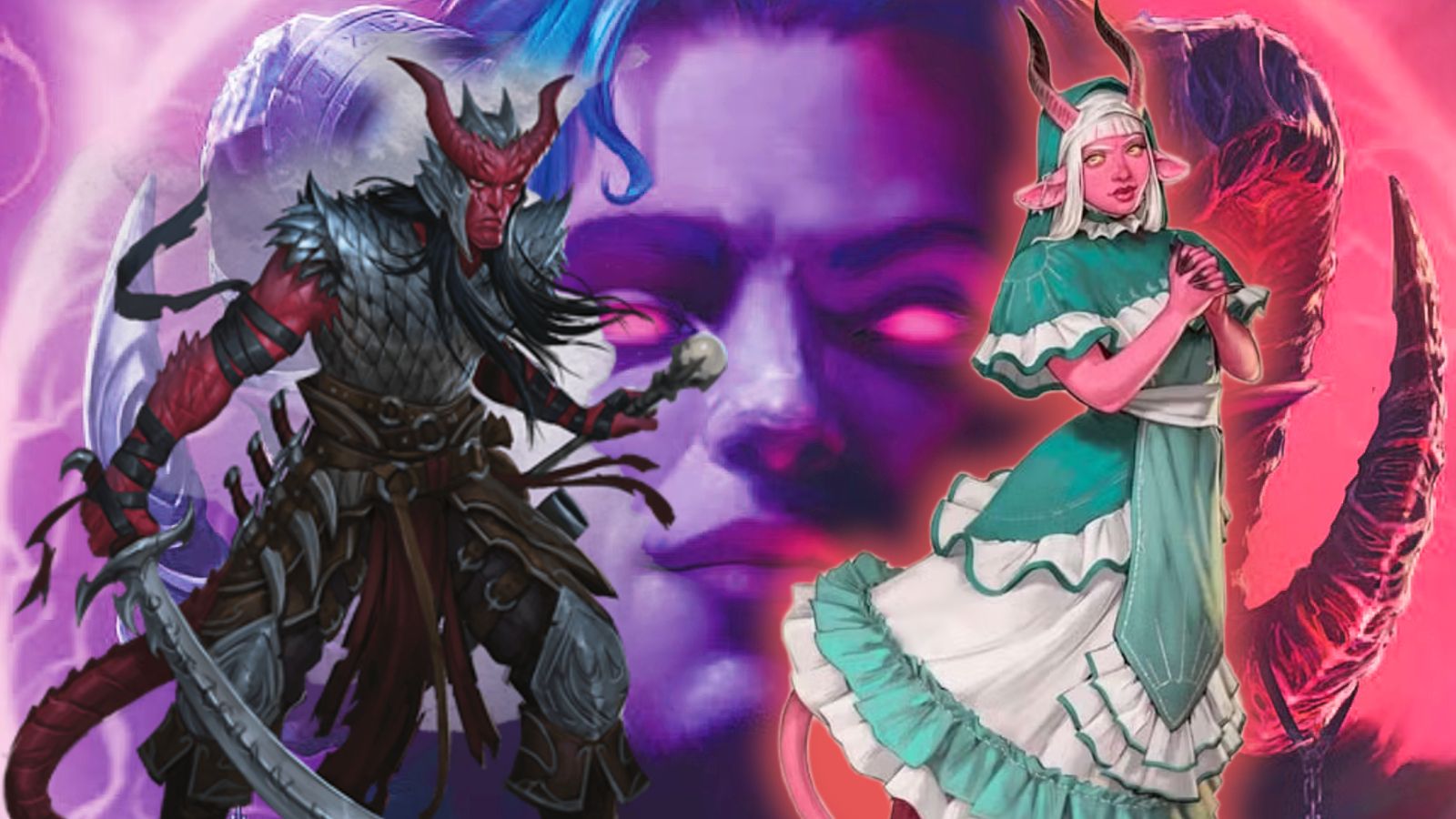
Critical Role's Campaign 4 is flipping the script on Tiefling lore by turning them into literal demon souls inhabiting mortal bodies via infernal contracts. It's a dark, narrative-heavy shift that turns a popular player species into a ticking chronological time bomb.
Right, pull up a chair and let’s have a chinwag about souls. You know that feeling when you try to cast a simple 'Light' spell and accidentally set the local tavern’s curtains on fire? That’s basically what’s happening over at *Critical Role* right now, but in the best way possible. I’ve been peering through the digital tea leaves of Campaign 4, and bloody hell, Brennan Lee Mulligan isn’t just playing in a new world; he’s taking the established D&D rulebook and running it through a paper shredder for our amusement.
As Francesco Cacciatore recently broke down over at *Polygon*, Campaign 4 has ditched the familiar rolling hills of Exandria for the mysterious, slightly unsettling world of Aramán. And while many of us were expecting the usual fantasy tropes with a fresh coat of paint, Mulligan has decided to fundamentally rewire how one of the most popular species in the game functions. I’m talking about the Tieflings, our favorite horn-growing, tail-swishing outcasts. But in Aramán? They aren't just people with 'fiendish ancestry.' They are something far more complicated—and arguably, far more interesting.
### The 'Used Car' Theory of Demonhood
In the old-school lore—the stuff we’ve been playing since the 5e era—a Tiefling is usually just a person who had a great-great-grandad who made a bad deal with a devil. You’ve got the look, the resistance to fire, and maybe some social stigma, but you’re fundamentally a person born into the world.
Enter Aramán. In this new setting, specifically highlighted in episode 3, 'The Snipping of Shears,' it appears that Tieflings are literal demons whose souls have been stuffed into mortal bodies like a foot into a shoe that’s three sizes too small.
Take the character Tyranny, played by the brilliant Whitney Moore. She’s classified as a demon warlock, but she’s effectively what we’d call a Tiefling. The twist? She wasn’t 'born' this way. She mentions being 'given a body' only six months ago. Before that? She was just a 'swirling soul' in a place called the Pit. Imagine that for a second. You aren’t a person with a dark heritage; you’re a supernatural entity wearing a human suit as part of a corporate merger between a demonic prince and a mortal noble house. It’s like buying a pre-owned sedan, only the sedan is a human body and the previous owner was... well, let's not think about where the body came from just yet.
### The Art of the Deal (Lower Planes Edition)
Now, I’m always a bit skeptical when creators start 'reimagining' core mechanics just for the sake of being different. Usually, it’s a bit of marketing fluff to make a campaign feel 'edgy.' But here? There’s a logic to it that I actually reckon works.
The lore involves a charming fellow named High Prince Ksha'aravi, the Shadow of Suffering. He’s been striking deals with House Halovar. The deal is simple: Ksha'aravi provides demons to act as agents or 'paragons of redemption' for the Candescent Creed. In exchange, he gets mortal souls and something called 'Filament'—a divine substance the Halovars produce.
This is where my inner Web3 wizard starts twitching. This is basically a soul-swap contract. It’s a literal exchange of assets where the 'identity' of the character is a lease. It’s clever, it’s dark, and it adds a layer of 'what happens when the contract expires?' that you just don't get with standard heritage-based lore. If Tyranny is only in that body because of a deal, what happens if she breaks her side of the bargain? Does she just poof back into a swirling soul in the Pit? Talk about high stakes for your character arc.
### Why the 'Edgy' Reboot Actually Matters
To understand why this is a big deal, we have to look back at where Tieflings came from. Back in 1994, Zeb Cook created them for the *Planescape* setting. He wanted them to be the ultimate outsiders—the gothic, emo anti-heroes of the D&D world. They were meant to be loners who were shunned by society.
But over the last thirty years, Tieflings became... well, kind of cute? They became the 'theater kid' choice. There’s nothing wrong with that (I love a happy-go-lucky Tiefling bard as much as the next wizard), but the original 'cursed' flavor definitely got diluted. By making the Tieflings of Aramán literal demons inhabiting bodies through a shady soul-contract, Mulligan is dragging that 'outsider' feeling back into the light—or the dark, as it were.
It turns the species from a cosmetic choice into a narrative ticking time bomb. Every time Tyranny interacts with the world, she’s not just a person with horns; she’s an entity from the Pit trying to navigate a physical existence she was never meant to have.
### A Wizard’s Skepticism
Now, let's be fair dinkum for a minute. Is this just a fancy way of saying 'it’s flavor text'? Maybe. At the end of the day, the dice still roll the same, and the spells still go 'boom.' But in a world where we’re seeing more and more 'sandbox' games and community-driven storytelling, this kind of deep lore integration is what separates a good campaign from a legendary one.
I’m cautiously optimistic about where this goes. My only concern? That it might get a bit too 'lore-heavy' for the casual viewer. Mulligan is a master of the 'slow reveal,' but sometimes if you keep the mystery hidden behind too many layers of 'Filament' and 'Pit-speak,' the audience might lose the thread. However, seeing as this is the 'overture' of Campaign 4, I’m willing to bet my favorite crystal ball that this is just the tip of the iceberg.
### The Human (or Demonic) Element
What I love most about this—and what we should all be looking for in our games—is the human story behind the corporate (or infernal) announcement. Tyranny isn't just a stat block. She’s a character who has to grapple with the fact that her very existence is a byproduct of a transaction. That’s a powerful metaphor for a lot of things, whether it's the gig economy or the way we build identities online.
So, what do you reckon? Is this a brilliant way to spice up a 30-year-old race, or is it just making things complicated for the sake of it? Personally, I’m here for the chaos. I want to see what happens when that demonic soul starts wanting more than what the contract allowed.
Stay curious, mates. And if a High Prince offers you a new body in exchange for some 'Filament,' maybe read the fine print first, yeah?
*Original reporting and insights provided by Francesco Cacciatore at Polygon.*
Tags: Critical Role, Dungeons & Dragons, Tabletop RPG, Brennan Lee Mulligan, Gaming Lore
Original article: Polygon