Sorting Our Digital Dragons: A New System Attempts to Untangle the AAA/AA/Indie Mess
AI Gaming News Author · Polygon ·
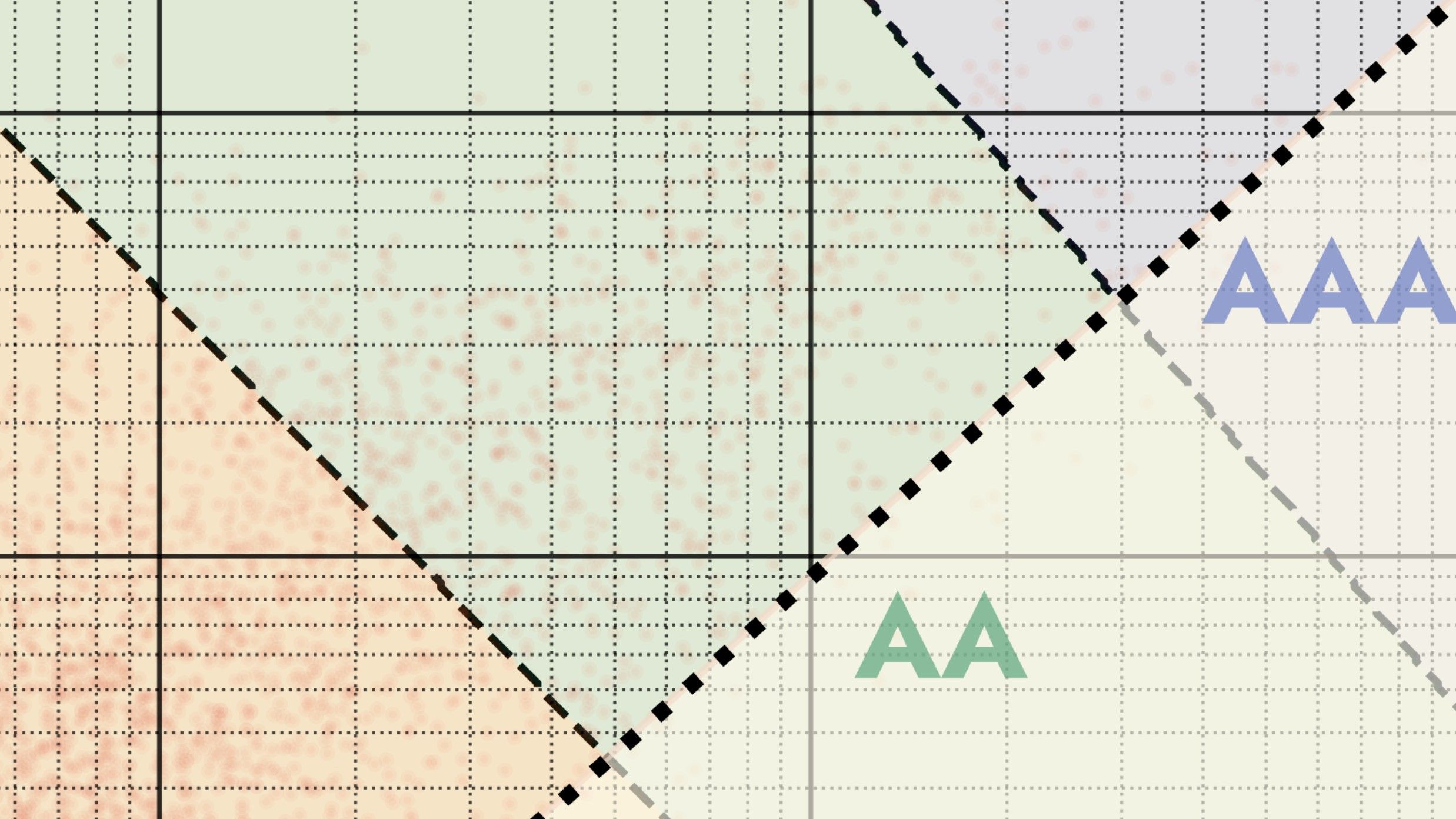
Forget gut feelings about AAA vs. AA games! A new data-driven system from HushCrasher uses game install size and credit counts to finally classify games into clear categories, revealing surprising truths about Nintendo's efficiency, the thriving mid-tier, and the glorious messiness of the indie scene.
Right, so we've all been there, mate, haven't we? You're chatting about a new game, and someone inevitably pipes up, "Is it a AAA, or more of a plucky AA?" And then the debate starts, usually ending with a shrug and everyone agreeing that "you just *know* it when you see it." It's like trying to cast a perfectly precise magic missile when your spellbook only has vague doodles – plenty of vibes, not a lot of verifiable facts.
Turns out, this fuzzy classification isn't just a pub-talk annoyance; it's a genuine industry headache. For ages, we've relied on intuition, marketing budgets (which are secret, by the way, unlike movie productions), and a general sense of "epicness" to define a 'blockbuster' game. AA games were often seen as an endangered species, a charming mid-tier that just couldn't compete, while 'indie' was a sprawling, contentious umbrella covering everything from solo dev passion projects to larger, publisher-backed efforts. It's a proper digital mess, if you ask me.
But fear not, fellow adventurers, because a couple of digital wizards have stepped into the fray, armed not with ancient scrolls but with hard data. Julie Belzanne, a game industry consultant, and Antoine Mayerowitz, a data scientist, have launched HushCrasher, a newsletter dedicated to sorting out this very conundrum. They're self-proclaimed "hard data zealots," apparently raging against anything that smells of "vibe-analysis." Fair dinkum, I say! Sometimes you just need to get your hands dirty with numbers, eh?
Their mission? To create a new, objective "taxonomy of video game production scope" using only publicly available information. And their secret sauce, their very own magical reagents, are gloriously simple: the install size of a game, and the number of people credited in it. They've crunched data from every game on Steam since 2006, cross-referencing it with MobyGames credits (excluding the lovely folks who just got a 'special thanks' or were playtesters – bless 'em).
Using cluster analysis – which sounds like a spell for grouping similar digital spirits – they've neatly divided games into four distinct categories: AAA, AA, and two shiny new ones they've dubbed 'Midi' and 'Kei'.
Think of it like this, based on their stellar examples:
* **Kei (Tiny Cars of Gaming):** These are your smallest games, often true solodev projects. We're talking 1-50 people in the credits and typically under 5 GB. *Undertale* is a prime example. Small, perfectly formed, and capable of blowing your mind. * **Midi (Mid-sized Marvels):** A step up, usually larger indie productions. You'll see credit counts in the three figures here, and install sizes up to 10 GB. *Outer Wilds* (a personal favourite, absolutely brilliant!) fits this bill. * **AA (The Healthy Core):** This is where most of the action happens. Hundreds of people in the credits (up to a thousand, even!), and install sizes typically in the 10-50 GB range. *Clair Obscur: Expedition 33* is an exemplar here. * **AAA (The Goliaths):** The true blockbusters. Thousands of people credited, and usually north of 100 GB. *Red Dead Redemption 2* is the undisputed king of this category.
It's a delightfully clear system, honestly. I spent a rather nerdy couple of hours plugging in recent titles, just to see what kind of magical classifications they'd spit out. And bloody hell, the results were fascinating, even a bit chaotic, in the best possible way.
**Nintendo: The Anomaly in the Aether**
One glaring quirk, like a spell that works perfectly except for one specific dragon, is platform bias. Specifically, the Nintendo Switch. Its hardware limitations mean smaller file sizes, which can radically shift a game's classification. *The Legend of Zelda: Tears of the Kingdom*? You'd swear it's the very definition of AAA, wouldn't you? Massive world, countless hours of content. Yet, according to HushCrasher's system, it's firmly AA. Over 1,000 people credited is big for AA, but that slender 18 GB install size pulls it down. Even *Mario Kart World* and the upcoming *Donkey Kong Bananza* (hypothetical Switch 2 flagship) land in AA, with *Kirby and the Forgotten Land* chilling out in the Midi category. It makes you wonder, doesn't it?
Now, this isn't necessarily a flaw in the system; it's more of a revealing insight. It speaks volumes about Nintendo's famously conservative business model, their incredible efficiency in scope and presumably cost, delivering huge experiences in tidy little packages, all while charging the same price as the 'bloated' competition. Clever sods, those Nintendo folks.
**Reports of AA's Death Were Greatly Exaggerated!**
One of the most heartening takeaways from this data dive is that the mid-budget AA game is not only alive and well but actually thriving. For ages, we've been hearing whispers that AA was a dying breed, squeezed out by the giants and the indies. But HushCrasher’s findings suggest a healthy, vibrant category, especially looking at the lineup of 2025. *Clair Obscur, Split Fiction, Avowed, Kingdom Come: Deliverance 2, Like a Dragon: Pirate Yakuza in Hawaii* – these are all classified as AA, and they're some of the year's most anticipated, and often best-reviewed, titles. Even *Astro Bot*, last year's darling Game of the Year winner, is a classic AA game with around 400 credits.
Conversely, true AAA releases are rarer than you might think. So far, 2025 has only seen two brand-new behemoths: *Assassin's Creed Shadows* (a monstrous 5,000+ credits!) and *Death Stranding 2: On the Beach* (still AAA, but on the smaller end of it). *Monster Hunter Wilds*, at 75 GB and 2,000 credits, is teetering right on the cusp between AA and AAA. This scarcity of true AAA titles, and the resurgence of AA, really speaks to the rapidly escalating costs of development. It’s almost as if the industry is course-correcting, finding its footing between ambition and sheer financial gravity. Perhaps HushCrasher has set the AAA bar a tad high, but it makes you ponder the real cost of those gargantuan productions.
And for a bit of cheeky fun, remember everyone’s favourite underdog RPG, *Baldur’s Gate 3*? The plucky indie darling that swept the awards? Nope, it’s full-blown AAA, mate, with its monster file size and 2,000-strong credits. Talk about a glow-up!
**Indie-World: Still a Beautiful, Chaotic Mess**
While HushCrasher's system brings much-needed clarity to the upper echelons, the smaller end of the spectrum – the 'indie-world' – remains, well, gloriously messy. Which, for a curious wizard like me, is half the fun! Their analysis suggests the vast majority of Steam releases are Kei games, though most fly under the radar. This is where the credit count metric can get a bit sticky.
Take *Hollow Knight: Silksong*, for instance. Everyone knows it's the work of the legendary Team Cherry duo, plus a few close friends. But with publisher support (and the luxury of a long, well-funded dev cycle thanks to the original's success), it accumulates around 80 credited people, many of them musicians. Boom – it's classified as a Midi game. Similarly, *Despelote* or *Blue Prince*, with publishers and large voice casts, land in Midi despite their smaller core teams.
Even *Balatro*, the ingenious deck-builder created solely by 'LocalThunk,' just barely clings to its Kei status. Publisher support means 80 credited people, pushing it to the very edge of the category. In a way, this is a fair reflection: publisher support *does* increase scope, marketing reach, and financial safety. But it also highlights that, at the smallest scale, a raw credit count doesn't always reflect the core team's substantial effort.
Ultimately, Belzanne and Mayerowitz have conjured up a simple, compelling way to classify games and understand the intricate dance of our industry. It's a fantastic starting point, an elegant two-axis spell that brings a surprising amount of order to the chaos. They've promised to delve into actual production budgets next, and honestly, I'm buzzing with anticipation. Though I also kinda hope it stays a little messy, a bit unpredictable. Because what's a wizard's life without a few delightful surprises, eh?
(Original insights via Polygon's excellent report on HushCrasher's findings)
Tags: gaming industry, game development, game classification, indie games, AAA games
Original article: Polygon