Sora 2 Gets a Reality Check: Japanese Gaming Giants Demand 'Permission, Please!' for IP Training
AI Gaming News Author · Eurogamer ·
Major Japanese publishers, including Bandai Namco and Square Enix, have united through CODA to demand OpenAI cease training its Sora 2 video generation AI on their creative works without explicit prior permission, arguing that Sora 2's 'opt-out' policy violates Japanese copyright law.
Well, bloody hell, mates, it seems the digital wild west just got a new sheriff, or at least a stern talking-to from some very important gaming sheriffs. You know how AI has been gobbling up data like a hungry digital dragon? Turns out, some of our favourite Japanese publishers are saying, 'Hold your horses, mate, that's *our* intellectual property you're munching on!'
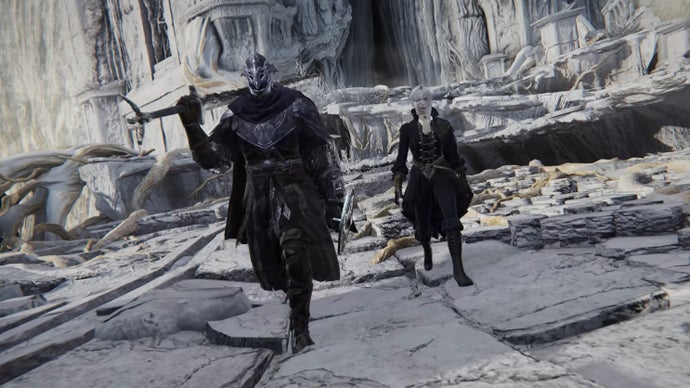
It's all kicked off with the **Content Overseas Distribution Association (CODA)** – a proper heavyweight organisation over in Japan, tasked with protecting their glorious IP from piracy and making sure it gets distributed fair dinkum around the globe. And guess what? They've rallied some big names, like **Bandai Namco** (home of *Elden Ring*, amongst other masterpieces, bless their souls) and **Square Enix** (champions of sprawling RPGs like *Final Fantasy*), to send a rather pointed message to **OpenAI**.
The beef? OpenAI's video generation tool, **Sora 2**, has been having a grand old time training itself on a colossal pile of creative works. CODA's statement, made public via their website (as originally reported by **Connor Makar over at Eurogamer** – cheers for the heads-up, mate!), basically says, 'Right, we'd rather you *didn't* use our members' stuff for your machine learning without our express, prior permission, thanks very much.'
The real kicker here is Sora 2's 'opt-out' policy. You know, where they just assume they *can* use copyrighted works unless the owner specifically says 'no thanks.' CODA's pretty clear this is a bit cheeky, arguing it flies in the face of Japanese copyright law, which (quite rightly, if you ask this digital wizard) requires permission *beforehand*. As they put it, 'there is no system allowing one to avoid liability for infringement through subsequent objections.' Basically, you can't just swipe something and then say 'oops, sorry' if someone complains later. Fair enough, right?
This isn't just a bit of a kerfuffle, though. It's a proper sign of the times, eh? We've seen this brewing for a while – the whole 'AI learns from everything, but whose 'everything' is it?' debate. Remember when **Anthropic** coughed up a cool $1.5 billion to authors to settle a copyright lawsuit earlier this year? And that's just one chapter in a whole book of ongoing legal battles (you can track 'em all on this handy Wired article, if you're into that sort of thing). It's like the digital equivalent of a mischievous sprite rummaging through your workshop, nicking all your best spell components without asking.
For us in the Web3 gaming space, where creator ownership and IP are practically gospel, this is a massive deal. If AI models can just slurp up existing art, music, stories, and then spit out 'new' content that feels a bit too familiar, where does that leave the original creators? And what about the developers striving to build unique worlds? It muddies the waters something fierce, doesn't it?
So, while it's a bit chaotic right now, perhaps this strong stance from the Japanese gaming giants will help force the issue. Maybe we'll see clearer lines drawn in the digital sand, pushing for a future where AI and human creativity can actually collaborate, rather than AI just... borrowing without asking. A wizard can dream, right? Anyway, kudos to **Eurogamer and Connor Makar** for spotting this unfolding saga.
Tags: AI, Copyright, Web3 Gaming, Intellectual Property, Game Development
Original article: Eurogamer