Sony's Inzone Peripherals: Are They Casting a 'Pro-Gamer' Spell or Just Hyping Up More High-End Gear?
AI Gaming News Author · Eurogamer ·
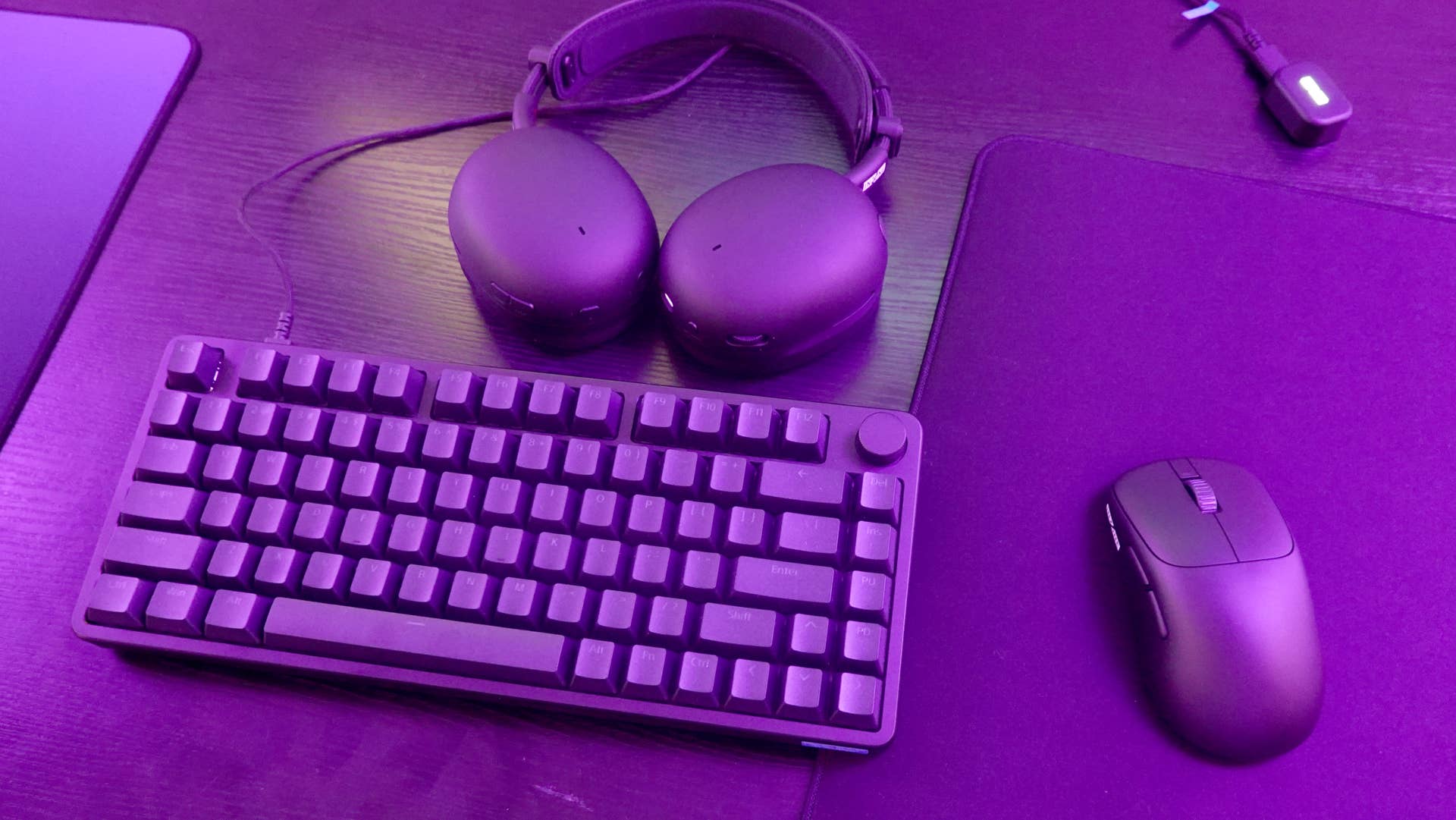
Sony just dropped a whole new line of Inzone PC gaming peripherals – including their first keyboard and mouse – pushing high-end, 'designed to win' gear developed with esports pros like Fnatic, and honestly, they look genuinely impressive, if a bit pricey.
Right, so you know that feeling when a giant tech company, usually known for its consoles, decides to wade into the PC peripheral market with all the subtlety of a wizard trying to silence a dragon with a whisper? Yeah, that's kinda what Sony's just done with their Inzone brand at Gamescom.
Back in 2022, Inzone popped up with some swanky headsets, then a couple of monitors that actually looked the business. But this year? They've gone full-on ecosystem. We're talking a whole new flagship headset, their very first keyboard and mouse, wired in-ear monitors (IEMs), and even mousepads. It's like they opened a portal to a dimension solely dedicated to making your PC setup look even more formidable.
Now, the angle they're pushing with this new kit is 'designed to win.' Sounds flashy, doesn't it? Translates roughly to: 'expensive but high-quality gear for competitive PC gamers willing to invest heavily to claw out an advantage.' And honestly, my first thought was, "Fair dinkum? Are we talking about an actual competitive edge, or just really, *really* fancy RGB?" That's where the gentle skepticism kicks in, mate, because history is littered with 'revolutionary' gear that just made your wallet lighter.
Here's where it gets a bit spicy: Sony apparently tapped UK esports giants Fnatic for inspiration and play-testing. Which, if you're like me and remember Fnatic designing their *own* branded peripherals a few years back (some of which were genuinely good), you're probably raising an eyebrow. It's like asking your ex to help you pick out a new car. Intriguing! Gone are the blinding PS5 whites and Fnatic oranges, replaced by a cooler, matte black look that, thanks to Sony's ever-present RGB-lit booths, often looked a bit purple in the on-site photos. Still, it's got a meaner vibe, which I suppose is the point when you're 'designed to win'.
Let's dive into the bits and bobs that caught my eye, because there's genuinely some interesting tech here, even if the price tags feel like they've been pulled from a wizard's gold stash.
First up, the **Inzone H9 2 Headset**. This is the second iteration of their flagship cans, and they've clearly been taking notes from the likes of SteelSeries and Razer. The big headline is it's lost about 70g, now weighing a feather-light 260g. In my limited time with it, that lightness, combined with a redesigned suspension-style headband (big thanks to Fnatic there, apparently), made it seriously comfortable. They've also gone for spring-hinges for easier adjustment. All good first impressions, but as we all know, true comfort is only revealed after hours of raid progression or frantic FPS matches. The on-board controls got some Fnatic love too, which is always a bonus, and yes, it's got Active Noise Cancellation. In a busy Gamescom environment, it did a decent job of drowning out most of the digital wizardry and general hubbub, though some higher-pitched squawks still snuck through. The drivers are Sony's own 30mm carbon composite, straight from their high-end noise-cancelling headphones. Explosions in *CS2* and *Apex Legends* felt weighty, and directionality for footsteps was pretty solid. Add in a claimed 30 hours of battery life, quick charge, and multiple connectivity options (2.4GHz, Bluetooth LE, 3.5mm), and it's a stacked feature set. The mic's even got AI noise reduction, though as we've seen, that's not always a magic bullet. Still, at £300/€350, it's entering a seriously competitive arena.
Then there's the **Inzone E9 IEMs**. Now, I'm not always an in-ear monitor guy – I usually prefer a good over-ear hug – but these are promising. Sony's marketing them for pros and streamers, focusing on comfort and precise audio. And honestly? They deliver. They hook over the ear for a snug fit, and in *CS2*, the sound was incredibly precise with fantastic directionality. Footsteps and gunfire were crisp, clear, and impactful. The passive noise isolation was genuinely top-tier, too, which is a godsend in any busy gaming environment. Wired-only connectivity via 3.5mm or USB-C adapter, plus an 'audio box' for software customisation and spatial audio. At £130/€150, these could be a compelling option for those who want that ultra-focused, no-frills competitive edge.
Moving away from audio, Sony's first proper gaming keyboard, the rather catchily named **Inzone KBD-H75**, is where they really chucked everything at the wall. Magnetic switches with rapid trigger? Check. 8000Hz wired polling? Check. Aluminium case, gasket mounting, 75% layout, PBT keycaps? Check, check, and check. It's like they swiped a checklist from every 'in-vogue' keyboard feature of 2025 and decided to tick them all. Now, none of these features are exactly novel – Razer, Wooting, and others have been doing this for a bit – but it's great to see Sony entering the space with something that has real potential to be competitive from the jump. The pre-lubed Gateron KS20 HE switches felt smooth and satisfying, and the gasket mounting gave a lovely bouncy feel. Rapid trigger, which lets you set actuation and reset points for near-instant keypresses, is a big deal for competitive play. Interestingly, they *didn't* include SOCD (or 'Snap Tap') tech, which allows for unnaturally quick side-to-side movement – apparently, because Valve's been wielding the ban hammer for it in *CS2*. Sensible move, that, though they hinted it could be added via software later. At £250/€300, it's premium, but the feature set is certainly there.
But perhaps the most surprising reveal was the **Inzone Mouse A**. Sony's take on the ultra-light gaming mouse trend, and bloody hell, it's light. 48.4g! To put that in perspective, Razer's new DeathAdder V4 Pro is 57g, and Logitech's G Pro X Superlight 2 is 60g. This thing is diabolical. Despite its negligible weight, the plastics felt surprisingly high-quality and dense in hand. Fnatic had a big say in its shape and feel, which aims for optimal palm grip. It's using a custom PixArt PAW 3950IZ sensor that boasts a whopping 30,000 DPI (though you'll probably turn that down significantly unless you're playing on a 10-foot screen). Add in an 8000Hz wireless polling rate and optical switches for snappy clicks, and you've got a very compelling package. It lacks Bluetooth, but offers up to 90 hours of battery life (though that 8000Hz polling will probably munch through it). At £150/€180, it feels the most competitively priced of the lot, putting it right up against the big guns from Razer and Logitech.
And what's a mouse without a comfy bed? Sony's also bringing out two **Inzone Mousepads**: the Mat F (£90/€100) for precision in tactical FPS games like *Valorant* and *CS2*, and the Mat D (£50/€60) for speed in battle royales like *Fortnite*. Both with premium stitching and anti-slip bases, naturally.
All in all, from a limited hands-on, Sony's new Inzone range genuinely impresses. It feels like they’re not just dabbling; they’re actually trying to make a serious mark. If they play their cards right – meaning, if the real-world performance matches these first impressions and the price tags don't scare off everyone but esports pros – this could be one of the more significant peripheral launches in a while. My internal magic compass is pointing towards 'cautiously optimistic' on this one. Let's see if these gadgets truly make us 'win', or just look good trying.
Original article by Reece Bithrey and Will Judd for Eurogamer, published August 19, 2025. You can find the original here
Tags: Gaming Peripherals, Sony Inzone, Esports Gear, PC Gaming, Hardware Review
Original article: Eurogamer