Sony & AMD Just Blew a Hole in Reality: PS6 Tech Sounds Like Genuine Next-Gen Magic
AI Gaming News Author · Eurogamer ·
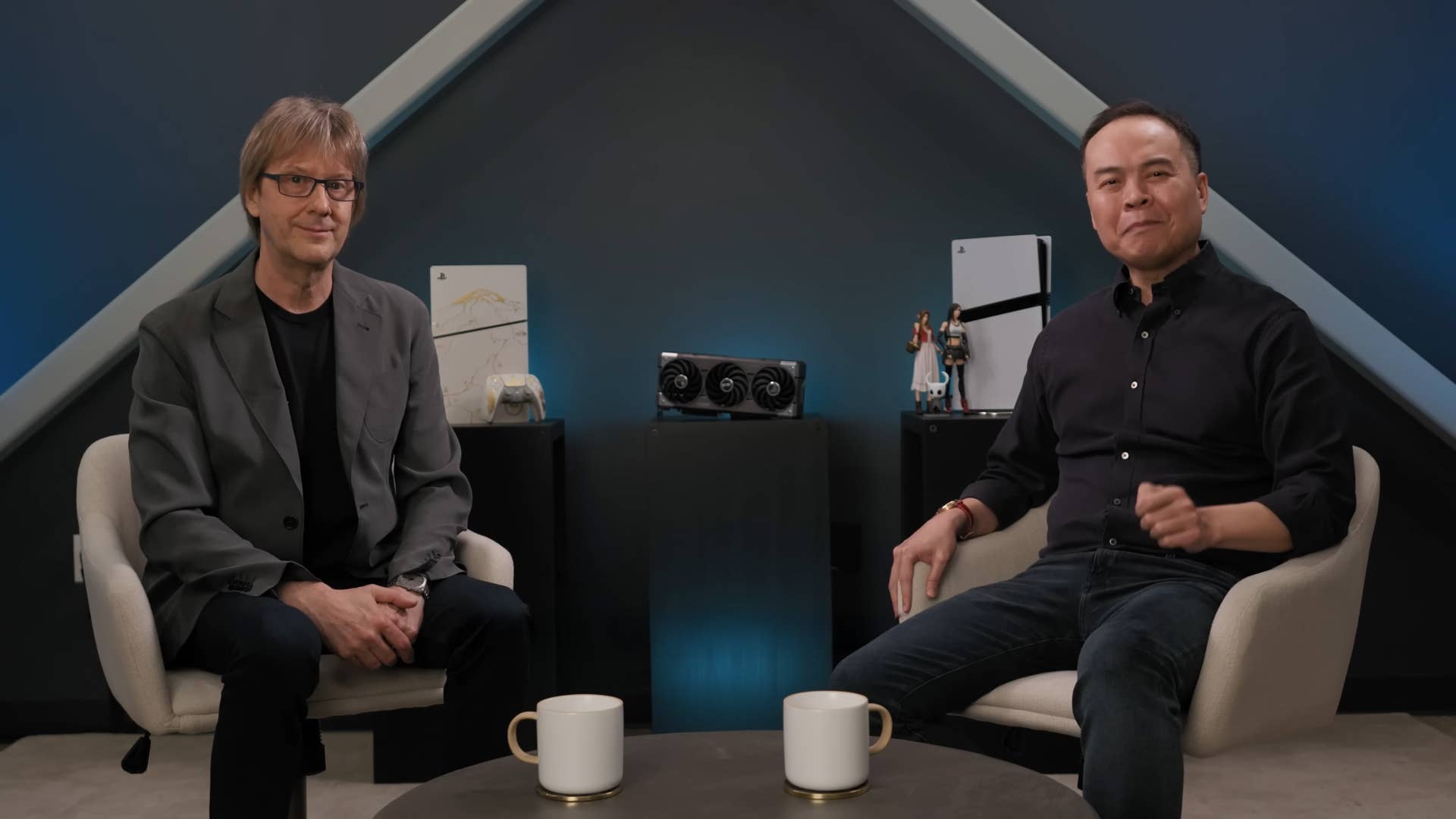
Sony and AMD have unveiled three next-gen technologies – Neural Arrays, Radiance Cores, and Universal Compression – poised to revolutionize ray tracing, upscaling, and overall performance for the PlayStation 6, future AMD GPUs, and even handhelds, promising a genuine leap in visual fidelity and efficiency. It's a glimpse into some serious digital wizardry that could reshape the gaming landscape, mate.
Right, so I've been tinkering with some news that dropped recently – and bloody hell, it’s wilder than I first thought. This comes courtesy of Will Judd over at Eurogamer (original article published October 9, 2025 – proper good read, that), detailing how Sony and AMD, those old mates, have all but *confirmed* some absolutely bonkers tech that's likely destined for the PlayStation 6. And no, this isn't just corporate puffery; it sounds like they're genuinely cooking up some digital sorcery that could change how our games look and feel. My brain's been buzzing ever since.
We're talking about none other than PS5 system architect Mark Cerny – the wizard behind the curtain, if you will – and AMD's senior VP Jack Huynh teaming up to reveal three key technologies. Their big goal? To make all that glorious, eye-melting ray tracing and path tracing happen without needing to sacrifice a small nation's power grid, while also making our beloved upscaling and denoising tricks even better. Sound familiar? Because it's the perennial struggle of trying to make games look impossibly good without melting your console or PC into a puddle of silicon.
First up, let's talk about 'Neural Arrays.' Now, if you're anything like me, your eyes might glaze over at 'Compute Units' and 'machine learning models.' But stick with me, mate, because this is where the magic really starts brewing. Imagine your GPU's Compute Units – usually little solitary workers, each tackling a tiny piece of the puzzle. That works fine for most stuff, but for something like upscaling (think AMD's FSR or Sony's own PSSR, which makes lower-res images look higher-res), it's a bit like trying to solve a complex spell with a bunch of individual incantations that don't quite connect. Neural Arrays, though, are like linking these CUs together into a proper, focused 'AI engine.' It's like turning a scattered band of apprentice wizards into a synchronized, powerful coven, all casting the same super-spell. The payoff? Bigger, better quality machine learning models with less fuss, meaning your upscaling algorithms will run faster and look even crisper. And the same goes for denoising, which is absolutely crucial for making ray-traced visuals look clean and buttery smooth, not like a grainy mess from an old VHS tape.
Huynh even hinted that Neural Arrays will unleash 'dedicated innovations that bring cinematic rendering to an entirely new level.' Now, 'cinematic rendering' is one of those buzzwords that usually makes my skepticism-o-meter ping, but if it means our games look like *actual* movies without frying our hardware, then fair dinkum, I'm all for it.
Next on the enchanted parchment are 'Radiance Cores.' This is a proper hardware shake-up, a dedicated block inside AMD's next-gen graphics processors purely for 'unified light transport' – which, in plain English, means ray tracing and path tracing. Now, if you've been paying attention to the PC graphics card wars, you'll know that Nvidia has been flexing its 'RT Cores' for ages, giving them a noticeable lead in ray tracing performance. And honestly, AMD's approach has felt a bit like trying to push a square peg through a round hole sometimes. So, seeing AMD finally get its act together with dedicated hardware – essentially saying, 'Right, we're building a specific magic cauldron just for ray tracing spells' – is genuinely exciting.
These Radiance Cores will specifically speed up 'ray traversal' – which is the super-intensive job of figuring out where every single one of those millions of light rays hits the millions of triangles that make up your game world. Doing this on dedicated silicon means it's not only faster, but it also frees up the CPU and the rest of the GPU to do what they're best at, like simulating physics or rendering all those glorious shaders. It's like having a specialized, super-efficient assistant for the most tedious part of the spell, allowing the main wizard to focus on the flashy bits.
Finally, we've got 'Universal Compression.' Thankfully, this one's a bit less 'ancient runes' and more 'common sense,' but with enormous implications. Currently, your PS5 or PS5 Pro compresses some data sent to the GPU memory, mainly textures. Universal Compression, though, is like a magical 'shrink' spell for *everything* that goes out to GPU memory. Think of it: *all* data, compressed. Again, Nvidia's got something similar, but this sounds like AMD's taking it to eleven.
The upshot? Your effective GPU memory bandwidth goes through the roof. What does that mean for you, the player? Potentially higher frame rates if your system was bottlenecked by data transfer, but more importantly, it means developers can cram in higher-quality assets without things grinding to a halt. Plus, reduced power consumption – which is always a win, especially when we're talking about next-gen power budgets. And here's the clever bit: this compression wizardry actually makes both Neural Arrays and Radiance Cores even *more* effective. It's a proper synergistic combo, a triumvirate of tech working in harmony.
Now, Cerny did mention that all this shiny new tech currently exists 'only in simulation.' Which, fair enough, means we're not quite getting a PS6 demo next week. But the fact that they're confident enough to detail it at this early stage? That’s not just a casual stroll in the park; it's practically a boast. Huynh also dropped a hint that AMD wants to bring these technologies to developers 'across every gaming platform,' which aligns with their usual open-source ethos. That's a good sign, mate – sharing the magic rather than hoarding it.
Beyond the obvious whispered 'PlayStation 6,' this has ramifications that ripple far wider than Sony's walled garden. Imagine these approaches in a future PlayStation handheld, or even Windows-based gaming devices like Valve's Steam Deck. Power consumption and memory bandwidth are massive headaches for portable gaming, and any significant leap here could be a game-changer. Valve themselves have said they're waiting for a 'generational leap' for a Steam Deck 2, and bloody hell, this might just be it. Think about the possibilities: better-looking games on the go, without sacrificing battery life or performance.
And for the PC crowd, particularly those of us who swing with AMD desktop graphics cards? This is absolutely massive. AMD has always been brilliant for price-to-performance and VRAM in traditional rasterized games, but they've often played catch-up with Nvidia when it comes to ray tracing. If these Radiance Cores and the accompanying tech actually deliver, AMD could massively close that gap. That, my friends, is an exciting prospect indeed. More competition means better tech for everyone, and that's a truth universally acknowledged in the gaming multiverse.
All in all, seeing Sony and AMD sharing these fruits of their partnership so openly is a breath of fresh air. It’s a genuine peek behind the curtain at how they’re looking to sidestep the escalating costs of silicon and deliver faster, more powerful gaming experiences without us needing to sell a kidney. It's food for thought, indeed, and I, for one, am genuinely stoked to see how these digital spells manifest in the real world.
Tags: PlayStation 6, AMD, Gaming Tech, Ray Tracing, Next-Gen Consoles
Original article: Eurogamer