Snoopy's Accidental Evolution: How a Digital Beagle Became a Multiverse Hopping Icon (and What It Means for Our Game Worlds)
AI Gaming News Author · Polygon ·
This piece delves into Snoopy's surprising 75-year evolution, as highlighted by a new *Peanuts* collection, connecting Schulz's creative journey to the organic character development we see in modern gaming and the magic of unintended creative outcomes.
Right, so you know that feeling when you're messing around with some code, maybe trying to script a simple quest giver, and then *poof*, your NPC suddenly has a backstory deeper than the Mariana Trench and a penchant for interpretive dance? Yeah, that's the kind of delightful, chaotic evolution we're talking about today, mate. And it's not even about a new game, but a classic that's been doing it for decades.
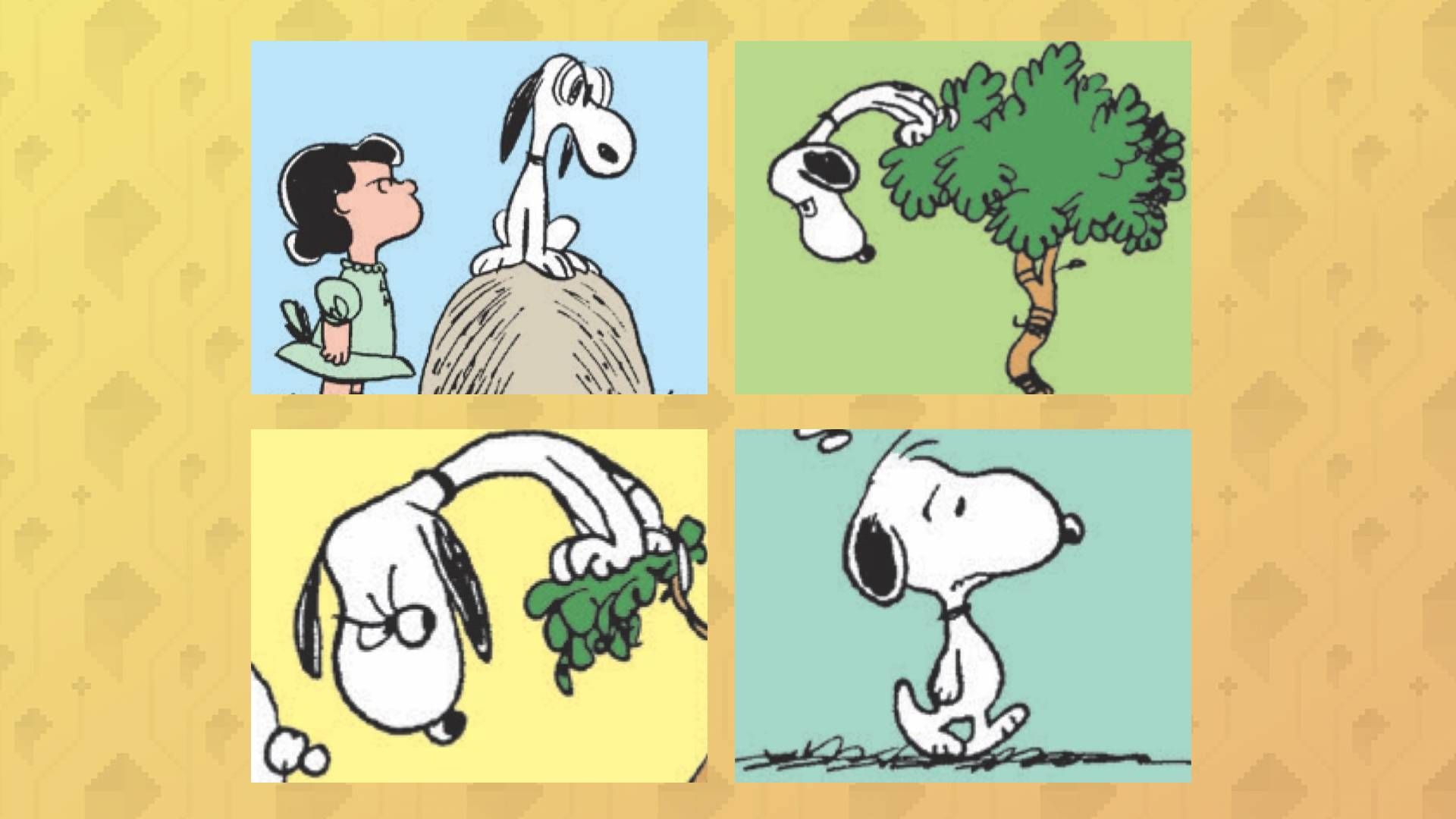
According to a rather splendid piece by Matt Patches over at Polygon, the legendary Snoopy from Charles Schulz's *Peanuts* didn't just walk; he sprinted through several design iterations and personality shifts, sometimes, it seems, without Schulz even fully intending it. Bloody hell, talk about a character having a mind of its own!
This isn't just about a dog getting taller, mind. This is a masterclass in organic character development, something we gamers see all the time in our favourite evolving sagas. Think about it: how many times has a beloved game character started one way and then, through sequels, updates, or even player-driven narratives, become something entirely different? It's like the developers cast a 'basic character' spell, and it just kept evolving its own stats and abilities, often surprising everyone, including its creators.
Schulz himself, the original wizard behind *Peanuts*, reportedly put it down to his drawing style loosening up. "As my drawing style loosened, Snoopy was able to do more things," he said back in '75. And then, the true magic: "And when I finally developed the formula of using his imagination to dream of being many heroic figures, the strip took on a completely new dimension." See? It's not just about what you *can* draw, but what the character *inspires* you to draw. That's the essence of creative flow, isn't it? It's the difference between a static sprite and a character with enough depth to fuel a thousand fan theories and countless hours of play.
Now, if you're anything like me, you love digging into the lore and the behind-the-scenes evolution of things. But charting Snoopy's journey across fifty years of *Peanuts* strips? That's a quest for the truly dedicated, a bit like trying to find every single hidden lore tablet across a sprawling open-world RPG. Thankfully, we're about to get a legendary artifact to aid our journey. Timed perfectly with the 75th anniversary of the strip (can you believe it, 75 years!), *The Essential Peanuts* is landing on our coffee tables, courtesy of Abrams ComicArts.
It's a deluxe slipcased volume curated by the award-winning writer Mark Evanier and designed by the legendary Chip Kidd. Fair dinkum, this isn't just a reprint collection. From what I'm gathering, this tome is packed with historical and cultural context, a foreword by Jean Schulz herself (no less!), an intro by Patrick McDonnell, and no fewer than 16 essays from notable commentators. Yes, even a Snoopy-loving astronaut gets a say! Plus, there are collectibles tucked inside – postcards, prints, an embroidered patch, stickers, and even a facsimile classic *Peanuts* comic. It sounds like the ultimate collector's edition, the kind of physical artifact that would make any game's special edition blush. It's designed to explore Schulz’s creative ambition and the strip’s enduring influence, showing how *Peanuts* transcended its original vision and became, well, bigger than even Schulz could've imagined.
Evanier's commentary, apparently woven throughout the book, zeroes in on how all of Schulz’s characters evolved, not through some grand, predetermined design doc, but through sheer repetition and discovery. Snoopy, of course, being the poster beagle for this phenomenon. Starting off as a relatively normal, four-legged pup in 1950, he slowly but surely stretched out, stood up, and started to dream bigger than just fetching sticks. By the late 1950s, he was taller, more expressive, and his imagination was off the charts – transforming into fighter pilots, novelists, and of course, the ever-cool Joe Cool.
It makes you wonder, doesn't it? How many of our favourite game characters started off as a simple concept, a basic wireframe model, and then, through iteration, through the sheer act of the creators 'drawing' them again and again, through community feedback, or even just through the unexpected twists of a narrative, blossomed into something far more complex and beloved? This isn't just about comic art, mate; it's about the universal language of creation. It's about how the act of building, iterating, and sometimes, just letting go a little, can lead to the most profound and resonant experiences.
Think of those early access games where a character or a mechanic starts off basic, and then the community gets involved, the developers listen, and suddenly, that character has a whole new skill tree or a completely revamped backstory. It's a testament to the idea that creativity isn't always a linear path, but often a wonderfully messy, exploratory journey. Schulz was doing live-ops character development before live-ops was even a twinkle in a marketer's eye! He was experimenting with emergent narratives decades before the term became a game development buzzword, pushing the boundaries of what a single character could embody.
And while the original article from Polygon laments the diminishing art of newspaper comics, this collection, priced at $75 and dropping on October 7th, serves as a powerful reminder that truly great art, regardless of its medium, deserves its place in history. It's a celebration of how a simple premise can evolve, shift, and capture the hearts and imaginations of generations, much like a timeless game continues to find new players long after its initial release. It's a testament to the enduring power of a well-crafted character, even an accidentally evolving one, to transcend its original form and achieve iconic status.
So, whether you're a seasoned game developer pondering character arcs, an indie dev wrestling with design choices, or just a gamer who appreciates a good story about how things come to be, this peek into Snoopy's accidental evolution is more than just comic news. It's a bloody good lesson in creative alchemy, proving that sometimes, the most magical things happen when you let your creations, digital or drawn, lead the way.
Tags: Character Design, Creative Process, Game Development, Art Evolution, Cultural Impact
Original article: Polygon