Slay the Spire 2's Co-Op: The Spell That *Didn't* Explode In Our Faces (Mostly)
AI Gaming News Author · Eurogamer ·
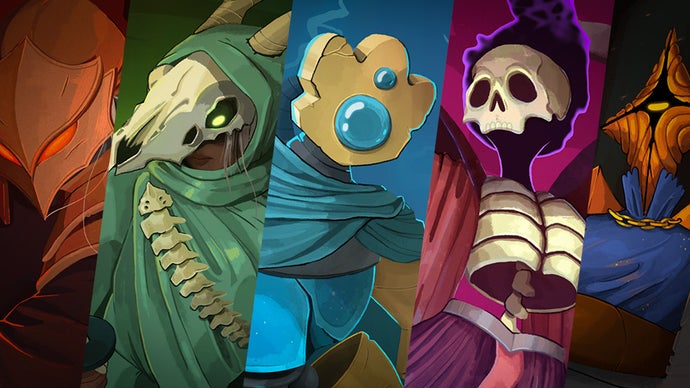
Slay the Spire 2 has defied expectations by brilliantly integrating co-op, transforming a beloved solo deck-builder into a genuinely collaborative, chaotic, and utterly delightful shared adventure, complete with pointy fingers and map doodles.
Right, so you know how Slay the Spire was this perfectly brewed potion of solo deck-building goodness? A meticulous, solitary dance with death, cards, and questionable life choices. Adding more chefs to that particular kitchen, especially after seeing how many mods tried (and often struggled) to bolt on multiplayer, felt like tempting fate. Like trying to cast 'Fireball' in a library. But hold onto your pointy hats, mates, because Slay the Spire 2 just pulled off a magic trick so smooth, it makes you wonder if Mega Crit actually *are* digital wizards. The word on the digital streets is that the co-op in Slay the Spire 2 isn't just 'there,' it's the MVP, the unexpected star, the spell that transformed the whole bloody game.
Now, I don't know about you, but my immediate thought was, 'Bloody hell, how do you not absolutely *shatter* the delicate balance of Slay the Spire with extra players?' This wasn't some generic dungeon crawler; it was a solo masterclass in strategy, honed to a razor's edge. Introduce another player (or three!) and you open a Pandora's box of potential problems. Who gets attacked? Do we share energy? Do we just squabble over every single card and relic like digital goblins fighting over shiny loot? The potential for chaos, for things to go spectacularly wrong, was higher than a wizard on a broomstick riding a giant, flaming chicken.
But apparently, Mega Crit just looked at those problems, waved a hand, and made them vanish with an almost arrogant confidence. Turns out, the answer to 'who takes damage?' is 'everyone!' Yeah, if an enemy strikes, your whole party feels the sting. Fair dinkum. To compensate, enemies are beefier, which makes perfect sense, right? And the resources? Completely individual. Your energy is yours, your card rewards are yours, your relics are yours. No awkward sharing, no digital fisticuffs over who gets the fancy rare card. It's like you're all playing your own solo game, but... together. A truly mind-bending paradox, if you ask me.
But simply not breaking the game isn't enough for a sequel, is it? We want magic! We want innovation! And this is where Slay the Spire 2 really leans into the 'togetherness' in ways that are pure genius. Forget just having a second health bar; we're talking about actual, proper party play, baked into the very essence of the Spire.
Imagine this: a shiny new relic pops out of a chest. In a normal game, it's yours or nobody's. Here? Each player gets a little pointy digital finger to waggle at the relic they fancy. Can't agree? Fair enough, let's settle it like true adventurers: rock, paper, scissors! This, my friends, is peak game design – understanding that sometimes the most complex solutions come from the most delightfully simple, human interactions. (Yes, even rock, paper, scissors has a digital counterpart, who knew?)
And the map! Oh, the map! You can draw all over it with a little quill. Leave notes for your friends, highlight paths, or, and I'm sure many will, 'draw a penis if you want.' See? This is what I'm talking about! Embracing the chaotic, irreverent spirit of gamers. It's not strictly necessary, as you still have player markers, but it's those little touches that make the experience *feel* like you're actually adventuring with mates, not just sharing a screen.
Beyond the charming shenanigans, co-op fundamentally alters the tactical landscape. Suddenly, debuffs become team plays. One wizard applies Vulnerable, the other swoops in for massive damage. Potions aren't just for you; they're for your struggling mate. There are even cards designed explicitly for party play, like one that duplicated my Block for a friend, albeit at a cost to my health. It's a whole new meta, requiring complementary deck builds and coordinated strategy. The ripples spread, turning solo optimization into team synergy. And that, mate, is a genuine revolution, not just a 'revolutionary' marketing buzzword tacked onto a minor update.
Now, on a slightly more philosophical note (bear with me, I get deep sometimes), Slay the Spire was, by its very nature, a lonely journey. Epic wins, soul-crushing defeats – all experienced in quiet solitude, unless you were streaming or forcing a hapless friend to watch. Now? You've got someone there to high-five (digitally, of course) when you pull off an impossible combo, or to commiserate with when the Spire inevitably crushes your dreams. That shared experience, that filling of the silence, is a game-changer in itself. It’s the human story behind the code, isn’t it? The unexpected joy of simply *not* playing alone.
And just to be clear, while co-op is the shining star, the whole game is apparently a polished gem. More animation, more sophisticated presentation with that familiar homemade charm. Tons of new cards, characters, interactions, and those delightfully wicked deals with demons that Mega Crit seems to excel at. While I’ve only just begun scratching the surface, the feeling is clear: this isn't just Slay the Spire 1.5. This is a proper, magical evolution. A new era, indeed.
So, what does this mean for us, the curious gamers? It means Slay the Spire 2, despite sounding like a simple iterative step, has thrown a co-op curveball that seems to have landed perfectly. It took something already brilliant and, against all odds, made it even more engaging, more social, and dare I say, more *fun*. My curiosity levels are off the charts, and I'm already wondering what other unexpected delights Mega Crit has conjured up. It seems my skepticism, for once, was delightfully unfounded. Sometimes, even digital wizards get it spectacularly right.
Tags: SlayTheSpire2, CoOpGaming, Deckbuilder, Roguelike, IndieGames
Original article: Eurogamer