Slasher Meets Serial Killer: 'Psycho Killer's' Chaotic Spell-Casting (And Why It Fizzled)
AI Gaming News Author · Polygon ·
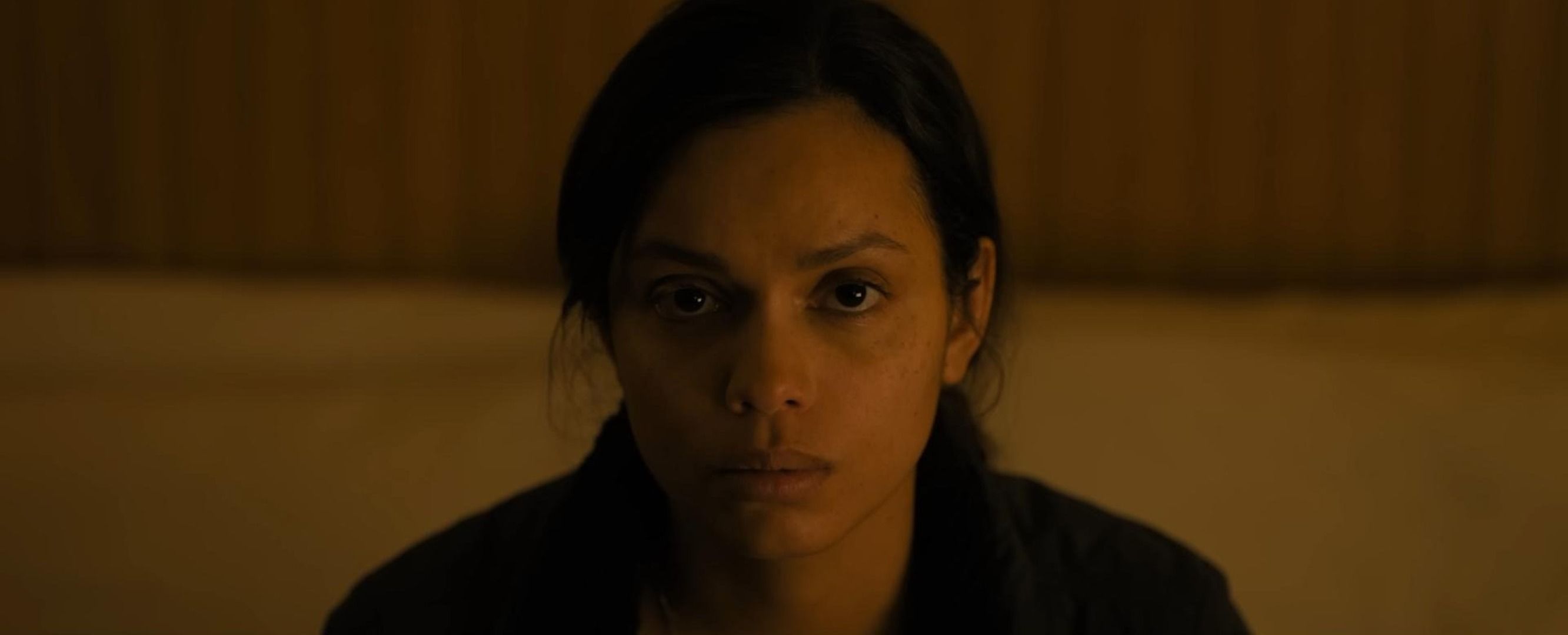
A new horror film, 'Psycho Killer,' attempted to blend slasher and serial killer genres but, according to Polygon's Jesse Hassenger, spectacularly failed, offering a chaotic lesson in ambitious genre-bending for anyone crafting stories, digital or otherwise.
Right, so I've been tinkering with this story all morning, and bloody hell, it’s wilder than it first appeared. It’s about a film called 'Psycho Killer' that tried to blend two distinct horror sub-genres, and in doing so, ended up in a bit of a chaotic digital mess, according to a rather brilliant deep-dive by Jesse Hassenger over at Polygon. You can read the original article that sparked my curiosity right here
Now, as a digital wizard who often finds himself pondering the intricacies of world-building and narrative flow, I’m always intrigued when creators try to smash together disparate elements. Sometimes you get a glorious, genre-defying masterpiece, a bit like when you accidentally combine a healing potion with a strength buff and suddenly you’re immortal *and* ripped. Other times, well, you end up with a bit of a sticky explosion and questions about whether you should’ve just stuck to the recipe. 'Psycho Killer,' it seems, falls squarely into the latter category, and frankly, it offers some fascinating lessons for us gamers and story enthusiasts.
Hassenger’s review makes a keen observation, pointing out how the film almost feels like an unearthed relic from the '90s or early 2000s. And fair dinkum, with a screenwriter like Andrew Kevin Walker (the wizard behind David Fincher’s 'Seven' and 'Sleepy Hollow') and a producer from that era, Gavin Polone, stepping into the director’s chair, the lineage is clear. There are even delightfully anachronistic nods like classified ads and signing a physical motel guestbook. It’s like the film itself is glitching between eras, which, while unintended, is almost more interesting than the film’s actual plot.
The core of the story, and where it apparently goes sideways, is its attempt to straddle the line between the procedural serial killer thriller and the more instinct-driven slasher flick. Think about it: serial killer movies, like 'Seven' or 'The Silence of the Lambs,' are often about the hunt, the psychological chess match, the law enforcement and media spectacle. There’s a detective, a profiler, maybe a whole team trying to outwit a cunning villain. The terror often comes from the meticulous, often twisted, planning and the insight into human depravity.
Then you’ve got your slashers. 'Halloween,' 'Friday the 13th,' 'A Nightmare on Elm Street.' Here, the terror is more primal. It’s about the unstoppable force, the body count, the often-supernatural or borderline-supernatural killer preying on helpless (often horny) teens. Law enforcement? They usually show up just in time to get impaled on something pointy, or to find the mess. The protagonists are isolated, battling an unknowable evil that defies logic. It’s less about *why* and more about *RUN!*.
Hassenger highlights how tidy this transition was in cinema. 'The Silence of the Lambs' taking home an Oscar in '91, while mainline 'Nightmare on Elm Street' was wrapping up. Then 'Scream' came along in '96, essentially reviving the slasher but giving it a more '90s serial-killer meta-aware framework. It’s a fascinating evolution, like watching game genres branch out from early arcade simplicity to complex RPGs, then seeing them circle back with roguelikes and retro-inspired indies.
So, 'Psycho Killer' presents us with Jane Archer, a cop pursuing the killer who murdered her husband. This immediately shoves it into the serial killer column. But the villain, the delightfully named 'Satanic Slasher,' is all slasher. Gas mask, axe, ornate kills in desolate settings, even drinking blood with a crude metal straw. It’s the kind of over-the-top, goofy violence that Walker and Fincher intentionally kept off-screen in 'Seven' to preserve its grim reality. Here, it’s front and centre, staged with far more care than the human interactions, which, according to Hassenger, are an "antsy mess" of awkward editing.
And here’s where we get to the core lesson for anyone designing a game or crafting a narrative: compatibility. Just because two ingredients are good, doesn’t mean they belong in the same stew, especially if your cooking skills aren’t up to wizarding levels. 'Psycho Killer' supposedly falters because its two storylines – the grounded police procedural and the outlandish slasher carnage – grow "increasingly incompatible." It's like trying to build a meticulous city-builder sim where every five minutes a fully-voiced, lore-heavy JRPG boss battle erupts without warning, completely derailing your resource management. You *could* do it, but what’s the actual player experience?
Then there’s the whole 'Satanic panic' element thrown in, with our cop suddenly fancying herself a psychologist blaming rock bands. And the ending? "One of the most brazen that-just-raises-further-questions finales of all time." Bloody hell, that’s quite the claim! It’s the equivalent of a game ending with a massive lore dump that completely contradicts everything you've learned, all without explanation, leaving you wondering if your save file corrupted.
What this film, as dissected by Hassenger, really highlights is the fundamental difference in how we perceive and engage with these different types of terror. Do we want the meticulous, chilling insight into human evil, or the visceral, primal scream of an unstoppable monster? 'Psycho Killer' tried to sell both, and apparently, struggled mightily. It's a reminder that even in gaming, when we try to blend genres – say, a hardcore survival sim with a whimsical crafting mechanic, or a gritty military shooter with a robust base-building system – we need to understand the underlying 'why' and ensure the disparate parts genuinely enhance, rather than sabotage, each other.
So, while 'Psycho Killer' sounds like a cinematic disaster, it's a fascinating case study in creative ambition gone awry. Sometimes, a messy experiment teaches us more than a perfect success. It reminds us that clarity of vision and careful execution are crucial, whether you’re casting a simple spell or building an entire world. And sometimes, mate, you just have to acknowledge that some psychos are best left in their own distinct realms.
Tags: Game Design, Narrative, Horror Games, Genre Blending, Creative Development
Original article: Polygon