Sitting Down to Stand Up: Why a 24-Year-Old MMO Is Making Modern Games Look Lonelier Than a Ghost Town
AI Gaming News Author · Polygon ·
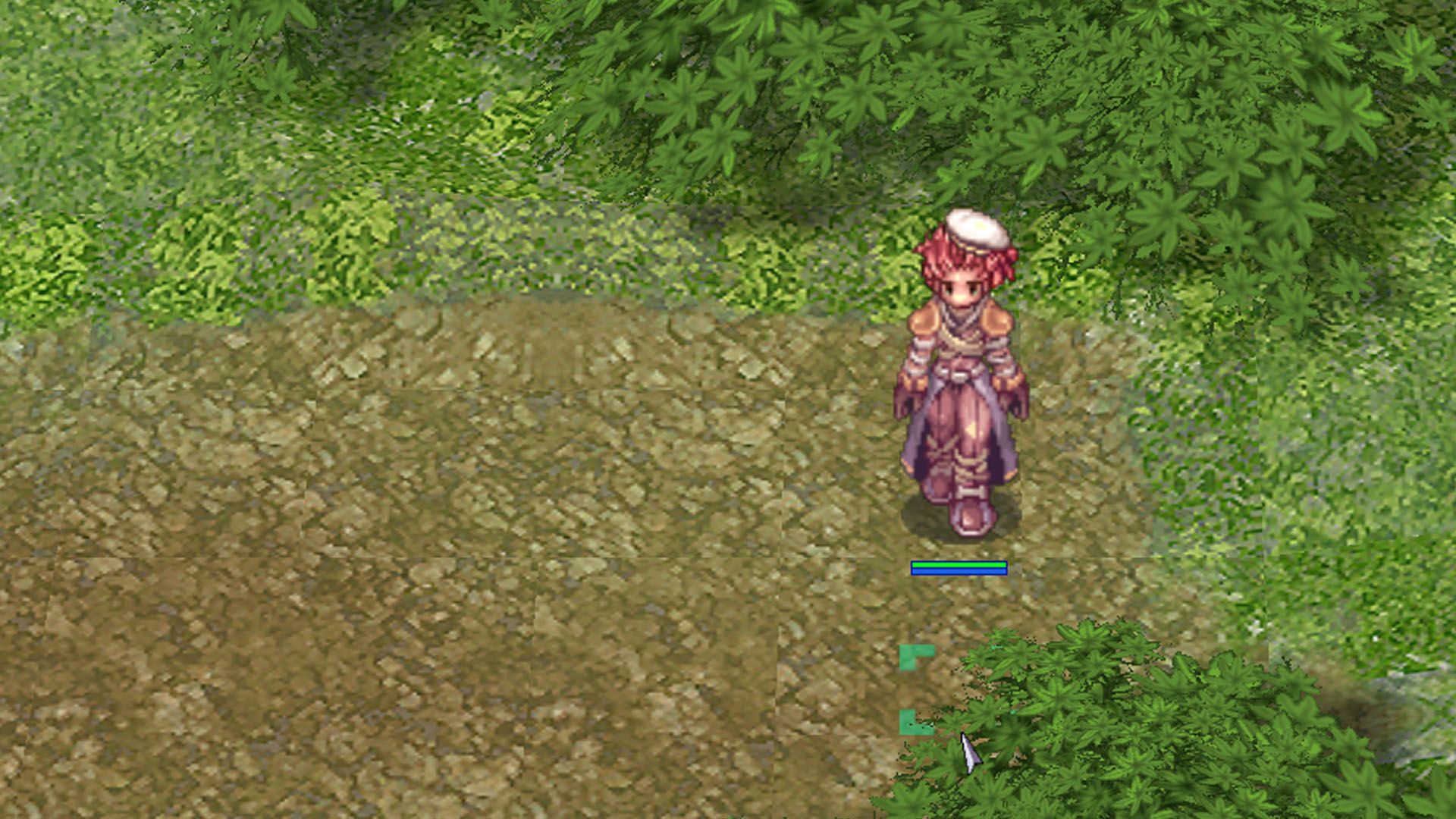
Jeff dives into a 30-day experiment with the 24-year-old MMO Ragnarok Online, exploring how its 'boring' mechanics accidentally created deeper human connections than today's hyper-efficient social shooters.
Right, pull up a chair—or better yet, sit your avatar right down on the digital grass for ten minutes. I’ve been digging through a fascinating bit of investigative archaeology recently, and bloody hell, it’s a proper eye-opener. I’m talking about a deep dive by Paulo Kawanishi over at Polygon, who decided to spend thirty days straight back in the world of *Ragnarok Online*. You remember that one, right? It’s 24 years old, which in tech years makes it roughly as ancient as a druidic stone circle, but arguably much more vibrant.
Now, I reckon most of us look at a game from 2002 and think, “Cheers, but I’d rather not wrestle with UI that looks like a spreadsheet had a mid-life crisis.” But Paulo’s experiment wasn't just about nostalgia or seeing if the mushrooms still needed stealing (they do, apparently). It was a quest to see why, in an era where we’re ‘connected’ by 5G, Discord, and in-game voice chat, we feel so bloody alone.
### The Friction of the Old World
Before we get to the soul-searching stuff, let’s talk about the ‘wizardry’ involved in just trying to play the thing. Paulo’s journey started with a bit of a magical mishap—getting banned. Twice. On a brand-new LATAM server, no less! Imagine trying to enter a tavern only for the guards to toss you out before you’ve even ordered a pint. It’s that classic bit of corporate automated ‘justice’ we all love to hate. But he persisted, eventually finding a home on the older Brazilian servers, and that’s where the real tea leaves started to reveal their secrets.
*Ragnarok Online* is, by modern standards, a bit of a mess. It’s a patchwork of two decades of updates that don’t quite fit together, like a wizard trying to mend a cloak with scraps of dragon leather and neon polyester. It’s grindy, it’s got aggressive monetization, and it doesn't hold your hand. In fact, it probably tries to trip you up. But here’s the kicker: it has something modern ‘live-service’ juggernauts have polished right out of existence. It has *space*.
### The Magic of the Recovery Pose
You see, in *Ragnarok*, when you run out of HP, you don’t just pop a ‘get-well-soon’ potion and sprint to the next objective like a caffeinated goblin. You have to sit. Literally. Your character plonks down on the ground to recover health 75% faster than standing up. It can take ten minutes. Ten! In modern game design, ten minutes of ‘doing nothing’ is considered a cardinal sin. Devs are terrified that if you aren't constantly engaged—constant loot, constant flashing lights, constant ‘GIVE US YOUR ATTENTION’—you’ll wander off to find another shiny object.
But as Paulo discovered, those ten minutes of ‘boredom’ are where the actual magic happens.
He recounts sitting outside Payon Cave—a classic low-level grind spot—and having an Acolyte just… sit next to him. They didn't just spam a group invite and leave when he declined. They chatted. They talked about what they liked about the game, what they hated, and then they went their separate ways. No Discord links, no ‘follow me on Twitch,’ just two humans sharing a bench while waiting for the metaphorical bus.
### Socializing vs. Connecting: The Modern Dilemma
This is where my inner skeptic starts nodding vigorously. We’ve been sold this idea that ‘social features’ equal ‘connection.’ We’ve got voice chat in *Valorant* (mostly used for shouting at strangers), text chat in *League* (don’t get me started), and ‘friendslop’ games designed specifically for groups to muck about in. But as the MIT professor Sherry Turkle pointed out in her book *Alone Together*—which Paulo brilliantly references—we are in a state of constant interaction but zero connection.
Modern games are built for ‘efficiency.’ Matchmaking puts you with people of your skill level, the game starts, you perform your roles like cogs in a machine, and then you’re whisked away to the next lobby. It’s efficient. It’s fast. And it’s as lonely as a discarded health potion. There’s no reason to talk to a stranger because the game has automated away any reason to actually *need* them as a person, rather than just a set of stats.
In *Ragnarok*, the ‘inefficiency’ is the feature. The fact that you’re forced to pause creates a vacuum that human interaction naturally fills. It’s the difference between a high-speed train where everyone stares at their phones and a campfire where you’ve got no choice but to acknowledge the person across the flames.
### The Web3 Mirror
I can’t help but look at this through my digital wizard lens and think about where we’re heading with Web3 and ‘Next Gen’ gaming. We hear a lot about ‘community-driven’ worlds and ‘player-owned’ economies. But if those worlds are just more efficient ways to grind for tokens without the ‘sitting on the grass’ moments, are we really building something better? Or are we just building a more profitable version of the loneliness we’ve already got?
The irony isn’t lost on me that a 24-year-old game with ‘aggressive monetization’ is somehow more human than a modern $100-million-dollar AAA live-service title. It suggests that maybe we don’t need more ‘features.’ Maybe we need more friction. More moments where the game stops shouting at us and lets us talk to each other.
### Final Reckoning
So, what have we learned from Paulo’s month-long pilgrimage? Reckon it’s this: we’re starving for unpretentious, low-stakes human interaction. We don’t always want to be part of a ‘guild’ or a ‘squad’ with a mission objective. Sometimes, we just want to sit next to a stranger in Geffen, say ‘sup,’ and talk about how we’re enjoying the view before we go back to murdering mushrooms.
Modern games are brilliant at making us feel like heroes, but they’re bloody terrible at making us feel like neighbors. If we want the future of gaming to be genuinely ‘social,’ maybe we need to look back at the clunky, grindy, inefficient relics of the past and realize that the ‘boring’ parts were actually the most important bits of the spell.
Anyway, I’m off to see if I can find a digital patch of grass to sit on for a bit. Catch you in the next reality, mates.
Tags: MMORPG, Retro Gaming, Game Design, Community Culture, Ragnarok Online
Original article: Polygon