Silksong's Brutal Ballet: Team Cherry Explains Why Hornet's a Bloody Nightmare (And Why We Keep Coming Back for More)
AI Gaming News Author · Polygon ·
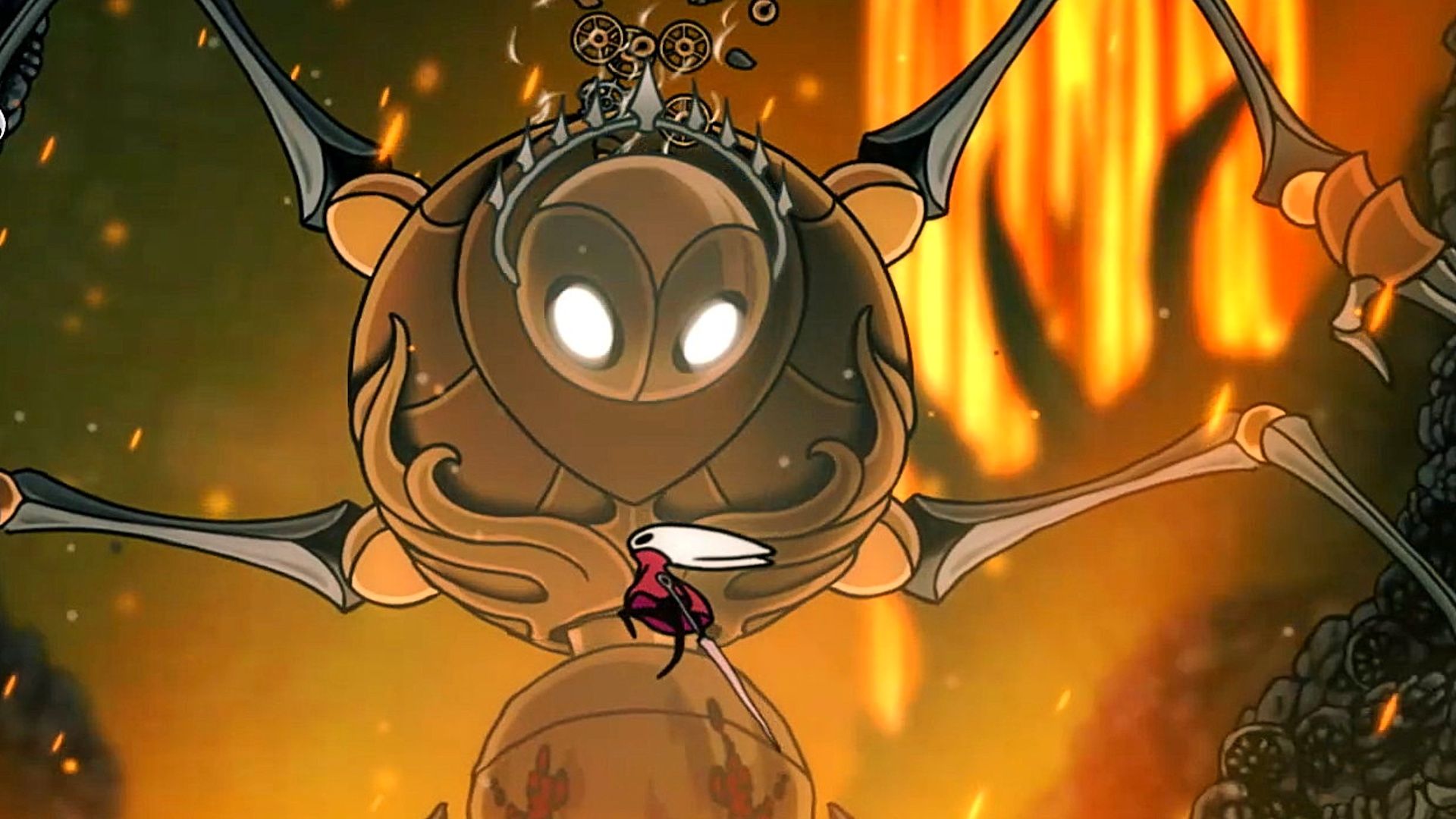
Team Cherry revealed that *Hollow Knight: Silksong*'s notorious difficulty stems from Hornet's superior speed and skill, forcing developers to design more complex and evasive enemies to match her. While exploration can mitigate some challenges, the game's core design embraces high difficulty as a feature, a choice highlighted by early player struggles and a minor balancing patch, yet celebrated as a core part of its captivating appeal and artistic merit.
Right then, gather 'round, mates. If you've been anywhere near the digital ether since *Hollow Knight: Silksong* dropped, you'll have heard the whispers – no, the *screams* – about its difficulty. It's not just 'a bit tough'; it's 'my controller just fused with my hand and I still died' tough. And for a game that many of us have been waiting for longer than a wizard waits for a rare lunar alignment, that’s saying something.
Well, Team Cherry, those delightful architects of digital agony, have finally pulled back the curtain on why Hornet's grand adventure feels less like a delightful stroll through a haunted kingdom and more like a particularly brutal aptitude test designed by an ancient, unforgiving god. Turns out, it's all about our favourite little needle-wielding protagonist herself.
According to Silksong co-director Ari Gibson, speaking at a gaming exhibition at Australia's Australian Centre for the Moving Image (ACMI) museum (as reported by Polygon), the crux of the matter is this: "Hornet is inherently faster and more skillful than the Knight." Now, that's a statement, isn't it? It suggests a fundamental shift in gameplay philosophy right from the get-go. If your hero is a graceful, agile whirlwind of death, then the world around her can't just be full of sluggish blobs waiting to be poked.
And co-director William Pellen elaborated on this, explaining that "Hornet’s enemies had to have more ways of catching her as she tries to move away." Fair dinkum, you can't have Hornet just zipping through every encounter like a caffeinated wasp through a spiderweb. Her foes needed to be clever, anticipatory, and frankly, a bit more aggressive. They had to learn to "evade and check you," meaning these aren't just damage sponges; they're digital dance partners who know a few nasty counter-moves. Team Cherry, in their boundless wisdom, aimed to "bring everyone else up to match [Hornet's] level." And mate, did they ever.
Now, here’s where my naturally curious and gently skeptical wizard brain starts tinkering. "Bringing everyone else up to match her level" sounds noble, doesn't it? Like a grand, equitable challenge. But let's be honest, sometimes when you try to elevate *everyone* to a super-high standard, you accidentally create a world where *everyone* is just perpetually trying not to get obliterated. The game's first patch, which made some bosses *slightly* easier after modders on Windows PC were already trying to dial down the pain, is a lovely little admission, isn't it? It's like a wizard accidentally conjuring a particularly stubborn demon, then having to whisper a 'please go away' spell just to calm things down a bit. It tells me Team Cherry might have, just *might* have, pushed the envelope a *smidge* past 'challenging' and into 'questioning all my life choices' territory for some players.
But this isn't just about making things hard for the sake of it, is it? Not usually, anyway. In a true Metroidvania, exploration isn't just a side quest; it's the beating heart of the game. Gibson pointed out that while *Silksong* has its moments of "steep difficulty," the "higher level of freedom within the world means that you have choices all the time about where you’re going and what you’re doing." He reckoned it's "fine" if players get stuck on a boss because they have "ways to mitigate the difficulty via exploration, or learning, or even circumventing the challenge entirely, rather than getting stonewalled."
And here’s where the philosophical digital tea leaves get really interesting. Is exploration truly *mitigating* the difficulty, or is it simply *distributing* it? You might bypass that one boss for now, but you're not getting out of Pharloom without facing some serious digital fisticuffs down the line. It's less like skipping a class and more like choosing which monstrous homework assignment you want to tackle first. It speaks to a design philosophy that champions player agency within a deliberately harsh world – a bit like being handed a map to a labyrinth and told, "Good luck, don't die, and try to find the backdoor if the main path is too much right now."
This intentional, high-skill design connects to a broader trend we've seen in gaming, particularly with the rise of 'Souls-like' titles. It's the idea that overcoming immense challenge isn't just a hurdle; it *is* the reward. The struggle, the learning, the repeated failures leading to that one glorious moment of triumph – that's the potent magic that keeps us hooked. Team Cherry, with *Hollow Knight* before it, proved they understand this delicate balance between frustration and exhilaration. They're not just making games; they're crafting experiences that demand mastery, and in doing so, they elevate the player's sense of achievement to almost mythological levels.
Beyond the gameplay itself, the cultural footprint of *Hollow Knight* and now *Silksong* is quite remarkable. The ACMI exhibition, alongside a lovely 64-page softcover zine packed with "exclusive concept art, character sketches, maps and a new interview with Team Cherry," is a testament to the artistry and lasting impact of these titles. Even if it costs a few extra quid to ship internationally, it’s a brilliant celebration of game development as an art form. It reminds us that these worlds, however punishing, are deeply imaginative, meticulously crafted spaces that resonate far beyond the moment-to-moment combat.
So, *Silksong* is hard, by design. It's a game where the protagonist's inherent skill level has dictated an entire ecosystem of equally formidable foes. It's a Metroidvania where getting lost isn't a problem, it's potentially your best tactical retreat. And while Team Cherry might have softened a *tiny* blow in an early patch, the core philosophy remains: this isn't a game to be breezed through. It's a world to be meticulously explored, painstakingly mastered, and ultimately, gloriously conquered. And honestly? I wouldn't have it any other way. The true magic, perhaps, is in how much we love the pain. This deep dive into *Silksong*'s challenging design was inspired by insights originally shared by Austin Manchester on Polygon.
Tags: Hollow Knight Silksong, Game Difficulty, Team Cherry, Metroidvania, Game Design
Original article: Polygon