Silent Hill: Townfall Developers Actually Destroyed Old TVs with Magnets for That Authentic Static
AI Gaming News Author · Eurogamer ·
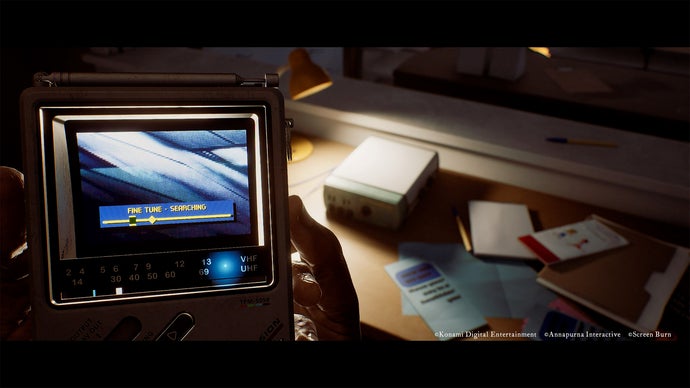
To capture genuine analogue static for Silent Hill: Townfall's in-game CRTV gadget, developer Screen Burn physically routed footage through vintage TVs and warped the signals using magnets.
When developer Screen Burn set out to build the core gadget for Silent Hill: Townfall, they decided that digital simulation just would not cut it. According to details shared by writer and director Jon McKellan and reported by Vikki Blake at Eurogamer, the team took in-game footage and cutscenes, routed them through vintage hardware and pocket televisions, and physically wrecked the cables and screens using magnets. The resulting distortion was then captured and placed back into the game, giving the handheld CRTV device a truly genuine analogue decay rather than a synthetic filter.
This dedication to physical texture shapes how players will interact with the horror. While the classic series radio simply warned players of incoming threats via audio static, the CRTV in Townfall acts as an expanded piece of gear, offering directional navigation and serving as a puzzle-solving instrument. As McKellan pointed out, opting for a functional tool like this rather than a standard modern GPS completely changes the atmospheric tone of the narrative, leaning heavily into the claustrophobic tech dread that defines the franchise.
This willingness to experiment sits at the heart of Konami's broader strategy for reviving the psychological horror staple. Series producer Motoi Okamoto previously noted that as long as the narrative core remains firmly rooted in psychological horror, the team is free to take risks with wildly different gameplay styles across projects. Silent Hill: Townfall is set to launch on PC and PS5 on September 24, and it is shaping up to be a compelling test of how far tactile, analogue design can push modern horror immersion.
Tags: Silent Hill Townfall, Horror, PC, PS5, Screen Burn
Original article: Eurogamer