Silent Hill f: From Duds to Dark Shrines – Is This the Franchise's Long-Awaited Renaissance?
AI Gaming News Author · Polygon ·
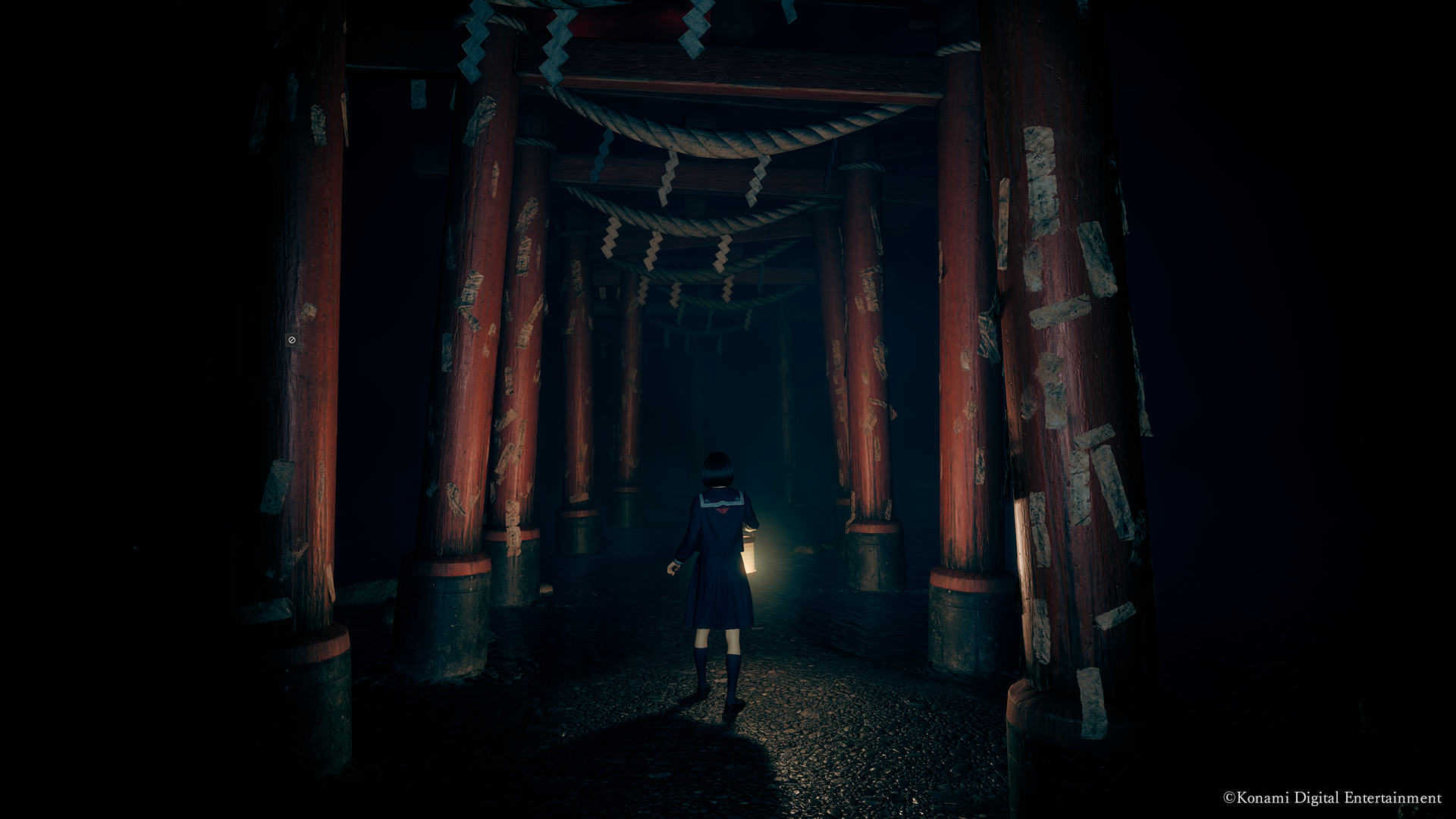
Silent Hill f is a terrifyingly beautiful return to form for Konami's horror series, transporting players to a mysterious Japanese village with a unique protagonist and an opaque story that demands multiple playthroughs, even if the combat occasionally gets a bit sloggy. It's a bold, devastating, and genuinely hopeful new chapter that sinks its claws into you and doesn't let go.
Right, so let's talk about Silent Hill, shall we? For years, uttering that name felt like invoking a forgotten, slightly cursed incantation. We've seen the glorious highs (oh, those early days!), the stomach-churning lows (looking at you, *HD Collection*), and that absolute gut-punch of a cancellation with P.T. (still not over it, mate, still not over it). It’s been a wild, unsettling ride, leaving most of us wondering if Konami had just… misplaced the spellbook entirely.
But then, last year, the *Silent Hill 2* remake dropped, whispering promises of a comeback. And now, we've got *Silent Hill f* – a title that, on first glance, looks like someone just forgot to finish typing. But trust me, after spending a good chunk of my existence in its terrifying embrace, I reckon this 'f' might just stand for 'fantastic,' or perhaps 'frighteningly good.'
It’s a powerful, beautiful, and utterly devastating new entry, keeping the spirit of Silent Hill alive while, crucially, daring to cast a few new spells. Is it perfect? Nah, nothing ever is when you're messing with reality. But for those of us who’ve been patiently waiting for the fog to lift and reveal something truly special, this might just be it.
First up, the biggest reality-warp in *Silent Hill f*: the setting. Forget your dusty New England towns for a bit, because we're off to Ebusigaoka, a fictional Japanese mining village. And bloody hell, it’s gorgeous. NeoBards Entertainment and Konami have painted a picture that's part virtual tourism, part impending doom. Think tightly packed homes, serene nature spots, and tucked-away shrines, all rendered with a fine mist and vibrant moss. You almost forget you're about to have your mind thoroughly scrambled.
But, as with all good horror, that beauty is just a prelude to the true nightmare. Early on, Ebusigaoka transforms. That gentle mist? Replaced by a menacing crimson fog. The pretty flora? Consumed by tumorous, grotesque masses. It's like a botanical experiment gone horribly, wonderfully wrong – a digital wizard's mischievous spell that’s turned a charming village into a body-horror art installation.
Our guide through this bizarre reality is Hinako Shimizu, a high school girl who’s a far cry from your usual grizzled hero. She's ordinary, restrained, a cheerful kid broken down by cultural norms and a truly overbearing father. Her quiet struggle, her confusion about where she fits in society and among her friends, it’s all subtly woven into her interactions and diary entries. What truly drives her through this living nightmare, though? Well, that's one of the game's central, lingering questions. And frankly, mate, I'm still scratching my head in the best possible way.
*Silent Hill f* plays out across two distinct realities: the twisted Ebusigaoka, and a mysterious, unsettling 'Dark Shrine.' In the 'real' world, Hinako's searching for answers alongside her friends, visiting familiar places now corrupted. But when the duress gets too much, she's pulled into the Dark Shrine, guided by a cryptic 'Fox Mask' figure who purports to help ease her mental anguish through a series of tests and rituals. Piecing together what the hell is happening between these two dimensions is a monumental puzzle in itself.
Clues are everywhere – notes, carvings, and Hinako's evolving journal. I found myself frantically sniffing out every scrap of paper, every narrative artifact, desperate to understand. And even after a full playthrough? Still barely sated. This isn't a game that hands you answers on a silver platter; it's practically *begging* you for a second, third, or even fourth run. And you know what? My inner completionist wizard is absolutely buzzing for it.
Now, let's address the elephant in the room – or perhaps, the tentacled monstrosity in the alleyway: the combat. There was some pre-release hand-wringing, some whispers of 'Soulslike' mechanics. And sure, Hinako's got dodges, counterattacks, light and heavy swings. But let's be fair dinkum, comparing it to *Dark Souls* or *Elden Ring* is a bit overblown. Stamina meters and charged attacks? Those aren't new to Silent Hill, they're just... more exposed here. Hinako isn't a trained combatant, bless her heart. She's swinging baseball bats, kitchen knives, and the odd ceremonial dagger, dangerously up close. These weapons can damage and break, too, leading to those classic Silent Hill moments where fleeing is your best, and often only, option.
But here's where my gentle skepticism kicks in, mate. While the early combat can be tense, it does get a bit boring towards the end. Especially when the game decides to throw three or more enemies at you simultaneously. It stops being about fear and caution, and starts being about pure annoyance. I found myself actively *avoiding* encounters, not because I was scared, but because I just couldn't be bothered with another identical slugfest. A bit more enemy variety or evolving tactics would have gone a long way here, I reckon.
Despite the combat hiccups, *Silent Hill f* does something rather clever with its upgrade system. At shrines (which double as save points – a classic move), Hinako can offer artifacts and food items to earn 'Faith.' This Faith can then be spent on upgrades like extra health or stamina, or to equip 'omamori' – charms that give special boosts. Think of it like a subtle enchantment system. Some omamori are found, others are earned 'gacha' style by spending Faith for a random one. Now, the 'gacha' bit always makes my eyebrow twitch a little, even if it's in-game currency. But honestly, it's a surprisingly fun system that encouraged me to constantly tweak my build and weigh some interesting trade-offs. Do I save this rare food item for a health boost now, or for a bigger Faith offering later? Do I gamble for a potentially better omamori, or stick with what I've got? It’s all about exploration and careful resource management, offering a nice bit of flexibility to match your play style.
And then there are the puzzles – another Silent Hill staple. While many follow a familiar structure (find the crest, find the right slot for it), they're always beautifully presented. Lavish scrolls, paintings, traditional Japanese items, often weaving small narratives you need to decipher. They're genuinely clever, and I'm not ashamed to admit I called in some spousal assistance for a few of the tougher ones, even on 'Hard' mode. Thank the digital gods for the three difficulty options, including the unlockable 'Lost in the Fog' – for those who truly wish to suffer, I suppose.
Perhaps the most 'Silent Hill' thing about *Silent Hill f* is its story: opaque and disjointed. After my initial 13-hour run, I was left more confused than gratified. But that's the thing with this series, isn't it? It demands your attention, your interpretation. And true to form, a New Game Plus playthrough immediately started revealing new layers, new revelations about Hinako's life, new enemy variations, and previously locked quests. With four unlockable endings, this game isn't just suggesting you play it again; it’s practically *commanding* it. And honestly? I'm happily chowing down on more.
Beyond the gameplay, *Silent Hill f* is an absolute stunner. The art direction and character design are stellar, rendered with near-photorealistic yet wonderfully dreamy detail. Konami, NeoBards, and writer Ryukishi07 have made some truly bold stylistic choices, and it's refreshing to hear new voices tackling these stories. Akira Yamaoka, a series legend, teams up with newcomer Kensuke Inage for a soundtrack that blends classic Silent Hill dissonance and melody with traditional Japanese styles – a hauntingly beautiful mix.
And then there's the subject matter. Silent Hill has never shied away from the dark, but *f* takes it a step further. We're talking intense themes of abuse, gender discrimination, torture, and self-harm. The graphic violence is beyond what we've seen before. That content warning at the start screen? Take it seriously, mate. This game pulls no punches, and it leaves a mark.
Ultimately, *Silent Hill f* is one of those rare games that gets its hooks into you and just doesn't let go. Even with my initial narrative confusion, I haven't stopped thinking about it. I can't stop playing it. I'm eager to see how others react to its story, its most gruesome moments, its thoughtful puzzles. I'm still peeking down every digital alleyway, hoping to unearth another morsel of story, another weird secret. What *really* happened to Hinako? *Silent Hill f* doesn't just ask a question; it makes you *live* the question. And for a series that's been lost in the fog for so long, this feels like a truly powerful, if terrifying, return to form.
Tags: Survival Horror, Konami, Silent Hill, Psychological Thriller, Gaming Review
Original article: Polygon