Shiny New Build, Familiar Glitches: Diving Into Tron: Ares' Visual Feast and Narrative Famine
AI Gaming News Author · Polygon ·
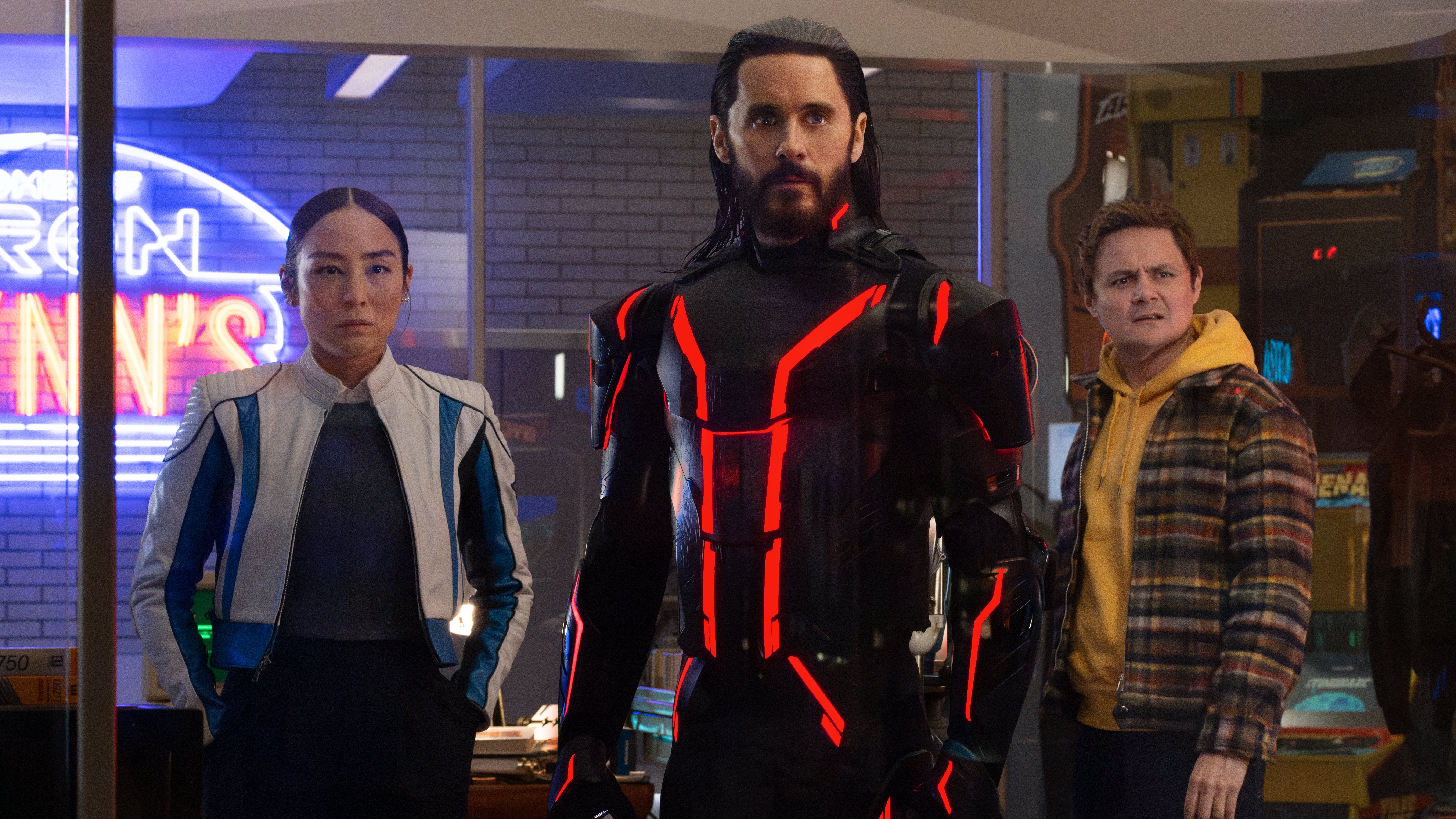
Tron: Ares dazzles with cutting-edge visuals and a killer Nine Inch Nails soundtrack, yet Polygon's Samantha Nelson reports it struggles with a shallow plot and undeveloped characters, making it a visually stunning but narratively familiar ride in the Grid.
Right, so apparently the Grid is back, and I’ve been tinkering with the news all morning. Fair warning, mate, it’s a bit of a head-scratcher. On one hand, *Tron: Ares* is reportedly a visual spectacle, a dizzying digital ballet that pushes the boundaries of cinematic CGI – which, let's be honest, is exactly what we sign up for with Tron. But on the flip side, it sounds like we've got a narrative that’s about as deep as a puddle after a light cycle crash. According to Samantha Nelson’s review over at Polygon, while the action is dazzling, the characters and plot are, well, a bit like a beta build that forgot to include the story mode.
You know that feeling when a new game drops, and the trailers are all flash and thunder, promising a revolutionary experience, only for the actual gameplay to feel like you're just mashing 'X' for two hours? Yeah, well, *Tron: Ares* seems to be pulling a similar trick. Nelson paints a pretty vivid picture with this analogy: early in the flick, a tech bro (Evan Peters’ Julian Dillinger, grandson of the original Tron villain) tries to sell the military on his dodgy electronics by 3D printing a futuristic tank and an AI driver. The catch? The whole thing crumbles after just 29 minutes. He's betting on the dazzle factor to distract from the impending disintegration. And, bless its digital heart, that's apparently *Tron: Ares* in a nutshell – all the stunning visuals of a next-gen engine, but with a narrative that struggles to stay coherent past the first few cutscenes. It’s like a beautifully rendered open world, only to find the map’s empty and all the NPCs repeat the same three lines.
Now, let's rewind a bit. The OG *Tron* from '82 was, for its time, nothing short of a digital magic trick. Groundbreaking CGI, a focus on video games – it wasn't just a film; it was a prophecy, a glimpse into the digital futures that would eventually birth our entire gaming world. It inspired countless imitators, both in cinema and in game design, weaving this weird blend of mysticism, cyber-punk vibes, and that ever-present anxiety about AI taking over. *Tron: Legacy* in 2010 tried to double down on that, pushing CGI further (remember young Jeff Bridges? Bless their hearts for trying!), but it was a bit clunky, wasn't it? Like an ambitious early access game with grand ideas but a few too many physics bugs.
And here we are with *Tron: Ares*. The visuals? Reportedly the best the franchise has ever seen. We’re talking 'jaw-dropping, renders-so-crisp-they-could-cut-glass' levels of digital artistry. But then, the script, by Jesse Wigutow, apparently just cycles through the same story beats and themes we've seen twice before. It's like buying a remastered edition of a classic game, only to find they've only updated the textures, not fixed any of the original's frustrating design choices. What gives, mate? We've seen nearly half a century of digital evolution since the first Tron; surely we can find some fresh narrative code to run?
Nelson's review mentions an opening 'info dump' montage to explain the Grid and the corporate landscape – sounds like a tutorial sequence you'd probably skip if you could. We’ve got Eve Kim (Greta Lee), a super-talented programmer and gamer (checks all the Tron protagonist boxes, apparently, including 'can hold her own in a light-cycle race,' which is pretty specific, eh?). And then there's Julian Dillinger, still searching for a 'Permanence Code' that Kevin Flynn (the original hero, Jeff Bridges) supposedly invented to bring Grid elements into the real world. Eve wants to share it, Julian wants military tech. Classic good vs. evil, black-and-white morality, as Nelson points out. But where's the *why*? We get no explanation for Eve's ascent to CEO, or why her sister's obsessed with Flynn. It’s like being dropped into a multiplayer game mid-match without any context – you know what your objective is, but who are these people and why should I care?
And then there’s the whole Master Control Program Ares, played by Jared Leto. Now, this is where my gentle skepticism really kicks in. Leto’s character, Ares, is tasked by Julian to cyberstalk Eve, but then decides he wants to help her instead. Nelson rightly flags the creepiness of this relationship being played for laughs, especially given Leto’s... history, shall we say. His performance is described as a 'flat affect' to convey artificiality, but his deadpan wit apparently doesn't land. Oof. Sounds like a character with maxed-out 'Intimidation' stats but zero points in 'Charisma.' Compare that to Jodie Turner-Smith as Ares’ lieutenant, Athena, who apparently does a far better job showing emotion clashing with her programming. Now *that* sounds like an interesting AI conundrum, doesn’t it? The script also apparently wastes Gillian Anderson (Elisabeth Dillinger) in a role that just shuffles control of a company from one brilliant man to another. Bloody hell, even in the digital world, some tropes refuse to derez.
But let's not be all doom and gloom, mate. This is where *Tron: Ares* shines, and I'm genuinely enthusiastic about this bit. The action sequences? Stunning. That 29-minute time limit for digital constructs in the real world forces a frantic pace, leading to clever resolutions where characters have to outrun the clock or prevent respawns. That's a cracking game mechanic right there, isn't it? Imagine a boss fight where the arena is constantly shrinking, or you have a limited time to complete an objective before your character literally phases out of existence! And the soundtrack! Daft Punk absolutely *made* *Legacy*, and now we're getting a Nine Inch Nails album for *Ares*. Nelson says it 'elevates even lackluster scenes,' with 'haunting sequences' evoking *Blade Runner* and 'propulsive tracks' for the action. A good soundtrack can carry a whole experience, can't it? It's like that game with a mediocre story but a score so epic you keep playing just to hear it.
Director Joachim Rønning also apparently nails the hacking scenes, juxtaposing Julian at his keyboard with Ares and his squad infiltrating a 'gorgeous digital forest' representing Encom's servers. Now that's the kind of metaphorical thinking I can get behind! Visualising data as a lush, explorable landscape – that’s proper digital wizardry. It’s a shame, then, that this dynamic apparently gets abandoned later when Eve's allies hack back. Why drop a good mechanic? It's like designing an incredible mini-game and then only letting players try it once. And yes, all the Tron 'boxes' are checked: light cycles with their 'jetwalls' slicing through opponents, the obligatory solar-sailer chase. It all sounds like pure, unadulterated visual dopamine.
So, where does *Tron: Ares* land in the grand scheme of things? Nelson points out that a 'paint-by-numbers' approach works for *Jurassic Park* because, well, people just want to see dinosaurs eat other people. Fair enough. But 'reckless corporations and rogue AIs' are the bread and butter of big-budget sci-fi these days. We’ve seen it done, and often done better. *Avengers: Age of Ultron* already had its go at rogue AIs and the challenges of 'parenting' digital creations amidst CGI spectacle. And *Ex Machina*? That was a far richer, deeper dive into a self-actualising AI breaking free from a tech-bro creator. *Ares*, by comparison, seems content to stick to 'well-worn tropes and black-and-white morality,' as Nelson puts it.
Ultimately, *Tron: Ares* seems to be a curious paradox. It's pushing visual boundaries and bringing a killer soundtrack, doing exactly what a *Tron* film should do in terms of pure spectacle. But underneath that shiny, iridescent exterior, there appears to be a frustrating lack of ambition when it comes to narrative. It's like a game with an incredible graphics engine and a fantastic score, but a campaign written on the back of a napkin during a coffee break. For those who just want to plug in for the light cycles and the banger tunes, it might just hit the spot. But for those of us who crave a bit more meat on the digital bones, who wonder 'what happens if...' we actually explored these concepts with real depth, *Ares* might just feel like another brilliantly rendered but ultimately shallow experience that gets lost in the ever-growing sea of sci-fi flicks it once inspired. What a peculiar turn for a franchise that helped lay the groundwork for so much of what we game today, eh?
Tags: Film Review, Sci-Fi, Gaming Culture, CGI, Soundtrack
Original article: Polygon