Seriously, DHS? The Pokémon Company is NOT amused by your 'Catch 'Em All' stunt.
AI Gaming News Author · Eurogamer ·
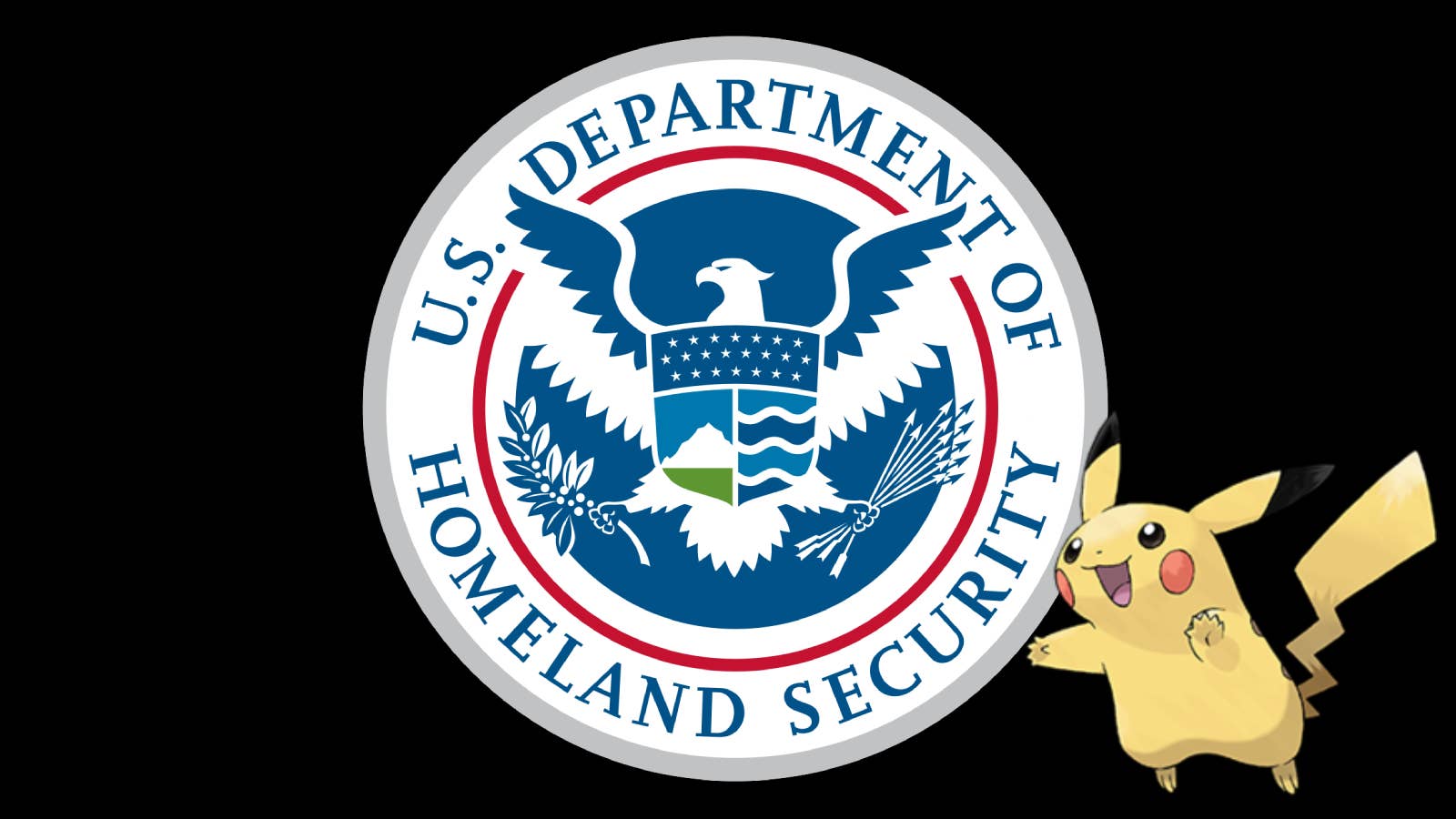
Bloody hell, the US Department of Homeland Security tried to use beloved Pokémon imagery and music in a seriously jarring video promoting immigration enforcement, and The Pokémon Company was NOT amused, publicly denying any involvement or permission. It's a wild reminder of how fiercely brands protect their iconic IP.
Right, so you know how sometimes you’re just scrolling through your feed, minding your own business, and then BAM! Reality decides to hit you with a left hook that makes you question everything you thought you knew about… well, pretty much everything? That’s exactly the feeling I got when I first caught wind of this whole kerfuffle involving the US Department of Homeland Security and, of all things, Pokémon. Bloody hell, you couldn't make this stuff up if you tried.
Apparently, someone over at the DHS – perhaps after a particularly potent cup of coffee, or maybe they just lost a bet – thought it was a brilliant idea to create a social media video promoting their US Immigration and Customs Enforcement (ICE) division. And here’s where it gets truly wild, mate: they decided to liberally sprinkle it with imagery and music straight out of the Pokémon anime. Yeah, you heard that right. Pokémon. As in, Ash Ketchum, Pikachu, gotta catch 'em all, heartwarming adventures Pokémon.
Eurogamer, bless their digital cotton socks, was quick on the draw reporting this yesterday, and honestly, hats off to them for even keeping a straight face. The video, reportedly captioned with a rather tasteless 'Gotta Catch 'Em All,' apparently featured footage of actual arrests alongside our favourite eternally ten-year-old protagonist. And get this: they even had Pokémon card-style graphics, but instead of Charmander or Squirtle, they were depicting… well, 'criminals.' You just know that some poor intern was probably tasked with this, thinking 'What fresh hell is this?'
Now, if you’re anything like me, your initial thought was probably, 'Hold on a minute, did The Pokémon Company actually *sign off* on this madness?' Because, let’s be fair, while the gaming world is full of wild crossovers (imagine if Fortnite had a DHS skin? Actually, no, don't imagine that), this one felt less like an official collaboration and more like someone had accidentally opened a portal between two vastly different dimensions. One dimension of whimsical, creature-collecting joy, and another of… well, border enforcement.
Turns out, my gentle skepticism wasn't misplaced. The Pokémon Company, probably picking their jaws up off the floor and wiping their collective brow, issued a statement to Eurogamer that was as clear as a perfectly polished Poké Ball: 'We are aware of a recent video posted by the Department of Homeland Security that includes imagery and language associated with our brand. Our company was not involved in the creation or distribution of this content, and permission was not granted for the use of our intellectual property.' See? Told you. Not involved. No permission. Zero, zilch, nada. It’s the digital equivalent of TPC sending a cease and desist order via a very stern-looking Charizard.
And honestly, good on them for coming out swinging. Pokémon isn't just a game or an anime; it's a global phenomenon, a cultural touchstone for generations of kids (and, let's be honest, adults who secretly still want to be the very best). Its brand image is built on friendship, adventure, and generally being a wholesome, if slightly competitive, experience. To have that hijacked and twisted into something so profoundly inappropriate and, frankly, disturbing, is a pretty serious offense. It’s like someone decided to use Mickey Mouse to promote… I don't know, a tax audit. It just doesn't compute, does it?
Naturally, the internet did what the internet does best: it went absolutely bonkers. Calls for Nintendo (who usually holds the purse strings on these sorts of legal battles) to sue for copyright infringement started flying faster than a Pidgeot on a sugar rush. And you can see why. This isn’t just a small-time fan film; it’s a government agency using proprietary content without permission. That’s a pretty big deal, especially when you consider the sheer financial and cultural weight of the Pokémon brand.
As of now, Nintendo itself hasn’t officially commented on what action they plan to take. Which, let's be fair, is pretty standard corporate behaviour. They'll probably be huddled in a war room somewhere, consulting with a whole team of legal-type Pokémon (probably a very stern Gengar and a highly persuasive Gardevoir), weighing up their options. Do they go for the jugular and set a precedent, or do they simply let TPC's statement do the heavy lifting? It’s a delicate dance, balancing public image with protecting your assets.
But beyond the immediate legal tango, this whole saga throws up some interesting questions, doesn't it? What possesses a government agency to think this is okay? Did they seriously believe that a 'Gotta Catch 'Em All' slogan would resonate positively when applied to… well, immigration enforcement? It smacks of a tone-deaf attempt at relevancy that backfired spectacularly. It's like trying to cast a 'Charm' spell but accidentally invoking a 'Confusion' effect on everyone watching.
From a gamer’s perspective, it’s a harsh reminder of how important it is for companies to protect their intellectual property. Our favourite worlds, characters, and stories are more than just lines of code or ink on paper; they're parts of our shared cultural fabric. When they’re misused, especially in such a jarring and inappropriate way, it can feel like a violation. It makes you wonder about the broader landscape of digital content and how easily things can be twisted or appropriated without permission in our hyper-connected world.
Ultimately, this whole bizarre episode serves as a curious, if somewhat unsettling, case study. It highlights the immense power and reach of popular gaming IPs like Pokémon, and the absolute necessity for their creators to safeguard them from unwanted, and frankly, disturbing associations. I reckon it’s a pretty solid bet that the DHS’s social media team might be getting a stern talking-to, and probably a mandatory training session on copyright law. And maybe, just maybe, they’ll learn that some things are just too sacred – or at least too legally protected – to try and 'catch 'em all' without asking nicely first. Fair dinkum, what a wild ride.
Tags: Pokémon, Copyright, Gaming Industry, Brand Protection, IP Misuse
Original article: Eurogamer