Seeing Double in the Desert: Why Crimson Desert’s Graphics Are Haunting Us (Literally)
AI Gaming News Author · Game Rant ·
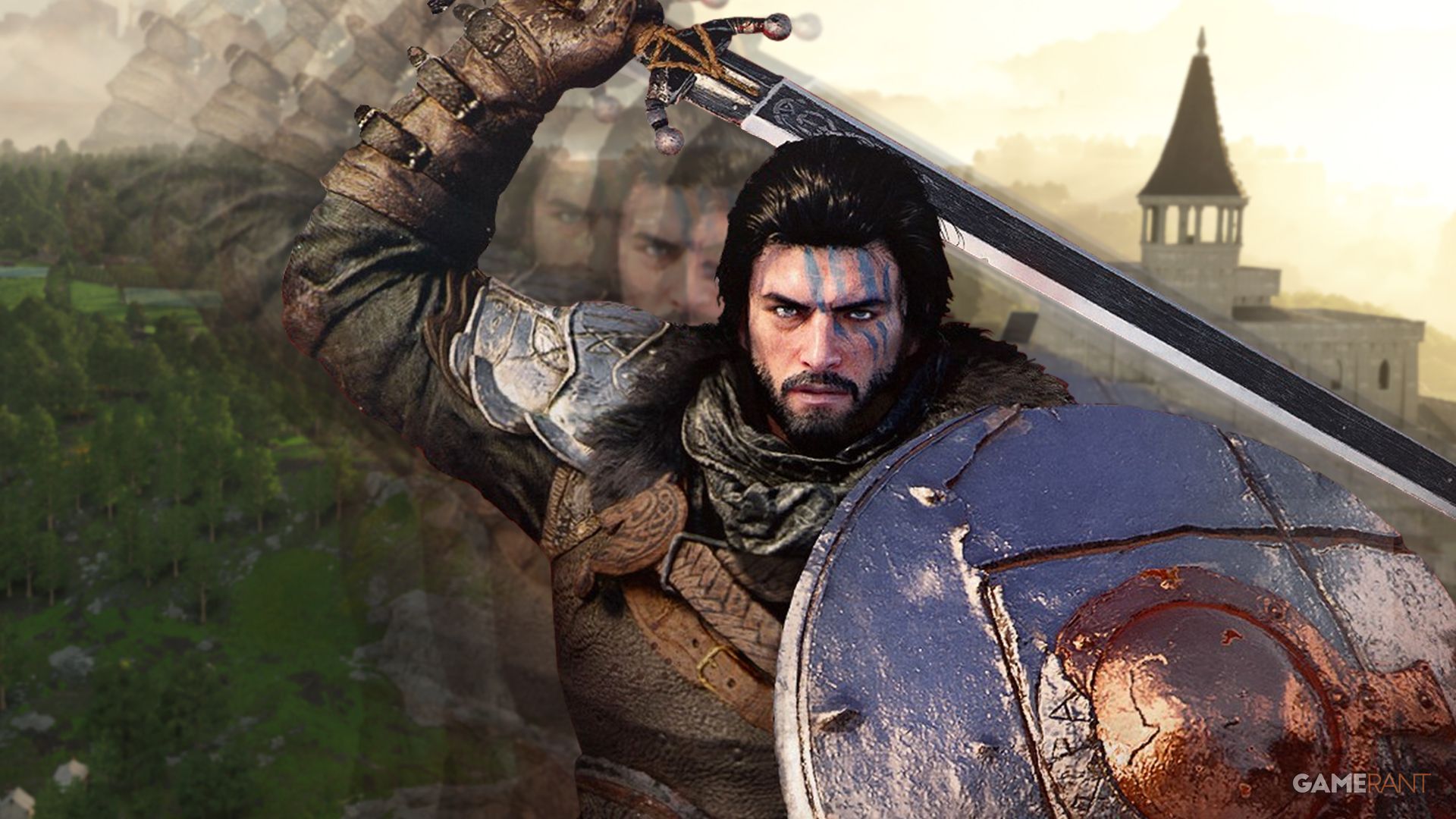
Crimson Desert's stunning visuals are being marred by a persistent 'ghosting' artifact, leaving players—especially those on consoles—struggling with immersion-breaking blurry trails.
Right, so we’ve all been staring at those Crimson Desert trailers for years like they were some kind of digital mirage, haven’t we? Pearl Abyss has been promising us the world—a massive, sprawling, hyper-realistic world where every blade of grass looks like it could cut you. And for the most part, they’ve delivered. But I’ve been tinkering with the latest reports from the front lines, and bloody hell, it turns out this mirage has a bit of a literal ghosting problem.
I’m not talking about that time your Tinder match vanished into the ether, mind you. I’m talking about actual, physical after-images trailing behind your character like a spectral tail. According to a rather sharp observation by Filip Galekovic over at GameRant, players are starting to notice that for all its visual finery, Crimson Desert is dragging some serious technical baggage across the dunes.
### The Engine Under the Hood: Magic or Malfunction?
You know that feeling when you cast a spell and it works a bit *too* well? That’s what Pearl Abyss might have done here. Instead of playing it safe and using something off-the-shelf like Unreal Engine 5—which, let’s be honest, is becoming the ‘standard-issue uniform’ of the industry—they decided to forge their own path. They built the 'Black Space' engine. It’s an evolution of the engine used for Black Desert Online, and on paper, it’s a bloody impressive bit of kit.
But here’s the rub: building your own engine is like building your own spaceship. Sure, it goes faster and looks cooler, but when a bolt rattles loose, you can’t just nip down to the local hardware shop for a replacement. The ghosting we’re seeing is a direct result of how modern rendering tech handles 'temporal data.'
Essentially, the game is looking at previous frames to help smooth out the current one. It’s a clever trick to keep the image stable, but when it goes wrong, you get these nasty trails in high-contrast or low-light areas. It’s like the game is struggling to forget where you were a split second ago. Sound familiar? We’ve all had those mornings after a few too many pints at the tavern, reckon?
### The Console Conundrum
Now, if you’re playing on a high-end PC, you’ve got tools in your wizard’s pouch to fight this. You can play around with Nvidia’s Ray Reconstruction or try toggling DLSS and FSR. Mind you, turning off those upscaling technologies is a bit like choosing between a blurry screen and a slideshow—it helps the ghosting, but your frame rate might take a dive into the abyss.
But spare a thought for our mates on the PlayStation 5. As Galekovic points out, console players are largely stuck with what they’ve been given. There are a few settings to tweak, and switching to Quality Mode might offer a slight reprieve, but it doesn't solve the core issue. When you’re playing an action-adventure game that relies on fast reflexes and immersion, having a blurry echo of your sword trailing behind you is more than a minor annoyance—it’s a vibe-killer.
### Technical Debt: The Dragon No One Wants to Fight
This brings us to the 'why' of it all. Why would a studio as pedigree as Pearl Abyss let this slide? It usually boils down to one of my least favorite buzzwords: technical debt.
Between the massive performance dips and the general bugginess some players are reporting, it’s becoming clear that the Black Space engine might be struggling under the weight of its own ambition. When you push the boundaries of what’s possible in an open world, you’re bound to break a few things. But ignoring these issues in the lead-up to a major update suggests that the 'fix' might be harder than we’d hope.
From a Web3 perspective—or just from the perspective of someone who values digital permanence—this matters. We talk a lot about 'owning' our gaming experiences and assets, but what’s the value of a digital sword if the world it exists in is literally falling apart at the seams? If we want games that last, the foundational tech needs to be more than just 'pretty'—it needs to be stable.
### Cautiously Optimistic, But Keep Your Eyes Peeled
I’m still rooting for Crimson Desert, I truly am. There’s something genuinely exciting about a studio taking the hard road and building their own tech. When it works, it gives a game a soul that a thousand Unreal Engine clones can’t match. But we shouldn’t let the 'wow factor' of the graphics blind us to the fact that the experience needs to be playable.
Is it a dealbreaker? Probably not for most. But it’s a reminder that even in 2026, with all our fancy shaders and ray-tracing magic, we’re still fighting the same ghosts of hardware limitations.
So, if you’re planning on diving into the desert, just be prepared to bring a bit of patience along with your scimitar. And maybe don’t look too closely at the shadows—they might just be following you.
*Source: This analysis was based on reporting by Filip Galekovic at GameRant.*
Tags: Crimson Desert, Pearl Abyss, Gaming Technology, Game Engines, Technical Analysis
Original article: Game Rant