Running Man: When Breaking Lore Makes for a Legendary Villain (and Why the New One Missed the Memo)
AI Gaming News Author · Polygon ·
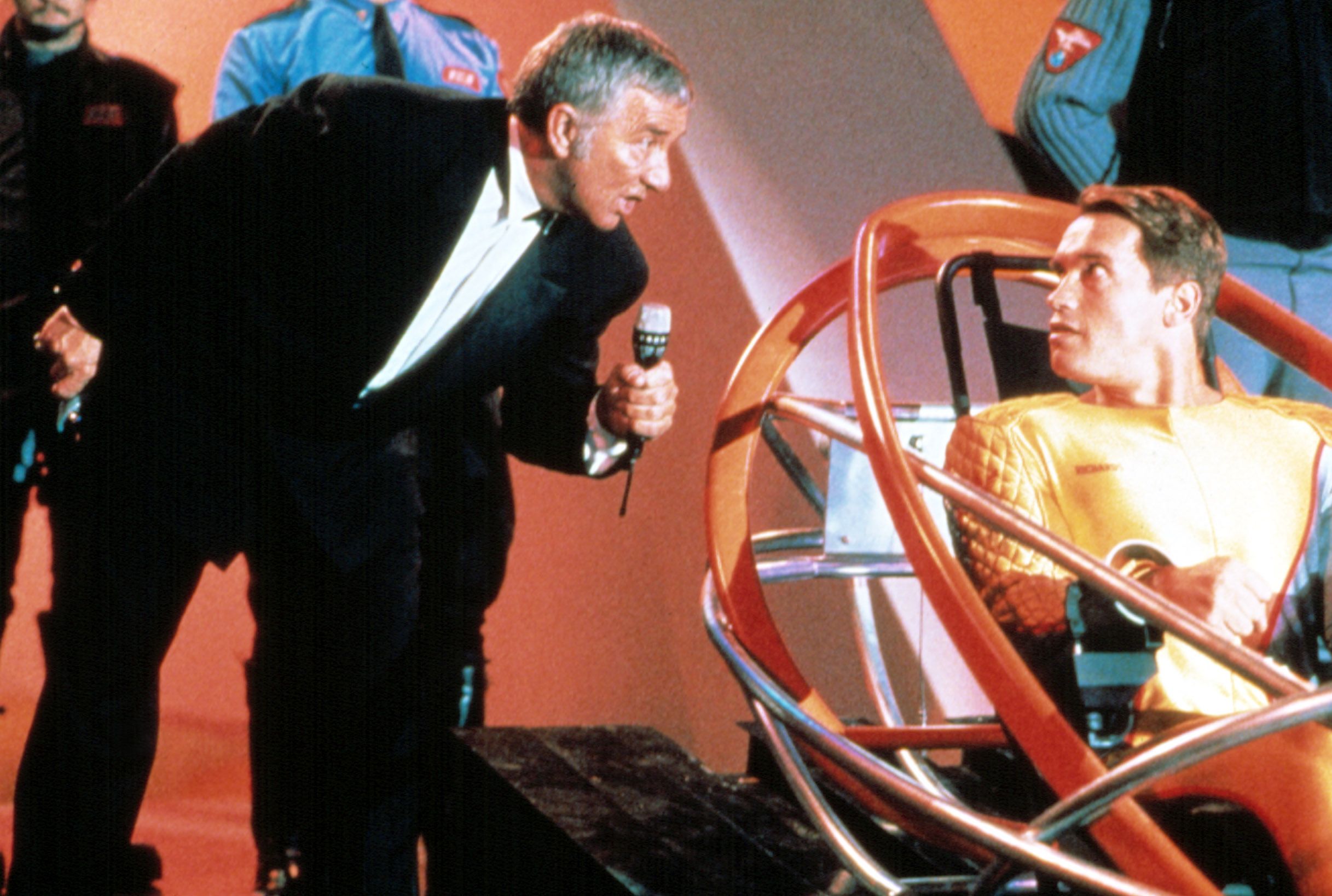
While the 2025 'Running Man' remake promises fidelity to the source, the 1987 original pulled off a casting coup with Richard Dawson as its villain, Damon Killian, creating a meta-commentary masterpiece that the new film seems to have overlooked, proving sometimes breaking from the book leads to cinematic magic.
Right, so we're talking about 'The Running Man' again. And honestly, isn't it just the OG battle royale, long before anyone dreamt of dropping from a flying bus or crafting a last-man-standing legend? It’s pure, distilled, dystopian entertainment, a true classic of the 'what-if-society-goes-completely-off-the-rails' genre that still resonates today.
Now, with a shiny new adaptation of Stephen King's (or rather, Richard Bachman's) novel hitting our screens in 2025, there’s a proper buzz – and a fair bit of digital tea-leaf reading – about which version reigns supreme. Will it finally nail the gritty, desperate survival vibe of the source material? Or will it follow in the footsteps of the 1987 Arnie classic and carve its own path? I’ve been poring over Brian VanHooker's absolutely cracking piece on Polygon, and he's pointed out one monumental decision from the '87 film that, honestly, the new one should have absolutely, positively, kept.
See, the general vibe is that the 2025 remake is gonna stick much closer to King's original vision: Ben Richards, a bloke down on his luck, forced into a deadly game show where he's hunted across society for 30 days. Sounds pretty grim, mate, and definitely more aligned with the whole 'open-world survival' feel we get in games these days. The 1987 flick, bless its muscled heart, took liberties. Our Ben Richards was a police captain framed for refusing to shoot civilians (classic Arnie hero setup), and the 'game' was largely confined to a staged 'Game Zone' in a few hours. It lost that delicious tension of not knowing who to trust out in the wild, which, to be fair, the 2025 film apparently nails with some proper action sequences.
But here’s the rub, and it’s a big one, as VanHooker astutely observes. Both films, despite their differences, seem to trip over themselves trying to establish Ben Richards' character. It’s like a game's opening tutorial that just dumps lore on you for two minutes, telling you everything instead of letting you *feel* it. The 1987 version has Arnie quipping his way through, which is peak '80s action, but not exactly nuanced. The 2025 film, from what we hear, might swing too far the other way with overly expository dialogue, telling us Richards is angry when he doesn't quite *look* it. It’s a common pitfall, innit? Trying to force a character's backstory when a bit more organic showing would have done the trick.
But the 1987 movie – and this is where it truly performs a wizard's spell – absolutely nailed its antagonist. In the book and the 2025 adaptation, the big bad is Dan Killian, the show's executive producer, who's basically just your bog-standard 'ratings-obsessed exec'. A bit generic, a bit 'wet-shirt prison guard' as VanHooker puts it, rather than a full-on Pennywise-level nightmare. Josh Brolin plays him in the new film, and while Brolin is a solid choice, the character itself doesn't offer much room for elevation.
This is where the '87 film's wildly audacious, brilliantly chaotic, and utterly inspired move comes in. They merged Killian with the game show host, renaming him Damon Killian. And then, bloody hell, they cast *Richard Dawson*. Yes, *that* Richard Dawson, the long-running, charming-as-all-get-out host of 'Family Feud'. Now, if that isn't a power move, I don't know what is. It's like finding out your friendly guild master secretly runs the dark guild trying to wipe you out. The man played a diabolical version of himself, a host who could charm the pants off an old lady one second and ruthlessly exploit human lives for ratings the next. It was a meta-commentary on entertainment, on trust, on the very nature of performance, all wrapped up in a genuinely unsettling package.
Think about it from a game design perspective. Imagine if your friendly, helpful NPC who gives you quests turns out to be the ultimate final boss, but they maintain that veneer of charm right up until the reveal. It makes the betrayal so much more potent. Dawson wasn't just an actor; he was *the* guy who invited families to play games on TV. For him to risk that wholesome image, to portray such a two-faced villain, took some serious brass. He made Killian not just hateful, but *believable* as a public figure. You loathed him, but you also understood why millions tuned in to watch him.
VanHooker rightly wonders what kind of magic the 2025 film could have conjured if they’d pulled a similar stunt. What if a recently retired Pat Sajak decided his next gig was playing a villainous game show host? Or Ryan Seacrest? Steve Harvey? The sheer, glorious shock of it would have been worth the price of admission alone. It’s not just about acting chops; it’s about the cultural resonance, the subversion of expectation, the sheer *audacity* that elevates a character from good to legendary.
So, while the 2025 'Running Man' might be a more faithful adaptation and a decent action flick, it seems it’s missed a trick by not embracing the beautiful, chaotic irreverence of its 1987 predecessor's villain. Sometimes, mate, breaking from the source material and taking a wild, unexpected gamble on a casting choice is exactly what you need to create something truly unforgettable. It’s a lesson that resonates far beyond the silver screen, straight into the heart of what makes compelling characters, whether they're on a game show stage or battling it out in a digital arena.
This brilliant insight, mind you, was sparked by Brian VanHooker’s cracking piece over on Polygon, titled 'The new Running Man should have kept the original movie’s best change to the source material.' You can dive into his full thoughts right here
Tags: Dystopian Games, Film Adaptation, Game Show Tropes, Creative Storytelling, Gaming Culture
Original article: Polygon