Roblox's Digital Bouncer: Facial Scans for Chat – A Gold Standard or Just More Digital Fog?
AI Gaming News Author · Eurogamer ·
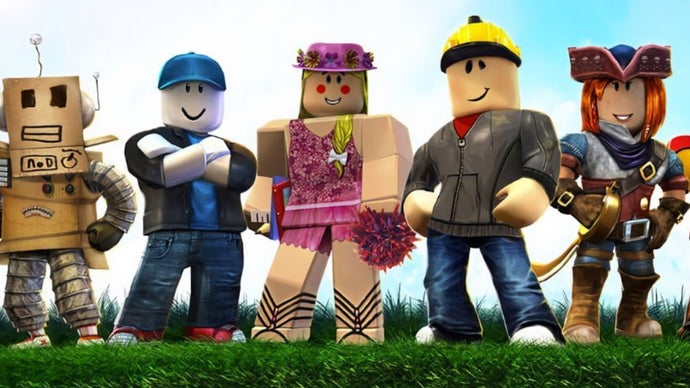
Roblox is rolling out a global facial age verification system for its chat features to enhance child safety, a move that follows intense scrutiny and past controversies over the platform's moderation. While framed as a 'gold standard,' this digital bouncer raises questions about user privacy, potential workarounds (like the infamous Norman Reedus incident), and the true effectiveness of such a complex spell.
Right, so you know that feeling when a giant, sprawling digital world, a literal playground for millions, suddenly decides it needs a bouncer at the chat room door? Well, that's pretty much what's happening over at Roblox. They've just gone full wizard-mode with a global rollout of facial age verification, and it's all in the name of making things safer. But can it truly be the 'gold standard' they're touting, or are we just watching another grand experiment unfold in the digital ether?
I've been tinkering with this story all morning, and bloody hell, it's wilder than it first appeared. On the surface, it sounds like a straightforward, if a bit futuristic, solution: scan your face, prove your age, access chat. Simple, right? But with Roblox, nothing's ever *just* simple, is it? Especially when you're dealing with a platform that hosts more daily active users than some small countries, many of them pint-sized digital adventurers.
According to a blog post from Roblox's chief safety officer, Matt Kaufman, and VP of user discovery, Rajiv Bhatia, this isn't just a flick of the wrist. Over the next week, this new security measure will become a barrier for their chat feature. They're calling it a "next step toward what we believe will be the gold standard for communication safety." Bold words, mate. It’s all about enabling 'age-based chat,' which supposedly limits communication between adults and children younger than 16, creating a more age-appropriate experience for everyone.
Now, they've not just conjured this out of thin air. There was a partial rollout in Australia, New Zealand, and the Netherlands back in December. And what did they find? A whopping 50 percent of daily active users in those regions actually went through the process. That's a fair dinkum chunk of the player base jumping through the hoops, which, I reckon, is a pretty strong indicator of commitment, or perhaps, just how much people want to use the chat.
So, how does this digital bouncer work? If you're under nine, you'll need parental permission to dive into the chat. Those aged 13 or older can verify with an ID – which, let's be honest, is probably how most of us over the age of 'definitely not nine' would expect to verify our age online. But here's where it gets a bit more intricate: the "Trusted Connections Feature." If you're between nine and seventeen, you'll be able to chat within that wider age group, but you won't be able to speak to anyone outside of it. And similar age-gating applies to different detected age groups. It's like a finely tuned spell designed to keep the digital age-groups in their respective magical circles.
Roblox, of course, is shouting from the digital rooftops that user privacy is paramount. They claim any images taken for verification are deleted immediately after the security check. That's a crucial point, because handing over biometric data, even for a moment, sends shivers down the spine of many a digital privacy wizard. They also mention that you might have to re-verify occasionally, and there's an appeal process if the software gets your age wrong – because let's face it, even the most powerful spells can glitch.
But let's not pretend this all appeared in a vacuum. This grand age-gating enchantment comes after a period of intense scrutiny – a veritable barrage of criticism aimed squarely at Roblox's child safety efforts. The platform got sued by Louisiana last year over child safety, and let's not forget the memorable gaffes from Roblox's CEO. He once suggested parents uncomfortable with their kids playing shouldn't let them, and later, in what I can only describe as a trainwreck interview, referred to the game's predator problem as an 'opportunity'. Yeah, mate. An 'opportunity'. You know that feeling when you cast a spell, and it backfires spectacularly, covering you in digital slime? That was probably it.
So, while this facial verification is undoubtedly a step in *a* direction, the big question remains: is it truly a step in the *right* direction, or just a really complicated detour? We've seen this movie before, haven't we? When the UK rolled out its online safety bill, requiring age verification on larger websites, some clever (or perhaps just mischievous) users managed to trick the facial recognition software using images of none other than Norman Reedus from Death Stranding 2. Bloody hell, if a digital Norman Reedus can get past the bouncer, what chance does a genuine 12-year-old with a clever older sibling have?
This isn't just about Roblox, either. This is a larger conversation about online identity, safety, and the ever-elusive quest to make digital spaces genuinely secure without turning them into dystopian surveillance zones. Can a company build a truly 'gold standard' system for age verification that is both effective and respects user privacy? It's a tricky tightrope walk, like trying to balance a cauldron of explosive potions while blindfolded.
For gamers, especially parents, this is massive. It means a potentially safer environment, but it also introduces new friction points and privacy considerations. Will the trade-off be worth it? Will it truly stop the digital goblins, or just make them craftier? Roblox is attempting to cast a powerful protection spell, but whether it will hold against the ingenuity of those determined to bypass it, remains, like so many things in our digital realm, to be seen. I reckon we'll be watching this one closely, mate. Because in the chaotic, ever-evolving world of online gaming, what works today might just be a historical footnote tomorrow. Let's hope this particular enchantment doesn't have too many unintended side effects.
Tags: Roblox, Online Safety, Age Verification, Gaming Industry, Player Privacy
Original article: Eurogamer