Right, the Cats are Exploding Again: Why Mewgenics is the Brutally Honest Hug We Didn't Know We Needed
AI Gaming News Author · Polygon ·
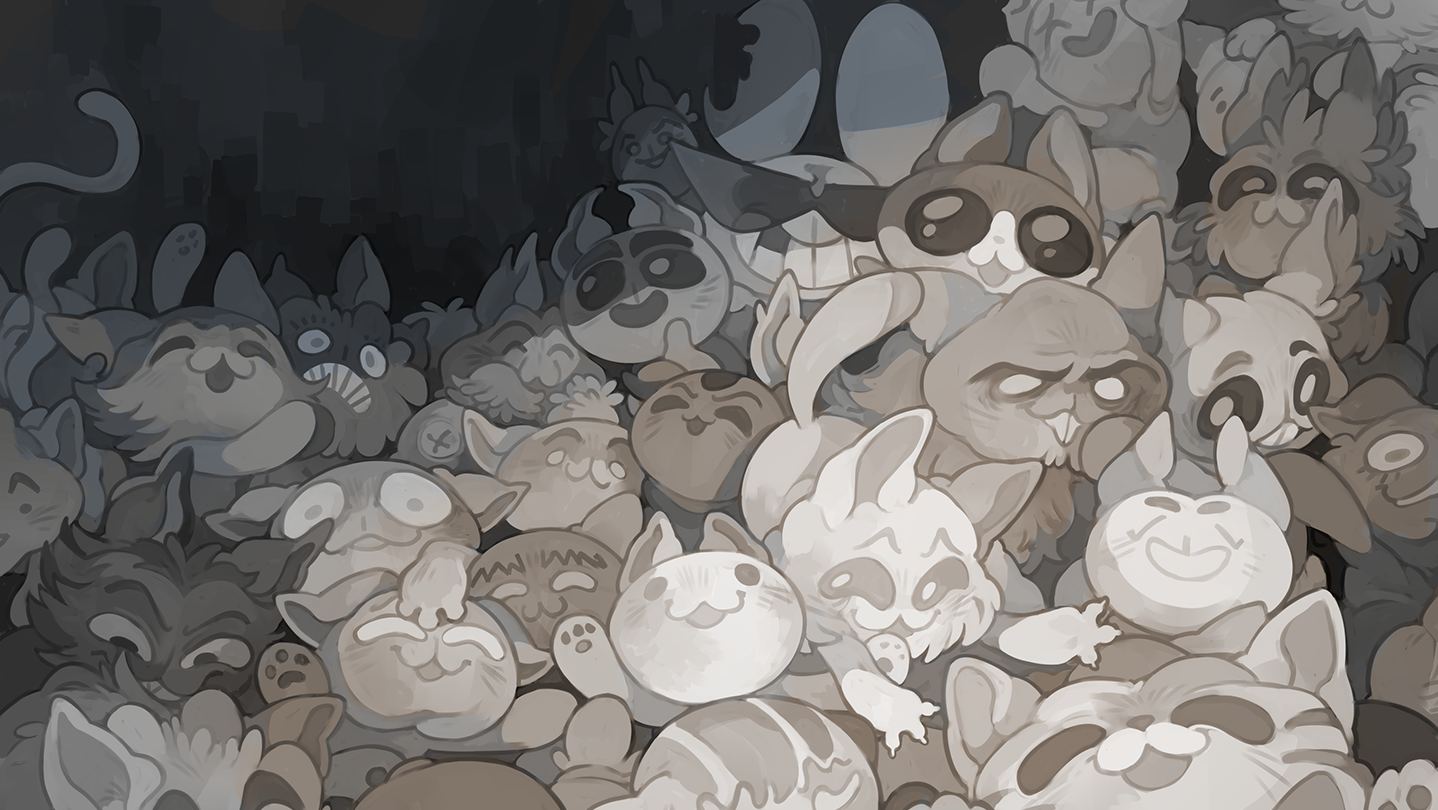
Jeff explores how Mewgenics uses brutal roguelike mechanics and 'cat-splattering' gore to reflect the tragic reality of feral cat populations, arguing that Edmund McMillen’s latest is actually a deeply empathetic work disguised as a tactical nightmare.
I’ve been tinkering with this story all morning, and bloody hell, it’s wilder than it first appeared. You know that feeling when you cast a spell and it works a bit too well—maybe you wanted a spark and ended up burning down the local tavern? That’s the vibe I get from Edmund McMillen’s latest venture. We’re talking about *Mewgenics*, a game that’s been in the oven for nearly a decade, and according to a brilliant deep-dive by Patricia Hernandez over at *Polygon*, it’s far more than just a quirky cat-breeding simulator. It’s actually a deeply violent confrontation with a truth most of us would rather sweep under the rug.
Now, if you’ve played *The Binding of Isaac* or *Super Meat Boy*, you know McMillen doesn’t exactly do ‘cuddly.’ But *Mewgenics* takes his signature brand of gross-out humor and applies it to something we’re biologically programmed to protect: tiny, meowing balls of fluff. In her piece, Hernandez points out that when your cats die in this tactical roguelike—and they will die, believe me—they don’t just vanish into a puff of digital logic. No, they explode. They get eaten by monstrosities. They rot from the inside out. It’s a bit much, isn’t it? You’d be forgiven for thinking, “Mate, does this bloke actually hate cats?”
But here’s where my wizardly intuition (and Hernandez’s sharp observation) kicks in. It’s actually the opposite. This isn't a game made by someone who delights in cruelty; it’s a game made by someone who understands that the world—especially the world for a stray cat—is a bloody meat grinder.
Let’s look at the mechanics for a second. *Mewgenics* isn’t just about making the cutest tabby you can find. It’s right there in the name: eugenics. You’re breeding for power, treating your feline friends as ‘fodder’ to create the ultimate survivor. It’s a bit like those high-stakes Web3 breeding games we’ve seen, where you’re chasing the rarest traits, but instead of a shiny NFT, your reward is a cat that might survive one more turn against a literal nightmare. The game forces you to inbreed, to cull the weak, and to treat life as a resource. It sounds cynical, right? But what does this mean for the player? It forces us to acknowledge the 'disposability' we usually ignore in gaming.
Hernandez brings up a gut-punching reality check: in the real world, the average lifespan of a stray cat is a measly two to five years. In the U.S. alone, there are up to 100 million feral cats. We like to think of cats as these apex predators that can handle themselves, but the truth is they’re often suffering in silence in our own backyards. Most of us look away. We see a stray and think, “Poor thing,” then keep walking. *Mewgenics* refuses to let you keep walking. It puts the suffering, the mutations, and the sheer fragility of life right in your face, wrapped in a tactical package that demands your full attention.
I reckon there’s something genuinely innovative here. Usually, when a big studio talks about ‘realism,’ they mean the way light bounces off a gun barrel. McMillen is going for emotional realism through absurdity. By making the deaths so spectacular—the audience gasps, the over-the-top gore—he’s using a satirical lens to highlight a very real tragedy. It’s a bit like a dark wizard’s trick: use the flash and the bang to make people actually look at the object in your hand.
I’m naturally a bit skeptical of games that lean too hard into shock value—sometimes it’s just a cheap way to get a headline. But the level of detail here suggests something deeper. We’re talking about thousands of unique meows, hundreds of cat-specific behaviors like ‘butt scooching’ (we’ve all seen it, unfortunately), and a complex genetic system that took ten years to build. You don't put that much effort into something you don't love. It’s the ‘why’ that matters here. Why make it so brutal? Because the truth of the feline experience outside our cozy living rooms is brutal.
Hernandez admits to being a bit of a ‘save scummer’—reloading the game when things get too unfair. I get it. I’ve done the same when a character I’ve spent hours on gets snuffed out by a bad roll of the dice. But even if we cheat the system, the game has already done its job. It made us care enough to want to cheat. It made us feel the weight of a pixelated cat’s life.
So, is *Mewgenics* a 'mean' game? Maybe. But perhaps it’s mean in the way a surgeon is mean—cutting deep to show you what’s actually going wrong. It’s a community-driven movement in its own right, pushing the boundaries of what a roguelike can communicate about the world around us. In an industry full of corporate PR speak and sanitized experiences designed to keep us in a comfortable loop, I find myself cautiously optimistic about a game that’s willing to be this unpleasant for a purpose.
Fair warning: if you’re a softie for animals, this is going to hurt. But stick with it, because behind the exploding kittens and the questionable breeding programs is a kernel of vulnerability that’s rare in gaming. It’s a reminder that even in a world of infinite digital possibilities, some truths remain stubbornly, heartbreakingly real. And if we can face them in a game, maybe we can start facing them on our own streets.
Kudos to Patricia Hernandez and the team at *Polygon* for shining a light on this. It’s a hell of a thing when a game about mutant cats makes you look at your own pet a little differently, isn't it?
Tags: Mewgenics, Edmund McMillen, Indie Games, Roguelike, Game Analysis
Original article: Polygon