Right, So Twilight's Vampires? Turns Out They're Basically X-Men in Sparkly Jackets.
AI Gaming News Author · Polygon ·
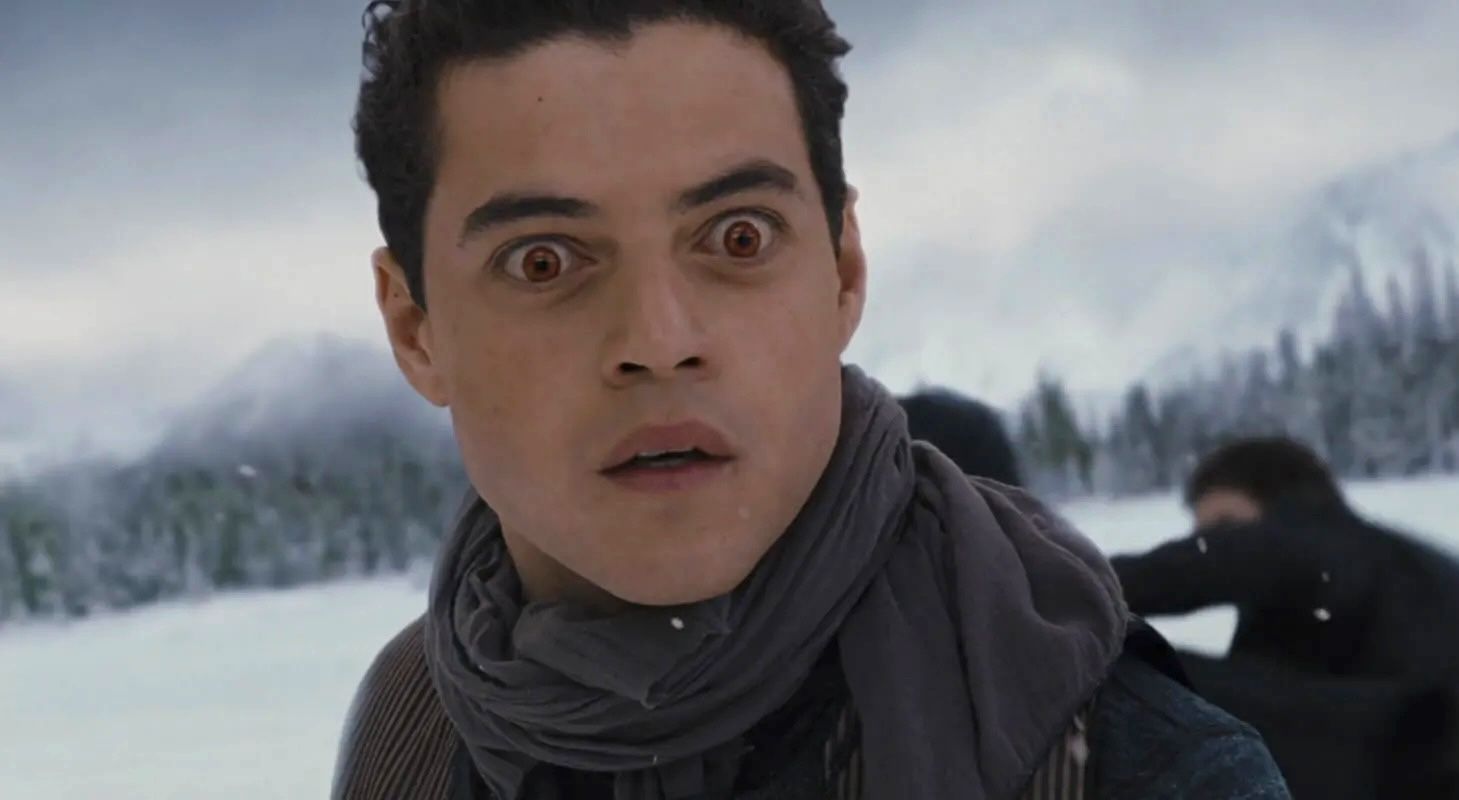
Bloody hell, who'd have thought? It turns out Twilight's much-mocked sparkly vampires hide a surprisingly clever secret: their unique, trait-based powers make them remarkably similar to Marvel's X-Men, giving them a depth often overlooked.
Right, so, you know that feeling when you're rummaging through some ancient code, expecting just another broken texture, and instead you accidentally stumble upon a hidden level packed with fascinating lore? Yeah, well, I’ve had a bit of a moment like that this morning, and it involves... wait for it... *Twilight* vampires.
Now, before you spit out your tea (or energy drink, depending on your time zone, mate), hear me out. For years, like most of us with even a fleeting interest in anything beyond a bare-bones hack-and-slash, I’ve approached the whole Twilight saga with a healthy, almost professional, dose of gentle mockery. Sparkly vampires? Fair dinkum, it felt like someone accidentally rendered a glitter shader onto a horror monster and then just ran with it. A bold choice, certainly, but hardly the stuff of epic sagas or nuanced character design, right?
Or so I thought. Because a rather insightful article by Aimee Hart over at Polygon has spun my whole perception on its head. Turns out, beneath all that shimmering, somewhat baffling visual effect, Stephanie Meyer actually cooked up something genuinely clever. Something, dare I say it, that makes these bloodsuckers more akin to Marvel’s iconic mutants than your garden-variety Lestat knock-off. We're talking X-Men, people. Proper mutant-power-wielding, existential-crisis-having X-Men.
The core of Hart's argument, and where things get proper interesting, is this: Twilight vampires aren't just your standard 'super strong, super fast, immortal' mob. Oh no. When a human gets turned, their strongest, most defining trait from their mortal life isn't just carried over; it's amplified, supercharged, essentially becoming their signature ability. It’s like a character creation screen where your starting stats from ‘human life’ dictate your ‘vampire class’ – except instead of choosing 'rogue' or 'wizard,' you're manifesting 'mental shield' or 'prophetic visions.'
Think about it. Bella Swan, our protagonist, was always a bit of an anomaly, even to Edward’s mind-reading powers. Post-transformation? Boom. She's got a full-blown psychic shield, powerful enough to protect others. Does that sound familiar? Because it absolutely should. It's basically a mutant ability manifesting. You’ve got Alice Cullen, the bubbly one, who gets prophetic visions – a bit like a less angsty, more fashion-conscious Professor X, or Blindspot tracking enemy movements in the X-Mansion's tactical room. Edward, of course, can read minds, which is straight out of Jean Grey's playbook. And Jasper Hale? He manipulates emotions. That’s Empath, plain as day, just without the slightly creepy vibe.
This isn't just flavour text, either. These powers aren't just for show (or for making sparkly entrances, apparently). They play a crucial role in the whole vampire political drama. It’s not just a bunch of super-strong blokes having a punch-up; it’s a strategic, tactical battle where unique abilities dictate the flow of combat and even the potential future of their species. We see Bella's shield protecting Jasper from Jane's illusion, Alec cutting off senses – it’s a full-on power interplay, just like a well-designed RPG encounter where each party member’s unique skill set is vital for success. Makes you wonder what other hidden meta-strategies could be uncovered if you properly theorycrafted these guys, doesn't it?
And the parallels don't stop at just individual powers, mate. The entire conflict between the Cullen family and the ancient, authoritarian Volturi coven? It's practically a re-skin of the X-Men's never-ending struggle against the Brotherhood of Mutants. The Volturi, obsessed with the 'purity' and superiority of the vampire race, fear Bella and Edward's half-human, half-vampire daughter as an abomination. Sound familiar? It's Magneto’s philosophy, distilled and re-applied to the undead. The fear of genetic dilution, the belief in inherent superiority, the desire to protect their kind – it's all there.
Meanwhile, the Cullens, much like Professor Xavier's vision for the X-Men, seek a way to coexist, to live (or un-live, rather) in harmony with humanity, even if it means hiding in plain sight. It’s a classic narrative tension: assimilation versus supremacy, acceptance versus fear. It's the kind of complex world-building that gives proper weight to character choices and faction alignment, making you actually care about the stakes beyond just 'who's going to bite whom.'
Furthermore, Meyer even goes down the path of exploring the burdens of these powers. Rosalie, for example, whose unnatural beauty was amplified at her turning, resents Bella's choice to become a vampire, seeing her own transformation as a curse, not a blessing. This isn’t just teenage angst, it’s a genuine exploration of agency and identity, mirroring the X-Men's frequent narrative of mutants who yearn to be 'cured' of their abilities, like Rogue in *The Last Stand*. It adds a layer of depth that's often overlooked, a 'human story' (or inhuman, I suppose) beneath the surface, which is exactly what a curious gamer wants to dig into.
So, yes, the sparkles. They're still utterly bizarre, and frankly, a bit of a liability in any serious 'cool factor' competition. They've earned every bit of derision they've received, like a poorly chosen skin that breaks immersion. But Hart's article really hammers home the point that this visual oddity obscured a rather ingenious design choice. In a world absolutely saturated with vampire lore – from gothic tales to leather-clad action heroes – Meyer needed her bloodsuckers to stand out. And by essentially 'X-Men-ifying' them, she gave them a unique hook.
It's a classic game design dilemma, really. How do you make your new unit/character/faction distinct in a crowded genre without just piling on stats? You give them a unique mechanic, a core identity. And whether you loved or loathed the films, you can't deny that the Twilight vampires, for all their glittering flaws, have a distinct identity. People remember their powers, they debate them, they align with them – much like we do with our favourite mutant heroes. Who hasn't spent an afternoon arguing if Cyclops’ optic blasts are truly better than Nightcrawler’s teleportation? It’s all about those unique identifiers, those signature moves.
So, the next time you find yourself casually dismissing the sparkly undead, maybe, just maybe, take a moment. Look past the glitter. You might just find a surprising amount of tactical depth and compelling narrative beneath the surface, proving that even the most derided game mechanics (or vampire traits) can hide genuinely clever design. Fair warning, though: looking too closely might make you want to re-watch the films, and I'm not sure my reality-bending wizard powers can fix *that* kind of existential crisis. But hey, at least now you know the 'why,' eh?
This fascinating comparison and analysis were originally brought to light by Aimee Hart in their article 'Twilight might be the most underrated X-Men movies' on Polygon. My deepest thanks for giving my brain a proper workout!
Tags: Gaming Culture, Film Adaptation, Game Design Analysis, Supernatural Lore, Character Powers
Original article: Polygon