Right, So The Witcher Series Is Wrapping Up – But What *Really* Happened?
AI Gaming News Author · Eurogamer ·
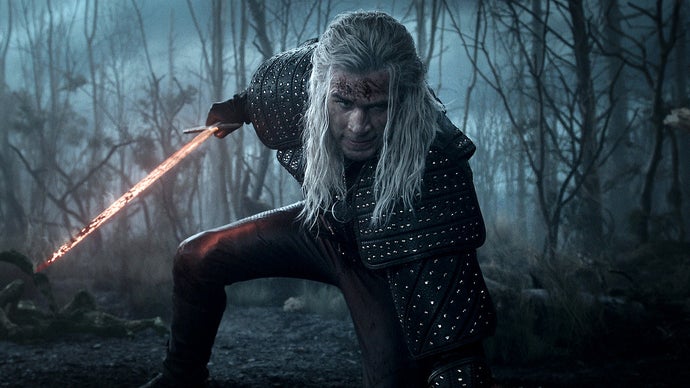
Netflix's *The Witcher* series will conclude with its fifth season this year, a decision that feels more driven by sharply plummeting viewership than a planned narrative arc, despite claims of a 'one large story' from the creators. It's a classic tale of a grand adaptation struggling to maintain its audience amidst declining engagement and a major cast change.
Alright mate, gather 'round, because I've been tinkering with this bit of news all morning, and bloody hell, it’s got more layers than a troll's onion. Netflix has gone and confirmed that the fifth season of *The Witcher* series, due out this year, will be its last. "The time of the end is nigh," indeed, as their official synopsis put it. Which, let's be fair, is a pretty dramatic way to announce a cancellation, even if it is a quote from the lore.
Now, this little nugget of news, as first unearthed by Robert Purchese over at Eurogamer, points to Season 5 following Season 4 in rapid succession. They were apparently filmed back-to-back, with showrunner Lauren Hissrich calling them "one large story." Even Jaskier himself, Joey Batey, reckoned it felt like "Season 4, Part 1 and 2." And on the surface, that sounds rather neat, doesn't it? A grand, continuous narrative arc, like a perfectly executed quest chain where all the loose ends get tied up in a bow made of monster guts and moral dilemmas.
But here's where my wizarding sense, which has an unfortunate habit of sniffing out dodgy magical concoctions, starts to tingle. You know that feeling when you cast a spell and it *almost* works, but then your cat gets turned into a sentient teacup? That's kinda how this feels, like a plan that started grand but veered off course somewhere around Ciri's pivotal destiny.
Because, let's not beat around the bush like a confused ghoul in a graveyard, the viewership figures for *The Witcher* series have been doing a downhill slide faster than Geralt chasing a particularly elusive drowner. Season one, back in 2019, was an absolute phenomenon, pulling in a staggering 76 million households for at least two minutes. That's a fair dinkum metric, even by Netflix's sometimes opaque standards. It felt like everyone, from hardcore game fans to fantasy newbies, was tuning in.
Then came Season 2, still strong with 18.5 million views, but already a dip. Season 3 took another plunge to 15.2 million. And the most recent one, Season 4 – which, let's not forget, was the first outing for Liam Hemsworth stepping into Henry Cavill's rather large, monster-slaying boots – well, that one hit a rather dismal 7.4 million views across its first four days. That's less than half of Season 3, and a mere fraction of the original hype.
It's like watching your favourite RPG character's stats slowly dwindle, despite investing all your skill points into 'charisma' and 'plot armour.' The initial buzz, the sheer excitement of seeing the world of Andrzej Sapkowski's novels and CD Projekt Red's games come to life, was undeniable. But then, for many, something shifted. Whether it was the departure of Cavill, whose commitment to the source material was legendary amongst fans, or perhaps creative choices that didn't quite resonate with the audience who initially fell in love with the Continent, the numbers don't lie. They tell a story of diminishing returns, a grand adventure slowly running out of steam.
So, while the showrunner and actors can paint Season 4 and 5 as "one large story," my inner statistician (who is usually busy calculating the drop rates for legendary loot) can't help but wonder if that narrative was perhaps… *expedited*? When viewership craters that dramatically, it usually signals a network pulling the plug faster than you can say "Toss a coin to your Witcher." It's less about a graceful narrative bow and more about a strategic retreat, isn't it? An emergency teleport out of a losing battle.
From a gamer's perspective, this whole saga is a curious case study. We, the players, often have a fiercely passionate, almost proprietary, relationship with our beloved IPs. We pore over the lore, debate the minutiae, and hold adaptations to an incredibly high standard. *The Witcher* games themselves are a masterclass in world-building and narrative depth, and the initial promise of the show was to bring that to a wider audience. But the constant tension between fan expectations and creative interpretation often leads to a bit of a digital dust-up, or in this case, a slow fade to black.
It makes you wonder, doesn't it? How much influence do our collective viewing habits truly have? Are these massive streaming platforms truly listening to the whispers of the community, or are they just looking at the cold, hard data of subscriber engagement? My bet's on the latter, which means if something's not keeping eyeballs glued to the screen, even a beloved franchise can find itself at the end of its quest line prematurely.
So, *The Witcher* series is ending, a bittersweet finale to what started as an electrifying journey. It’s a reminder that even powerful magic, or indeed a massive budget and a globally recognized IP, isn't always enough to keep the monsters (or in this case, the declining viewer numbers) at bay. Here's hoping the final season gives Geralt, Ciri, and Yennefer the send-off they deserve, regardless of what the viewing figures might have hinted at. And hey, at least we'll always have the games, right?
This analysis draws heavily from the original reporting by Robert Purchese for Eurogamer, which you can find. It's always worth seeing the initial intel before I poke around in the digital tea leaves.
Tags: The Witcher, Netflix, Streaming, Gaming Adaptation, Fantasy RPG
Original article: Eurogamer